Friday Oct 02, 2026
Friday Oct 02, 2026
Wednesday, 12 August 2026 05:28 - - {{hitsCtrl.values.hits}}
 Modern corporate life will probably never become free of pressure. Markets will remain competitive. Targets will continue to rise. Technology will keep changing. Every organisation, in one way or another, will continue pushing its own version of Sisyphus’ rock uphill, which makes the final question unavoidable. The real question is whether employees see that rock merely as a burden or as part of something worthwhile, and whether leaders help them see the difference
 Modern organisations have become remarkably successful at improving working conditions. Offices are more comfortable, technology has reduced physical effort, salaries have improved, and companies invest heavily in employee benefits. Yet many organisations continue to struggle with disengagement, burnout, quiet quitting, and a loss of employee commitment. This raises a key question: if material conditions are better, why does work still feel so empty to so many people?
This presents a paradox. Why do people who appear to have more than previous generations frequently seem less fulfilled at work?
The answer may lie in a place few corporate leaders expect to look: philosophy, and more specifically, the question of meaning.
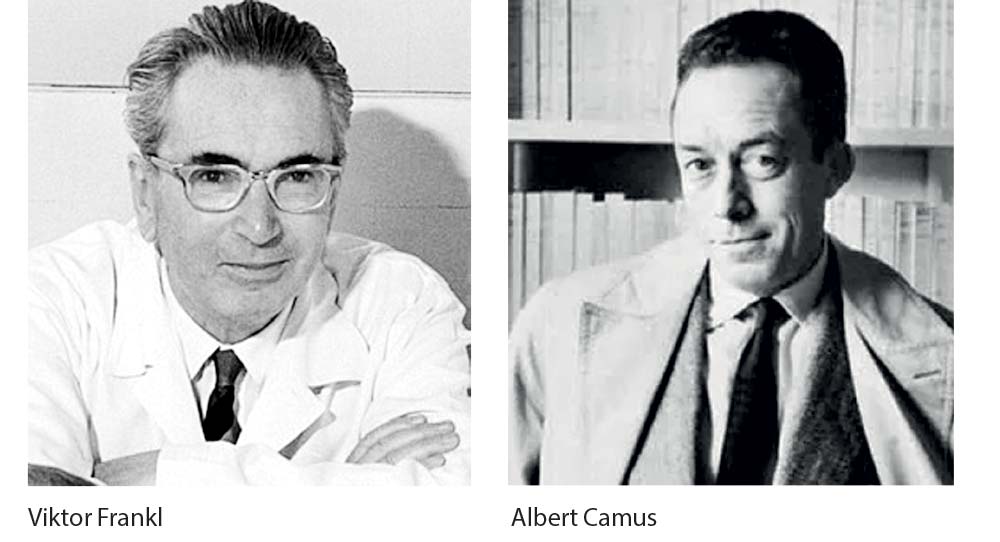
Two thinkers, writing in very different circumstances, offer practical insights into a central management challenge: how to keep people engaged when work feels repetitive, difficult or uncertain. One was Viktor Frankl, the Austrian psychiatrist and Holocaust survivor who developed Logotherapy. The other was the French philosopher Albert Camus, whose famous essay ‘The Myth of Sisyphus’ has influenced generations of readers.
Although they approached life from different philosophical positions, both asked the same essential question: how do human beings continue to work, persevere and even flourish when life appears difficult, repetitive or uncertain?
The search for meaning
Frankl’s answer was simple but deep. He believed that the deepest human motivation is not the pursuit of pleasure or wealth, but the search for meaning, and that work becomes more sustaining when it connects to that search.
His experiences in Nazi concentration camps convinced him that people could endure extraordinary hardship if they believed their suffering served a purpose. More importantly, he argued that although we cannot always choose our circumstances, we remain free to choose our response to them.
That insight has enormous relevance to the modern workplace, where employees are often asking whether their work matters.
Employees constantly ask themselves questions they seldom express openly.
“Does my work matter?”
“Am I contributing anything worthwhile?”
“Is this simply another way of earning a salary?”
If these questions remain unanswered, even generous remuneration may fail to create lasting commitment.
Many organisations respond to disengagement by increasing salaries, introducing incentive schemes or organising employee entertainment programs. These initiatives certainly have value, but they rarely satisfy the deeper need to believe that one’s work contributes to something worthwhile.
The corporate Sisyphus
Centuries before Frankl, the ancient Greeks told the story of Sisyphus, condemned by the gods to push a huge rock up a mountain, only to watch it roll back down again. His punishment was to repeat the task for eternity.
For many people, modern work can feel surprisingly similar.
Sales targets are met, only for higher ones to be imposed. Production schedules are completed, only for the next order to arrive. Reports are written, meetings concluded, and customer complaints resolved, yet tomorrow the cycle begins again.
The corporate rock never stops rolling.
Albert Camus used this myth to explore what he called “the Absurd”—the tension among humanity’s search for meaning and the often repetitive, uncertain nature of life.
His famous conclusion has puzzled readers for decades.
“One must imagine Sisyphus happy.”
Camus was not suggesting that Sisyphus enjoyed pushing the rock. Rather, he argued that once Sisyphus accepted his circumstances and refused to surrender to despair, the struggle itself became an act of courage and dignity.
Frankl and Camus did not arrive at the same philosophical conclusion. Frankl believed that meaning can be discovered, even in suffering. Camus believed that human dignity lies in refusing to be defeated, even when life appears meaningless. Yet both rejected hopelessness, and that shared refusal leads to a practical lesson for managers.
For managers, this distinction matters less than the practical lesson they share: resilience grows not simply from comfort or financial reward, but from purpose, responsibility and the determination to persevere at work.
Lessons from Japan
Interestingly, many Japanese management practices have embodied these principles for decades without ever referring to Frankl or Camus. This makes the connection from philosophy to practice especially clear.
Quality Circles, Kaizen and employee suggestion schemes recognise a simple truth: people become more committed when they are trusted to think, solve problems and improve their own work.
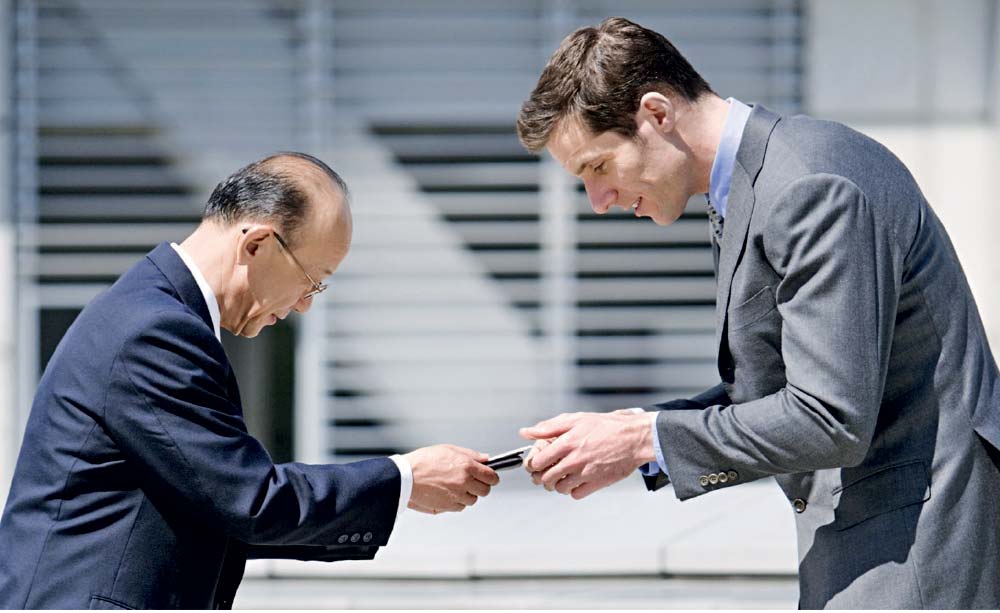
A worker tightening bolts on a production line is not simply performing a repetitive task. He is adding to product quality and buyer safety. A machine operator is not simply producing export goods but helping to build the reputation of the company and, ultimately, the country.
When employees understand how their work contributes to something larger than themselves, even routine tasks acquire significance.
Perhaps this explains why organisations that sincerely embraced employee involvement based Japanese management, often developed extraordinary levels of employee commitment. Employees were not merely instructed on what to do; they were invited to help improve how the work was done, which made the work feel more meaningful.
Unfortunately, some organisations later downgraded these practices to slogans, competitions and formalities, losing the deeper sense of participation that had made them so powerful in the first place.
Meaning in practice
Looking back over my own management career, I now realise that some of the most satisfying moments had little to do with budgets, profits or organisational restructuring. They came from helping people discover that their work mattered, and this was often where the insights became most tangible.
At the time, I had never heard of Viktor Frankl or read Albert Camus. Yet, in retrospect, I can see that many of the decisions I made were really attempts to help employees find purpose in what they were doing.
One experience occurred when I was the General Manager of a small Government organisation. Among the staff was a trainee stenographer who had earned a poor reputation. Her typing was untidy, her spelling weak, and her grammar inconsistent. Consequently, colleagues rarely entrusted her with important work. She spent most of her time typing routine correspondence that seemed to have little significance.
One afternoon, the Ministry urgently requested a draft Cabinet Paper. My secretary was on leave, and the remaining stenographers had already left the office early. I had little choice but to ask this young lady to prepare the document.
Perhaps because of the urgency, I told her rather sternly, “This is a Cabinet Paper. Please make sure everything is correct in one go.”
When she returned with the completed document, I was astonished. It was excellent.
Later, I learnt that she had proudly gone home and told her parents that she had typed a Cabinet Paper. For the first time, she realised that her work contributed to an important national decision.
Her confidence blossomed. Her performance improved noticeably.
Nothing had changed about her technical ability overnight.
What had changed was her perception of the importance of her work.
A second experience occurred at Dankotuwa Porcelain.
One young employee spent her day dipping biscuit-fired porcelain plates into glaze before placing them on a conveyor. It was one of the most repetitive jobs in the factory. Yet she had passed her Advanced Level examination in the science stream and possessed abilities that her daily routine never called upon.
When we introduced Quality Circles, everything changed.
Working with her colleagues in a Quality Circle, she helped investigate the causes of glazing defects. Using her scientific knowledge, the team experimented with different glaze viscosities until they identified an optimum level that significantly reduced defects.
The change in her zeal was remarkable. She was no longer simply dipping plates into glaze. She had turned into a problem-solver. She was contributing directly to product quality, customer satisfaction, and the company’s success.
That experience revealed to me something I have never forgotten.
Quality Circles do far more than solve technical problems. They help people discover that their ideas matter.
Three lessons for today’s leaders
These experiences, together with the insights of Frankl, Camus and Japanese management, suggest three lessons for today’s corporate leaders about meaning at work.
First, people need purpose as much as they need pay.
Fair remuneration is essential, but it is rarely enough to sustain commitment over the long term. Employees want to know that their work contributes to something worthwhile. Leaders who repeatedly explain how each person’s work benefits customers, colleagues and society build stronger organisations than those who rely solely on financial incentives.
Second, involvement creates meaning.
People become committed when they are trusted to think, solve problems, and improve how work is done. Participative management is therefore much more than a productivity technique. It is a way of affirming that employees are valued for their judgement as well as their labour.
Third, leaders create meaning by recognising potential.
One of the most important responsibilities of leadership is to help people see possibilities in themselves that they may not yet recognise. Sometimes a basic expression of trust, a new responsibility or the opportunity to solve a problem is able to transform an employee’s attitude more effectively than another salary increment.
A final reflection
Modern corporate life will probably never become free of pressure. Markets will remain competitive. Targets will continue to rise. Technology will keep changing. Every organisation, in one way or another, will continue pushing its own version of Sisyphus’ rock uphill, which makes the final question unavoidable.
The real question is whether employees see that rock merely as a burden or as part of something worthwhile, and whether leaders help them see the difference.
Frankl reminds us that people can endure remarkable hardship when they find meaning in what they do. Camus reminds us that dignity lies in refusing to surrender to difficult circumstances. Japanese management demonstrates that participation, trust and continuous improvement can make ordinary jobs into meaningful work. Perhaps that is the greatest challenge facing today’s leaders.
Our task is not simply to improve productivity or increase profits. It is to build organisations where people understand why their work matters. When employees discover meaning, commitment no longer depends solely on supervision, incentives or motivational speeches. It comes from within.
And when that happens, organisations gain something that no bonus scheme can ever buy—a workforce that believes in what it is doing. While I reflect on my own career, I realise that the most enduring management lesson was never about systems, structures or strategies.
It was about helping people see that they mattered. This is the formula I used in restructuring the Merchant Bank of Sri Lanka (MBSL). Perhaps that is where truly meaningful leadership begins.
(The author is a consultant on Productivity and Japanese Management Techniques; Former Chairman/Director of several listed and unlisted companies; Recipient of the APO Regional Award for Promoting Productivity in the Asia-Pacific Region; and Recipient of the Order of the Rising Sun, Gold and Silver Rays – Government of Japan. He can be reached through email: bizex.seminarsandconsulting
@gmail.com)



