Saturday Oct 17, 2026
Saturday Oct 17, 2026
Tuesday, 1 September 2026 04:16 - - {{hitsCtrl.values.hits}}
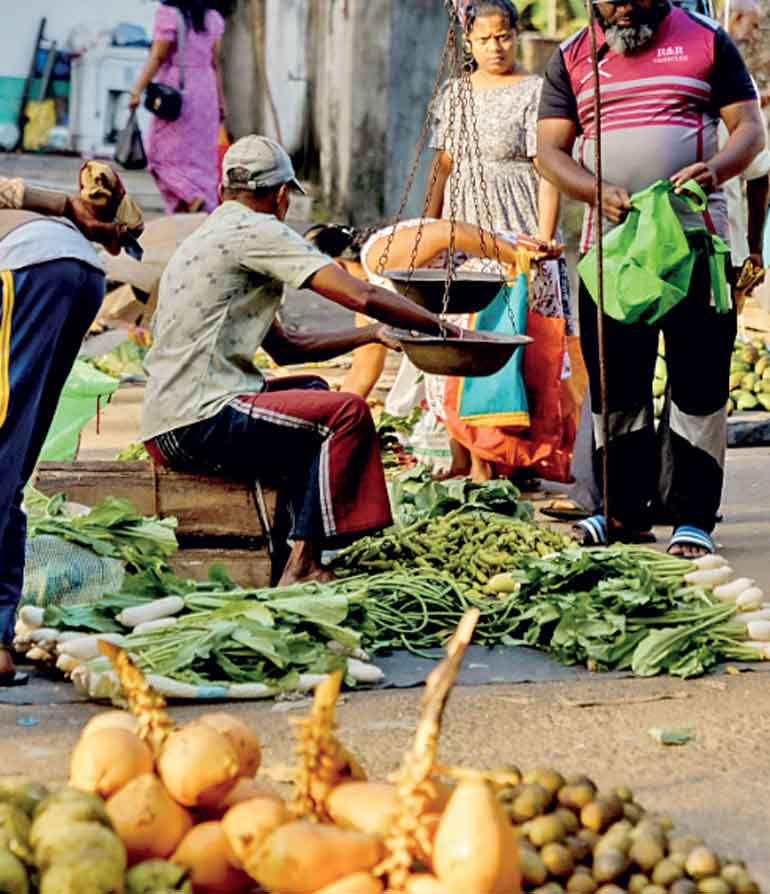
 Sri Lanka is at an important crossroads in its economic recovery. Having gone through one of the worst financial crises in its history, the country is now trying to rebuild trust, restore stability, and set the stage for steady growth. As the current monetary policy framework comes up for review, one question keeps surfacing: should the Central Bank change its inflation target? The short answer is no — not because 5% is some magic number, but because the existing framework fits Sri Lanka’s economic reality. The real challenge for the next phase isn’t picking a new number. It’s making the current system work better.
Small, open economy living with global shocks
Sri Lanka’s current framework, set up under the Central Bank of Sri Lanka Act No. 16 of 2023 and the Monetary Policy Framework Agreement of October 2023, targets headline inflation of around 5%, with room to move two percentage points in either direction.
This approach recognises something important: Sri Lanka is not a large, diversified, advanced economy. It’s small, open, and heavily dependent on the outside world. Oil prices affect transport and electricity bills. Global food prices hit household budgets. Currency swings raise the cost of imported goods. International interest rates affect how much capital flows in or out. Add in the risks of geopolitical conflict disrupting shipping, or droughts and floods hurting local harvests, and it’s clear that many of the forces driving prices in Sri Lanka are simply beyond the Central Bank’s control.
This matters because monetary policy can’t fix these problems directly. If fuel becomes more expensive on world markets, raising interest rates won’t produce more fuel. If a poor harvest pushes up vegetable prices, higher rates won’t grow more vegetables overnight. The real job of monetary policy isn’t to stop every short-term price wobble — it’s to make sure temporary shocks don’t turn into lasting, embedded inflation, and that people’s expectations about future prices stay anchored.
If fuel becomes more expensive on world markets, raising interest rates won’t produce more fuel. If a poor harvest pushes up vegetable prices, higher rates won’t grow more vegetables overnight. The real job of monetary policy isn’t to stop every short-term price wobble — it’s to make sure temporary shocks don’t turn into lasting, embedded inflation, and that people’s expectations about future prices stay anchored
Food prices hit harder in countries like Sri Lanka
One of the biggest differences between rich and developing economies is how much food matters in the average household budget. In Sri Lanka, food makes up about 26% of the Colombo Consumer Price Index basket — a big chunk of typical spending. Research from the IMF backs this pattern up more broadly: food accounts for a median of roughly 31% of consumption in emerging and developing economies, compared with about 17% in wealthy nations.
This isn’t just an abstract statistic. When global food or fuel prices spike, wealthier households can often absorb the hit because food is a smaller share of what they spend. Poorer households don’t have that cushion — they can’t simply eat less, so a bigger share of their income has to go toward keeping the family fed. That’s why headline inflation (which includes food and fuel) matters so much in Sri Lanka, even though economists sometimes prefer to look past these “temporary” swings. To a family staring at a higher grocery bill, the distinction between temporary and permanent inflation is beside the point.
External shocks aren’t going away
The past several years have shown just how easily the global economy can be knocked off balance. COVID-19 disrupted supply chains worldwide. The war in Ukraine sent food and energy prices soaring. More recently, shipping routes and trade have faced fresh disruptions from geopolitical tensions. Sri Lanka, as a small island nation, imports much of its fuel, food, machinery, and raw materials — meaning that global price swings quickly show up at home. Research on small island states confirms this vulnerability: their limited size, geographic isolation, heavy reliance on imports, and exposure to supply-chain problems make global food price shocks hit harder and faster than in bigger economies. Given all this, a monetary policy framework needs enough built-in flexibility to absorb these external shocks while still keeping a credible long-term anchor. That’s exactly what the current tolerance band is designed to do.
Inflation band is a feature, not a flaw
Some people misunderstand what an inflation “target” really means, assuming the Central Bank should hit exactly 5% every single month. But monetary policy doesn’t work with that kind of precision. Interest rate changes take time to filter through the economy, and the underlying causes of inflation are constantly shifting. That’s why a range makes sense. Sri Lanka’s framework currently allows inflation to move between 3-7% without automatically being treated as a policy failure. The Central Bank is only required to explain itself if inflation strays more than two percentage points from target for two straight quarters.
The Central Bank is only required to explain itself if inflation strays more than two percentage points from target for two straight quarters. Think of it this way: if an oil price shock temporarily pushes inflation to 6%, but the underlying trend is stable, an aggressive rate hike may do more harm than good. Likewise, if a temporary dip in food prices pulls inflation below target, there’s no need to rush in with stimulus just to hit the number exactly. The target should be seen as a medium-term compass, not a monthly scorecard
Think of it this way: if an oil price shock temporarily pushes inflation to 6%, but the underlying trend is stable, an aggressive rate hike may do more harm than good. Likewise, if a temporary dip in food prices pulls inflation below target, there’s no need to rush in with stimulus just to hit the number exactly. The target should be seen as a medium-term compass, not a monthly scorecard — and that flexibility is especially valuable for a country as exposed to outside shocks as Sri Lanka.
What other developing countries are doing
Sri Lanka isn’t alone in picking a target close to 5%. Kenya targets 5% inflation with a band of plus or minus 2.5 percentage points. Mongolia also targets 5%, with a 2-point band. Türkiye has historically used a similar setup, and Moldova targets 5% with a tighter 1.5-point band. Uzbekistan, too, targets 5% inflation. Of course, no two economies are identical — but this comparison shows that a target around this level isn’t unusual for emerging and developing economies.
A target is also a message
Inflation targeting isn’t just about setting interest rates — it’s a communication tool. Businesses use inflation expectations to plan investments. Workers factor them into wage negotiations. Banks use them to set lending rates. Households decide whether to save or spend based partly on what they expect prices to do.
A clear, steady target helps everyone coordinate these expectations. If people trust that inflation will stay broadly stable, temporary price spikes are less likely to spiral into permanent wage and price increases. This lesson is especially relevant for Sri Lanka after its recent painful bout of extremely high inflation. The real takeaway from that crisis isn’t just that inflation can spin out of control — it’s that once people stop trusting the numbers, restoring stability becomes far more costly. Chopping and changing the target every few years, without strong justification, risks damaging that hard-won credibility.
A new framework still needs time to prove itself
There’s also a simple, practical reason to stay the course: Sri Lanka’s current framework is still young. It takes time for the public, markets, and businesses to understand how a new system actually works — how the Central Bank responds when inflation runs hot, when it runs cold, and when external shocks hit. Just like any new institution, credibility is built through consistency, not constant redesign. The next few years would be better spent consolidating this young framework rather than tearing it up again.
Staying the course doesn’t mean ignoring high inflation
None of this means the Central Bank should shrug off inflation above target. The key distinction is between temporary shocks and inflation that becomes embedded and persistent. If food prices jump due to a short-term supply problem, policymakers need to judge whether it will fade on its own. But if higher food costs start feeding into wages, rents, and transport prices more broadly, that’s a different, more serious problem requiring a policy response. The Central Bank needs to stay forward-looking — focused not on where inflation is today, but where it’s headed several quarters ahead.
Interest rates can’t fix everything
It’s also worth remembering that monetary policy has limits. If vegetables are expensive because of spoilage after harvest, higher interest rates won’t help. If rice supplies fall short, the Central Bank can’t produce more rice. If global wheat prices spike due to war elsewhere, domestic interest rates can’t undo that.
Sri Lanka has already paid a heavy price for macroeconomic instability. Given that history, the wisest move now may be the least dramatic one: keep the current target, give the young framework time to prove itself, and focus energy on strengthening how it’s implemented — rather than reopening the debate over the number itself
This means fighting food inflation requires cooperation across Government — improving farming productivity, cutting food waste, strengthening storage and distribution, keeping strategic reserves where needed, boosting competition in food markets, and keeping trade policy predictable. A sound fiscal position also takes pressure off the Central Bank and strengthens overall confidence in economic management. And a flexible exchange rate can help the economy absorb external shocks without forcing all the adjustment onto interest rates alone — something Mauritius’s experience also highlights for small island economies.
Beyond the numbers: Real lives are at stake
Inflation can sound like an abstract statistic, but for ordinary households it’s anything but. Rising food prices force families to change what they buy. Higher transport costs eat into commuting budgets. Rising school expenses strain family finances. And when savings lose value, people lose confidence in their financial future. These effects fall hardest on lower-income households, who have far less room to adjust their spending. That’s why price stability isn’t just an economic goal — it’s a social one too.
Looking ahead: Building a smarter, forward-looking framework
Keeping the current inflation target doesn’t mean freezing monetary policy in place. The next three years should be used to make the framework more forward-looking, transparent, and credible — an approach known as Inflation-Forecast Targeting. Rather than waiting for inflation to rise before reacting, the Central Bank should continuously look ahead and adjust policy based on where inflation is expected to go, since interest rate changes take time to filter through the economy.
This forward-looking approach lets policymakers tell the difference between a temporary shock — like a short-term spike in food prices that’s expected to fade — and a more worrying trend, such as strong demand or rising inflation expectations that could push prices higher over time. Waiting for inflation to actually rise before acting in the second case would be too late.
Managing expectations is just as important as setting interest rates. If people believe inflation will stay under control, temporary shocks are less likely to become permanent. This is why clear communication from the Central Bank — explaining not just what it decided, but why, and what it expects going forward — has become central to modern monetary policy.
None of this works, though, without genuine Central Bank independence. This isn’t independence for its own sake — it exists to protect long-term monetary stability from short-term political pressure, such as the temptation to keep rates low before an election or finance Government spending directly. Independence doesn’t mean the Central Bank should avoid accountability — it still must explain its decisions clearly to Parliament, financial markets, and the public. Given how badly Sri Lanka was hurt when fiscal weakness, monetary instability, and lost confidence reinforced each other during its recent crisis, insulating monetary policy from short-term political cycles has never been more important.
Sri Lanka isn’t alone in picking a target close to 5%. Kenya targets 5% inflation with a band of plus or minus 2.5 percentage points. Mongolia also targets 5%, with a 2-point band. Türkiye has historically used a similar setup, and Moldova targets 5% with a tighter 1.5-point band. Uzbekistan, too, targets 5% inflation. Of course, no two economies are identical — but this comparison shows that a target around this level isn’t unusual for emerging and developing economies
Three pillars for the road ahead
Taken together, Sri Lanka’s next phase of monetary policy should rest on three pillars: a clear and credible inflation anchor, stronger forecasting and analytical capacity so decisions are based on where inflation is heading rather than where it has already been, and better communication paired with real institutional independence.
None of this promises to eliminate every bump in inflation — that’s simply not possible for a small economy exposed to global shocks. But it can help ensure temporary shocks stay temporary, expectations stay anchored, and inflation keeps drifting back toward its medium-term goal.
Sri Lanka has already paid a heavy price for macroeconomic instability. Given that history, the wisest move now may be the least dramatic one: keep the current target, give the young framework time to prove itself, and focus energy on strengthening how it’s implemented — rather than reopening the debate over the number itself.
(The author is Professor in Economics, Department of Economics, University of Colombo, and could be reached via email at [email protected])




