Friday Oct 16, 2026
Friday Oct 16, 2026
Monday, 30 March 2026 03:44 - - {{hitsCtrl.values.hits}}
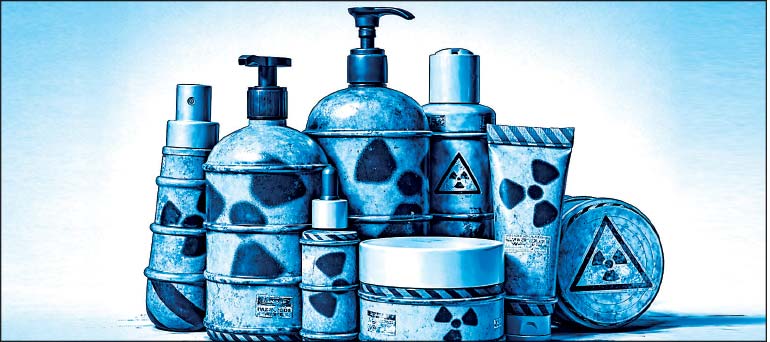
 Consumer product safety is not a luxury or a niche technical issue. It is a foundation for a healthier population, a fairer marketplace, and a more resilient economy. The longer action is delayed, the higher the cost we will all pay
 Walk into any supermarket or pharmacy in Sri Lanka, or scroll through an online marketplace, and you are surrounded by products promising brighter skin, stronger immunity, or better health. These claims are reassuring—and often persuasive. But behind many of these labels lies an uncomfortable truth: a growing number of products used daily by Sri Lankan consumers have not undergone adequate safety assessment and may contain chemicals that pose serious risks to human health.
This is no longer a hypothetical concern. A recent investigation by the Consumer Affairs Authority revealed alarmingly high levels of mercury in dozens of skin-lightening products sold locally, with some exceeding national limits by orders of magnitude. Similar concerns are emerging in the booming wellness and dietary supplement sector, where undisclosed ingredients, misleading claims, and poor manufacturing practices are increasingly common. The problem is not confined to one product category or one bad actor—it reflects systemic weaknesses in how consumer product safety is managed.
Sri Lanka’s regulatory system was designed for a very different marketplace. Oversight is divided among multiple agencies, including the National Medicines Regulatory Authority, Sri Lanka Standards Institution, Ministry of Health, and Consumer Affairs Authority. Each plays an important role, yet none has a clear mandate to oversee chemical safety across the full range of modern consumer products. The gaps between institutions matter. They create blind spots that unsafe products can—and do—slip through.
These weaknesses are magnified by changes in how products are sold. Thousands of cosmetics and supplements are imported each year from countries with uneven quality control. Social media and online marketplaces now allow products to reach consumers directly, often bypassing traditional retail channels altogether. Regulators are left reacting to problems after harm has already occurred, rather than preventing risks before products reach households.
Cosmetics illustrate this challenge clearly. While safety provisions existed under earlier legislation, they were not fully carried forward into the NMRA Act of 2015. Although heavy metal testing is nominally required for registered cosmetics, only a fraction of the products actually sold in Sri Lanka are formally registered. Mercury is only one of many potential hazards. Toxic substances can enter products through contaminated raw materials, adulteration, or poor manufacturing practices—risks that cannot be managed through complaint-driven enforcement alone.
The consequences are not abstract. Exposure to hazardous chemicals in consumer products has been linked to allergic reactions, respiratory illness, neurotoxicity, reproductive harm, and cancer. The International Agency for Research on Cancer has identified many chemicals commonly encountered in consumer products as known human carcinogens. At the same time, it is important to be clear: not all chemicals are dangerous. Risk depends on dose, exposure, and duration. Without systematic assessment, however, it is impossible to distinguish acceptable risk from unacceptable harm.
The economic costs of inaction are equally real. Unsafe products increase healthcare spending, erode public trust, and undermine legitimate businesses that comply with higher standards. Countries that have invested in strong, science-based regulatory systems—such as those in the European Union, Australia, and parts of East Asia—demonstrate that consumer protection and economic competitiveness are not opposing goals. Predictable standards protect consumers while supporting responsible industry growth.
What should Sri Lanka do differently?
Sri Lanka needs a more unified, science-based approach to managing chemical risks in consumer products which includes digital and informal markets. This does not necessarily require creating a new authority. It does require formal coordination among existing agencies, shared standards, and clear accountability for chemical safety across product categories, imports, and manufacturing.
Safety must be built into products from the start and actively enforced after they reach the market. Regulators should apply toxicological risk assessment—evaluating hazards, exposure, and dose—to identify the most dangerous chemicals and take decisive action. Labelling requirements, publicly accessible chemical standards, and enforceable protocols must be clear and widely communicated. Expanding chemical testing capacity—through new facilities and university–industry partnerships—will ensure that safety data is integrated into product development and compliance, protecting consumers before harm occurs.
Global examples to guide Sri Lanka show what is possible: the EU’s REACH regulation requires manufacturers to demonstrate chemical safety before market entry; California’s Proposition 65 mandates clear warnings for chemicals known to cause cancer or reproductive harm; Singapore requires all cosmetics to be registered with the Health Sciences Authority, enabling traceability and monitoring; and Australia’s AICIS program protects people and the environment through rigorous chemical risk assessment and management. India has a publicly available Banned/ Restricted Chemicals list consisting of chemicals that are pesticides and non-pesticides. Sri Lanka can adapt the principles behind these models—pre-market responsibility, risk-based prioritisation, digital monitoring, and public transparency—without replicating them wholesale.
Consumers must be empowered to take charge of their safety. Tri-lingual guidance, digital tools to verify product claims, reporting systems, and targeted education campaigns can help people make informed choices and reduce demand for unsafe products. Independent organisations like the Environmental Working Group and Clean Label Project (US) and Toxics Link (India) have successfully raised public awareness of chemical hazards in everyday products—yet Sri Lankan consumers remain largely underserved in this space.
Sri Lanka now faces a choice. It can continue responding to chemical safety crises one product at a time, after damage has already been done. Or it can invest in a modern, science-based system that prevents harm, protects public health, and strengthens trust in everyday products. Consumer product safety is not a luxury or a niche technical issue. It is a foundation for a healthier population, a fairer marketplace, and a more resilient economy. The longer action is delayed, the higher the cost we will all pay.
(The author is Co-Founder /CEO and Senior Toxicologist at HealthSurveil LC in Texas, United States, specialising in environmental and biological risk monitoring for better human health. She’s currently in Sri Lanka as a Fulbright US Scholar at University of Colombo and a Research Fellow at Verité Research)




