Monday Nov 23, 2026
Monday, 23 November 2026 00:28 - - {{hitsCtrl.values.hits}}

I recently had the opportunity to visit Kandy and the privilege of staying at the historic Queen’s Hotel. Even taking the regular lift to the first floor was an experience in itself—the character of the building, the architecture, and the sense of history surrounding it reminded me that this was a place created in 1844, carrying with it a remarkable legacy and an ancient glory.

Early one morning, I woke up and found the roads almost completely empty. I walked towards Kandy Lake and sat on one of those simple concrete benches, looking across the water towards the Sri Dalada Maligawa. There was a slight drizzle, and the quietness of the morning created a special atmosphere.
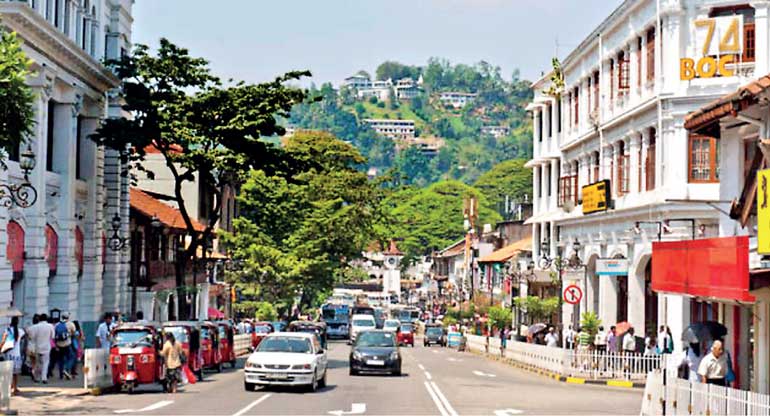
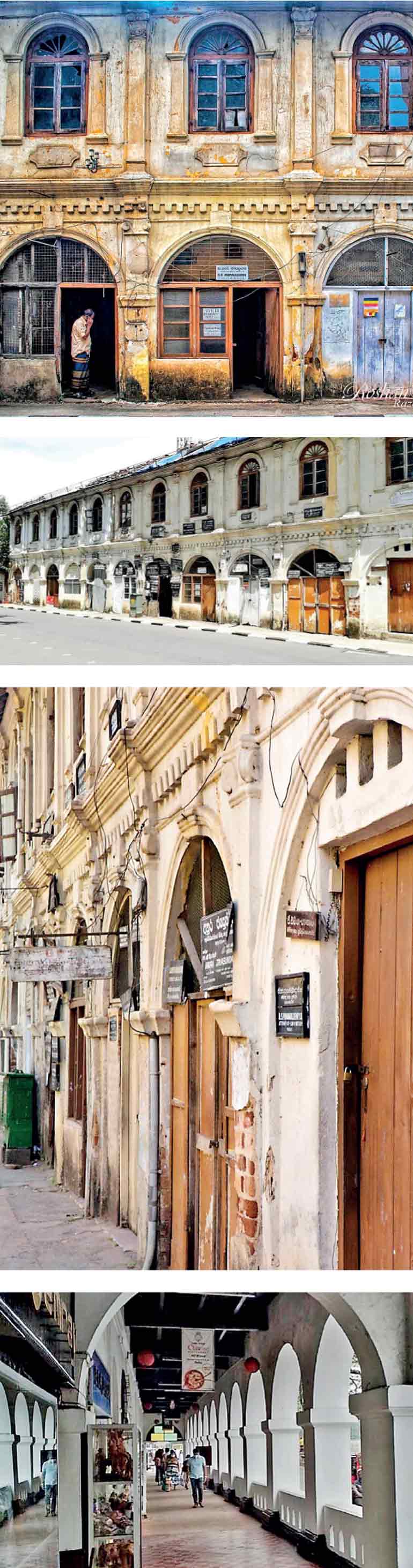
As I sat there, I began looking carefully at the architecture surrounding the lake. Dutch, British and traditional Kandyan influences appeared to blend together in a remarkable historical landscape. I then walked across Trincomalee Street and looked closely at some of the older buildings.
And I asked myself: What have we done to Kandy?
Kandy has all the ingredients of a world-class tourist destination. The Temple of the Tooth, the lake, the historic buildings, the surrounding hills, the ancient traditions and the unique cultural character of the city make it, in many ways, a natural tourist paradise.
Yet I could not help feeling that we have missed a golden opportunity to preserve and develop Kandy in the way it deserves.
My vision for Kandy would be very different. I would like to see a city where people, not vehicles, dominate the historic centre. Certain streets could be progressively closed to vehicular traffic, allowing visitors to walk, explore and experience the architecture, history and culture at a leisurely pace.
Imagine walking through the historic heart of Kandy without the constant movement of vehicles—stopping at an old building, discovering a small shop, sitting beside the lake, visiting the temples and experiencing the city rather than simply passing through it.
Modern development has its place, but it should not come at the expense of the architectural and historical character that makes Kandy unique. New construction in sensitive historic areas should be carefully controlled so that the city does not lose the very character that tourists come to experience.
Kandy should not merely be a place tourists pass through on their way to somewhere else. Kandy itself should be the destination.
With proper conservation, pedestrianisation, traffic management, restoration of historic buildings, carefully designed tourism infrastructure and a clear long-term vision, Kandy could become one of the greatest cultural tourism destinations in Sri Lanka—and potentially one of the most distinctive heritage cities in Asia.
We have the lake.
We have the Maligawa.
We have the temples.
We have the hills.
We have centuries of history.
We have the architecture.
We have the culture.
What more could a tourist paradise ask for?
What Kandy needs now is not more concrete. It needs imagination, protection, investment and, above all, a vision.
I hope the authorities will take a closer look at the extraordinary beauty and tourism potential of Kandy before more of its historic character disappears.
We still have the opportunity to make Kandy what it was always meant to be—a living world heritage city, where history is not merely preserved behind glass, but experienced on every street.