Friday Oct 16, 2026
Friday Oct 16, 2026
Thursday, 9 April 2026 00:26 - - {{hitsCtrl.values.hits}}
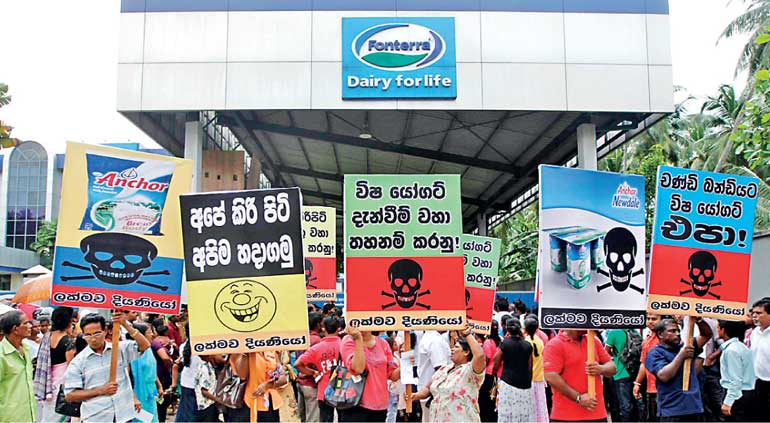
 In every democratic society, trade unions play an essential and respected role. They are the voice of employees, the defenders of fairness, and a necessary counterbalance to authority. Sri Lanka is no exception. For decades, trade unions have contributed significantly to protecting workers’ rights and advancing social justice.
However, a growing concern now demands urgent national attention: the gradual but visible overreach of certain trade unions into administrative and decision-making domains, areas that rightfully belong to statutory authorities and professional management.
This is not a criticism of trade unions as institutions. Rather, it is a call to restore balance, clarity, and accountability.
A blurring of boundaries
In recent times, there have been numerous instances where trade unions, particularly in critical public sectors, have moved beyond their traditional roles of representation and advocacy. Instead, they have begun to influence, delay, or even dictate administrative functions such as transfers, appointments, operational decisions, and policy execution.
Such developments raise a fundamental question:
This blurring of roles creates confusion, weakens institutional discipline, and ultimately undermines the rule of law.
The cost to the nation
The consequences of this overreach are far-reaching:
In critical services, even a single day of disruption can have life-altering consequences.
Protecting both rights and responsibility
It is important to state clearly:
 These two objectives are not in conflict, provided there is a clear and enforceable framework.
The need for urgent reform
Sri Lanka now stands at a point where legislative and regulatory reform is necessary to bring clarity to this issue.
Such reforms are not about restricting unions, they are about strengthening governance and ensuring fairness for all stakeholders.
A call to leadership
This is a matter that requires courageous and balanced leadership. Policymakers must act not out of confrontation, but out of responsibility to the nation.
Sri Lanka has the opportunity to set an example by creating a system where:
Conclusion
The strength of a nation lies not only in its freedoms, but in how well those freedoms are structured and exercised.
Trade unions must remain a pillar of democracy, but they must not become parallel centres of authority.
The time has come to act, not to divide, but to restore balance, protect institutions, and secure the future of public service in Sri Lanka.




