Friday Oct 16, 2026
Friday Oct 16, 2026
Monday, 9 February 2026 00:05 - - {{hitsCtrl.values.hits}}

Confident Group Chairman C. J. Roy
 The death of Roy during a tax enforcement operation is a profound tragedy, but failing to learn from it would be an even greater failure. For Sri Lanka, this moment calls for serious reflection. Taxpayers must comply early and transparently, non-compliant citizens must recognise the increasing risks of continued avoidance, tax officials must exercise their authority with restraint, professionalism, and humanity, and the State must ensure that revenue mobilisation never comes at the cost of human life or dignity. Ultimately, a tax system succeeds not when people fear it, but when they respect it
 Introduction: The incident that demands reflection
In January 2026, India witnessed a deeply disturbing incident when C. J. Roy, Chairman of the Confident Group, died during an ongoing Income-Tax search operation at his office premises. While investigations are continuing and authorities have cautioned against premature conclusions, the fact remains that a human life was lost in the midst of a tax enforcement action.
This incident sent shockwaves through the business community, triggered political debate, and raised serious questions about how tax powers are exercised, how taxpayers experience enforcement, and where institutional responsibility begins and ends.
For Sri Lanka — at a time when tax enforcement is intensifying amid fiscal consolidation, IMF-linked revenue targets, and an expanded tax base — this tragedy is not distant news. It is a warning signal.
Tax compliance: A shield, not a burden
The death of Roy highlights a reality that many taxpayers tend to underestimate. Tax non-compliance is not merely a financial or technical issue; it has the potential to escalate into a serious personal and psychological crisis. When unresolved tax irregularities progress into investigations or enforcement actions, the consequences extend far beyond additional tax payments or penalties. They can involve prolonged uncertainty, reputational damage, intrusive scrutiny, and intense mental stress. Once a tax search or raid commences, the taxpayer often loses control over the situation, underscoring that non-compliance carries risks that are far deeper and more personal than commonly assumed.
Lesson for Sri Lankan taxpayers: Tax compliance is not just about paying dues — it is about protecting stability, dignity, and peace of mind.
A message to the non-compliant general public: Delay is not immunity
A dangerous belief continues to persist among sections of the public — that everyone avoids tax and that nothing will ever happen. The incident involving Mr. Roy exposes the fragility of this assumption. While tax systems may tolerate non-compliance for a limited period, mounting fiscal pressures inevitably compel governments to act decisively. In Sri Lanka, the tax environment is evolving rapidly through the introduction of digital Taxpayer Identification Numbers, enhanced bank transaction reporting, integrated property and vehicle databases, and foreign income disclosures under international information-exchange frameworks. As a result, the compliance net is tightening steadily, often without public visibility, making prolonged non-compliance an increasingly high-risk strategy.
Lesson: Silence today does not guarantee safety tomorrow.
Business leaders and high-net-worth individuals: Transparency is protection
For entrepreneurs and promoters, the stakes are significantly higher. Complex business structures that are not supported by proper documentation quickly attract regulatory suspicion, while poor record-keeping intensifies pressure during audits and investigations. The absence of timely professional advice often leaves individuals isolated in high-stress situations. Responsible taxpayers must therefore maintain clean and transparent audit trails, voluntarily regularise historical non-compliance, engage qualified tax professionals, and recognise mental well-being as an essential component of overall risk management.
Lesson: Professional compliance is personal protection.
A critical reflection for tax officials: Power must be humanely exercised
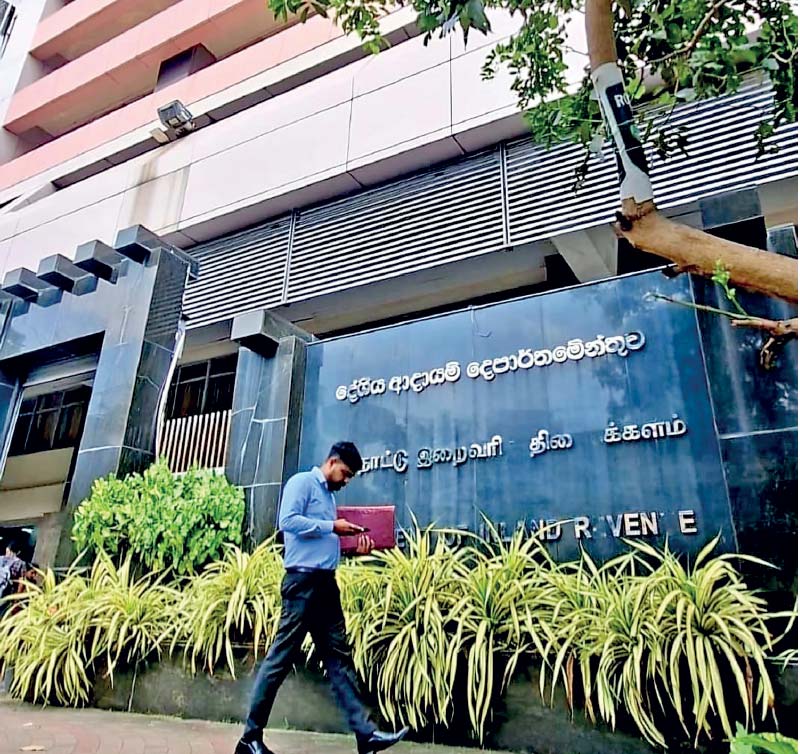
The death of Mr. Roy compels tax administrations everywhere to reflect seriously on how authority is exercised. Tax officials are entrusted with strong legal powers to safeguard public revenue, but enforcement must never cross the line into intimidation, coercion, or psychological pressure. For officials — including those of Sri Lanka’s Inland Revenue Department — this incident underscores a fundamental truth: enforcement must be firm yet proportionate, authority must be exercised lawfully yet empathetically, and revenue collection must never disregard human vulnerability. When power is exercised without sensitivity, institutions risk erosion of public trust, politicisation of enforcement, demoralisation of ethical officers, and long-term damage to voluntary tax compliance.
Lesson for officials: The legitimacy of tax collection depends on how power is used, not how much power exists.
Sri Lanka’s enforcement path: Firm, fair, and forensically clean
Sri Lanka is entering an unavoidable phase of intensified revenue mobilisation. However, global experience — reinforced by the tragic incident involving Mr. Roy — demonstrates that the manner in which enforcement is carried out is as important as enforcement itself. To ensure credibility and sustainability, Sri Lanka’s tax administration must be firm, fair, and forensically clean. This requires clear and written audit and search protocols, senior-level oversight in sensitive cases, documented communication rather than informal or verbal pressure, guaranteed access to professional representation for taxpayers, and robust internal accountability and grievance-redress mechanisms.
Lesson: Sustainable enforcement requires visible fairness.
Policy makers: Revenue targets must respect human limits
Governments often measure the success of tax administration through numerical indicators such as the number of raids conducted, additional assessments raised, and penalties collected. However, the human cost of enforcement — including stress, fear, and irreversible personal consequences — is rarely reflected in such statistics. A resilient and sustainable tax system therefore requires a careful balance between enforcement and fairness, achieved through voluntary disclosure mechanisms, effective alternative dispute resolution processes, continuous taxpayer education, and humane investigative practices that respect human dignity while safeguarding public revenue.
Lesson: A tax system that respects dignity ultimately collects more revenue.
Society at large: Fear is a weak foundation for compliance
Fear-based compliance is inherently fragile and temporary. Sustainable tax compliance is built on trust, predictability, fairness, and understanding. When taxpayers perceive tax authorities as adversaries, compliance tends to become minimal and defensive. In contrast, when tax administrations are viewed as fair, transparent, and professional regulators, compliance evolves into a cooperative and enduring relationship that benefits both the State and taxpayers alike.
Conclusion: A tragedy that must not be ignored
While Sri Lanka has faced many complex enforcement challenges, it has not yet experienced a widely reported case where an individual died during an Income-Tax enforcement action. This makes the Indian incident a significant regional reminder of why respectful, humane and transparent tax administration matters.
The death of Roy during a tax enforcement operation is a profound tragedy, but failing to learn from it would be an even greater failure. For Sri Lanka, this moment calls for serious reflection. Taxpayers must comply early and transparently, non-compliant citizens must recognise the increasing risks of continued avoidance, tax officials must exercise their authority with restraint, professionalism, and humanity, and the State must ensure that revenue mobilisation never comes at the cost of human life or dignity. Ultimately, a tax system succeeds not when people fear it, but when they respect it.
(The author is a Chartered Accountant and could be reached via email [email protected])




