Saturday Sep 26, 2026
Saturday Sep 26, 2026
Friday, 25 September 2026 00:23 - - {{hitsCtrl.values.hits}}
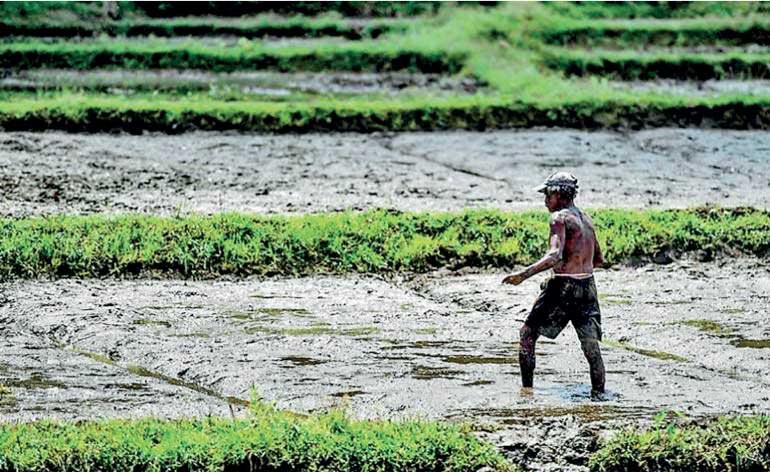
 The El Niño that is making waves across the world brings with it a shuddering threat of food insecurity to Sri Lanka. Experts warn that, in the worst-case scenario, it could reduce Sri Lanka’s paddy harvest in the Maha 2026/27 by upwards of 30 percent. If so, Sri Lanka could begin to experience rice shortages, resulting in high consumer prices, beginning June 2027, once the existing rice stocks and the harvest from the Maha season are exhausted. Compounding this issue is the Government’s recent move to allow the use of rice for other industrial purposes, which, while commendable, could accelerate the shortage. Regardless of when the shortage hits the consumer market, a 30 percent drop in the harvest could spell disastrous consequences for farmer incomes, placing the rural economy in limbo. The impact on consumers could become worse if India and other rice-producing nations restrict rice exports, as they often do, to safeguard their own domestic food security.
El Niño is not a new phenomenon for Sri Lanka. The island has experienced around twenty-five El Niño episodes since 1950, three of which were categorised as ‘strong’. Despite this experience and the vast availability of climate data, there remains widespread uncertainty and a lack of institutional planning regarding the possible effects this time. Although projections of an El Niño have been publicised since May this year, the Government has been slow to devise management strategies to ensure the island’s food security and the economic security of farmers, while successive Governments have failed to implement long-term disaster management reform that could help Sri Lanka weather such storms with relative ease.
Systems at play
To understand the problem, it is crucial to understand the systems at play. El Niño is the warm phase of the naturally occurring El Niño Southern Oscillation (ENSO), where a large band of warm ocean water builds up across the equatorial Pacific. Sri Lanka is also affected by the Indian Ocean Dipole (IOD), which is driven by differences in sea surface temperatures between the eastern and western Indian Ocean. While these are separate mechanisms, their interaction can determine whether El Niño’s effects are intensified or reduced. This year, the IOD is expected to enter a positive phase, which could worsen El Niño impacts and contribute to higher rainfall during October and November. But forecasts are just predictions, not certainties.
Sri Lanka has already been experiencing El Niño conditions from June, and officials from the Meteorological Department expect the event to intensify, with a 90 percent chance of it persisting into November. Heavier-than-usual rainfall is expected from October to November due to the combination of El Niño and a positive IOD, increasing the likelihood of flash floods. This will likely be followed by drier conditions from December to April, suppressing the North-East Monsoon that is crucial for rainfall in the Dry Zone.
As such, at the forefront of this threat are paddy farmers, who generally begin the Maha season, Sri Lanka’s larger paddy cultivation season, around September and October, with harvesting taking place in March. Following forecasts of heavier rainfall during the 2026/27 Maha season, officials have urged farmers to advance cultivation to avoid damage to newly planted seeds. However, farmer groups have criticised this recommendation, arguing that the Government has failed to provide a clear and consistent strategy. As Upali Kumarathunga noted, “El Niño is being described by the Government in two different ways. One is that the dry weather will continue. The other is that there could be heavy rainfall in October,” leaving farmers wondering what is actually happening.
Two choices
Farmers essentially face two choices: advancing the Maha season as recommended by authorities or postponing cultivation until December after the heavy rains. Advancing cultivation would require farmers to sow seeds earlier, ideally by the 15th of October. This would allow the paddy at least three weeks to mature before the onset of the heaviest rains, by which point, the paddy would be able to continue growing, even if it gets waterlogged by the rains. However, paddy farmers still rightly fear that heavy rains, due to the combined effects of the El Niño and positive IOD, would lead to flash floods, entirely wiping out the crops.
Because of this risk, some farmers understandably want to postpone cultivation till December, when heavy rains are expected to subside. However, this period could coincide with El Niño’s peak, bringing drier conditions until April. To minimise drought risks, farmers would need short-age paddy varieties that mature within two to two-and-a-half months. Yet Sri Lanka does not have sufficient supplies of such seeds, as more than 70 percent of cultivated paddy varieties generally require three-and-a-half months or longer to mature.
Therefore, whether farmers plant early or late, the possibility of crop losses remains. However, given the shortage of short-age seed paddy, advancing cultivation appears to be the more practical option for maintaining domestic rice supplies.
These solutions, however, are a-day-late-and-a-dime-short pontifications that are made necessary by Sri Lanka’s general lack of preparedness for extreme weather events. At its core, building an agricultural sector that is climate-resilient comes down to developing three fundamental areas: efficient water management structures, climate-smart agriculture, and effective risk management tools for farmers.
Fixing irrigation
Sri Lanka’s irrigation network is extensive but highly inefficient, operating at around 30 percent efficiency according to the FAO. This is due to ineffective and corruptible management structures, outdated technology, evaporation and leakages, and financial limitations worsened by the absence of water tariffs for farmers. Thus, farmers cannot reliably depend on irrigation systems to store and distribute water under changing climate conditions. In 2026 alone, the effects of this are being seen as water reserves across the country have depleted, with hundreds of small tanks that are used by smallholder farmers being at 10 percent capacity. Consequently, many farmers reported poor yields in the Yala season that passed.
Privatisation of irrigation could potentially address many of these inefficiencies through better water accounting, lower operating costs, increased productivity, innovation, and infrastructure upgrades. While irrigation has characteristics of a natural monopoly, this should not prevent the introduction of market-based principles. Unbundling parts of the irrigation system, encouraging public-private partnerships, and allowing limited-term private management contracts could improve accountability and efficiency. Private sector participation could also help overcome financial limitations and support the construction of larger reservoirs and improved water distribution systems.
Beyond irrigation, Sri Lanka must adopt new crop varieties that can withstand harsher conditions. One major reason experts support advancing the Maha season rather than delaying it is the dearth of short-age and drought-resistant seeds. The lack of plant variety protection, or ‘breeder’s rights’, in the Intellectual Property Act No. 36 of 2003 is primarily to blame for this limitation. Without the guarantee of some financial return following their investment into research and development, private companies are virtually unwilling to engage in it. The passing of the proposed Plant Varieties Protection Act is a necessity to close the gaps in Sri Lanka’s intellectual property rights law and foster a competitive market that breeds innovation and new, climate-resistant varieties of seed.
Crop insurance
However, even with improved irrigation and seeds, farmers will remain vulnerable without reliable crop insurance. The Government’s free crop insurance scheme, managed by the Agricultural and Agrarian Insurance Board and supported financially by the National Insurance Trust Fund (NITF), provides compensation of up to LKR 100,000 per acre for up to five acres of paddy cultivation. Yet many farmers are still waiting for compensation for crop damage caused by Cyclone Ditwah in December 2025, highlighting its unreliability. The issue is largely the bureaucratic inefficiencies that arise due to budgetary constraints, corruption vulnerabilities, and the delays associated with ascertaining damage for indemnity-based payouts. These drawbacks make this crop insurance program unreliable, while also crowding out private sector players that may be able to offer more efficient insurance products to farmers.
Moving towards index-based crop insurance, where compensation is linked to the intensity of extreme weather events rather than individual damage assessments, could address many of these issues. Private sector competition in insurance would reduce delays and corruption vulnerabilities, while providing farmers with stronger incentives to invest in improved technologies and seeds. The Government could support this transition by subsidising premiums for farmers in high-risk areas and restructuring the NITF to act as a reinsurer rather than a primary insurance provider. Concerns about limited weather station coverage could also be addressed through partnerships with telecommunications companies that run Sri Lanka’s extensive cell-tower network.
What can be controlled
Climate and weather cannot be controlled, despite advances in forecasting and prediction. What can be controlled is Sri Lanka’s readiness to respond to changing weather patterns and prevent unnecessary food shortages. El Niño is not caused by climate change, but Sri Lanka is also increasingly exposed to extreme events such as floods and droughts due to climate change.
Therefore, El Niño should be seen not only as a harbinger of Sri Lanka’s utter lack of preparedness but also as a call to action. Ensuring food security in an increasingly uncertain climate requires urgent policy reforms. The privatisation of irrigation infrastructure, private-sector-led innovation in seed, and private sector-run crop insurance programs are therefore no longer mere niceties, but necessities that demand urgent policy action.
(Sudaraka Ariyaratne is a Postdoctoral Research Fellow at Advocata Institute. Dharishta Peiris is a Research Intern at Advocata Institute)




