Monday Nov 09, 2026
Monday Nov 09, 2026
Monday, 9 November 2026 00:30 - - {{hitsCtrl.values.hits}}
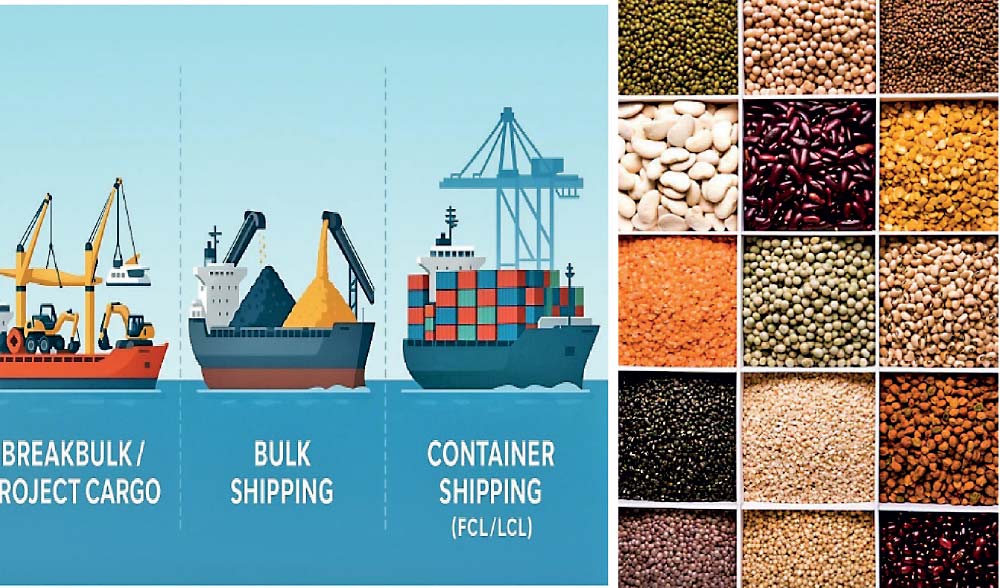
 For decades, Sri Lanka has rested on the laurels of its geography. Visualising global maritime maps, we point proudly to the thousands of ships passing just miles off our southern coast along the world’s busiest East-West sea lanes, declaring our strategic location an unmatched asset. Yet, the hard truth remains: our traditional transshipment model, acting essentially as a high-volume parking lot for other nations’ finished retail goods for transit, captures only a fraction of the global maritime value chain.
Compounding this, we have frequently deployed legal and political tools that deter investors and choke capital inflows, failing to diversify our economy or build necessary economies of scale. Consequently, Sri Lanka is earning an undesirable reputation as South Asia’s leading maritime protectionist nation. As global supply chains undergo rapid, unprecedented restructuring, the country stands at a critical crossroads. To secure long-term economic resilience, dismantle deeply entrenched domestic monopolies, and attract massive Foreign Direct Investment (FDI), Sri Lanka must urgently pivot toward becoming a dominant global logistics gateway and a premier commodity shipping hub.
The blueprint of value creation
Maritime experts frequently note that Trincomalee is the world’s second-best natural harbor after Sydney, Australia. Yet, the critical question remains: what have we actually done to leverage it, and what can be done moving forward? To understand this necessary transition, we must look beyond finished consumer goods like smartphones and electronics etc.
In 2014, we initiated commercial hub regulation via the Finance Act. Following intensive research, a few colleagues and I presented comprehensive position papers to the government, successfully bringing the law into reality. Yet, 12 years later, progress has stagnated. The institutions mandated to market and expand these free zones lack the strategic drive and structural awareness required to build dynamic logistics centers comparable to Singapore or Dubai. Today, Hambantota has established itself as a vehicle transit hub, offering a viable option for Roll-on/Roll-off (Ro/Ro) vessels; however, this remains a low-end, low-revenue vertical within the global shipping ecosystem.
In contrast, a true commodity hub deals strictly with the foundational blocks of the global economy:
A commodity hub operates much like a massive international airport. Instead of passengers changing flights, raw materials from all corners of the earth land in bulk to be safely stored, sorted, upgraded, certified, and redistributed in highly flexible, value-added quantities via containers and airfreight. Nations like Singapore and the UAE (Dubai) built immense sovereign wealth on this exact blueprint. By positioning themselves as trusted, neutral middlemen that store, process, and price the world’s raw materials in bulk, they transformed their economies across all logistics verticals.
Crucially, a commodity hub provides structural economic insulation. While consumer electronics and retail manufacturing markets fluctuate wildly with shifting global consumer demand, the world’s hunger for food, energy, and foundational metals remains permanent.
The operational gamechanger: Bulk-to-Container transloading
The operational backbone of this proposed transformation rests on an efficient logistical strategy known as Bulk-to-Container Transloading. This hybrid supply chain methodology optimises shipping economics by splitting transit into two distinct, highly profitable phases: moving raw materials cheaply in massive bulk over the long “first leg,” and feeding them into global container networks for highly flexible “last mile” distribution.
An operational hub in Sri Lanka would govern this transition across three sophisticated stages:
1.Inbound Bulk Arrival: Massive, unpackaged dry bulk carriers and liquid tankers deliver grains, sugar, minerals, or edible oils to deep-water Sri Lankan ports like Trincomalee.
2.The Transloading Phase: Utilising high-speed, shore-based equipment like pneumatic suction systems, cargo is efficiently transferred to port silos. Automated sampling protocols extract precise measurements to verify moisture, purity, and grade—establishing absolute quality control.
3.The Containerisation Process: The loose cargo is channeled directly into standardised 20-foot or 40-foot intermodal containers. This allows global buyers to purchase exact, flexible quantities rather than committing to an entire cargo ship’s worth of product.
To maximise this infrastructure, the Port of Trincomalee must be seamlessly connected to Colombo via a modernised rail network for rapid global transshipment links. This is precisely where the country requires advanced dry ports and large-scale international investments, executed without restrictive, protectionist conditions.
Eradicating bottlenecks for global suppliers
For global commodity exporters, shifting from traditional bulk shipping to a regional hub model in Sri Lanka generates massive structural cost savings:
Furthermore, Sri Lanka’s current competitive labor costs provide a distinct operational advantage over established, higher-cost commodity hubs across Asia.
A maritime gateway to emerging markets
This hub model perfectly synchronises major agricultural and mineral suppliers with the fast-growing, infrastructure-constrained buying markets of South Asia and East Africa. Global commodity superpowers like Australia (grains and minerals) and South American giants like Brazil and Argentina (soybeans, corn, and sugar) face massive shipping distances to Asia. By utilising Sri Lanka as a transloading and redistribution center, they can move historic volumes across the ocean via low-cost mega-bulk vessels, packaging and processing the goods directly at our doorstep. Similarly, Southeast Asian producers like Indonesia and Malaysia can pipe bulk liquid palm oil into specialised storage tanks in Sri Lanka to be distributed to regional markets strictly on demand.
On the demand side, regional bottlenecks present a massive opportunity. While India represents an enormous market, many of its southern and eastern ports cannot accommodate the world’s largest bulk carriers due to shallow draft limits. Sri Lanka can act as India’s premier deep-water gateway taking in massive bulk shipments, converting them to containers, and running high-frequency feeder shuttle loops into Indian ports. Bangladesh suffers from similar severe draft constraints and protracted vessel wait times. Exporters can bypass Dhaka’s port bottlenecks entirely by holding inventory safely in Sri Lankan silos and shipping retail-ready containers exactly when they are needed. Furthermore, as trade ties with East Africa strengthen, Sri Lanka serves as the perfect steppingstone to bundle diverse commodities heading westward across the Indian Ocean, while simultaneously offering vital supply chain security alternatives to the Middle East.
The way forward
If Sri Lanka is to transition into a high-income logistics economy, we must move beyond basic stevedoring. Establishing localised processing infrastructure and a formalised commodity derivatives exchange will not only secure our place in the global supply chain but will also create thousands of high-paying jobs in finance, maritime law, and advanced logistics for our youth.
The geography is undeniable. The shipping lanes are set. The blueprint has been definitively proven by the likes of Dubai and Singapore. What we require now is the collective political will, sweeping regulatory modernisation, a stop to protectionism and a bold strategic vision to unlock the Indian Ocean and claim our rightful place as a global maritime superpower.
(The author is an economist, and supply chain educator who serves as the Founder and CEO of Shippers’ Academy International. A dedicated policy advocate, actively championing international trade reforms, customs modernisation, and the liberalisation of maritime/logistics frameworks to transform Sri Lanka and South Asia into a highly competitive global hub for trade and logistics-www.shippersacademy.lk)




