Saturday Oct 03, 2026
Saturday Oct 03, 2026
Wednesday, 20 May 2026 04:41 - - {{hitsCtrl.values.hits}}
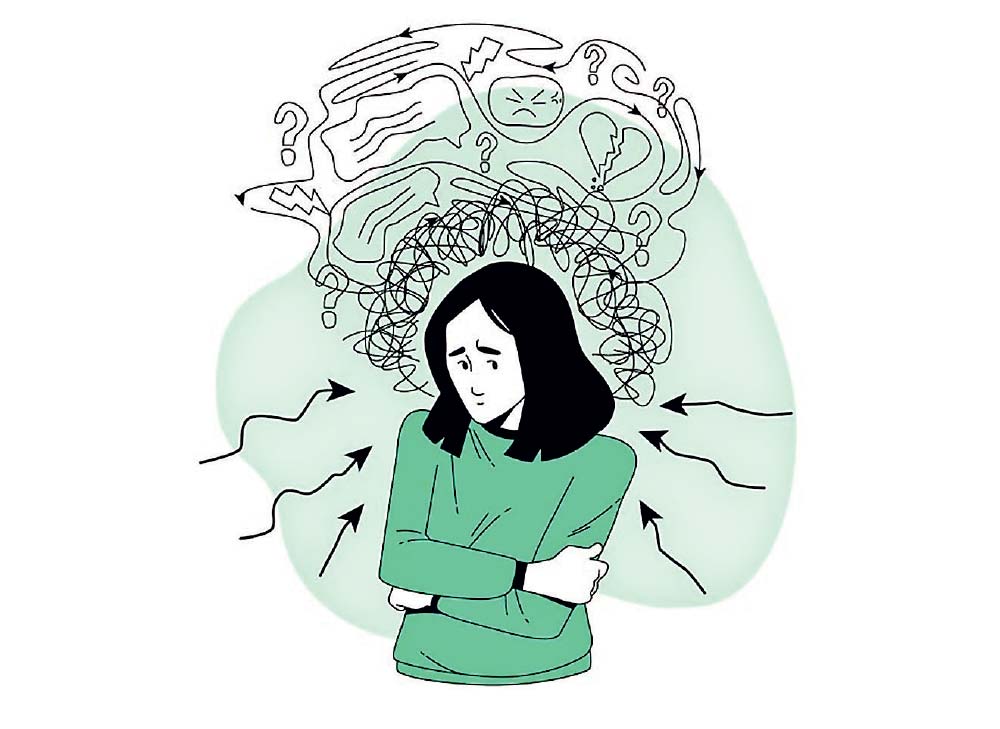
 Anxiety is not a weakness. It is an exhausted mind and body overwhelmed by prolonged emotional pressure. Mental suffering does not remain only in thoughts — it affects the entire body. That is why mental health deserves the same seriousness as physical health
 She felt a sudden tightness in her chest the moment she walked into the office. The noise of keyboards clicking, phones ringing, and conversations around her suddenly felt distant. Her breathing became shallow as she placed her bag on the desk. For weeks, the signs had been constant headaches, unexplained body pains, sleepless nights, racing thoughts, and a burning sensation in her stomach she assumed was simply gastric trouble. She blamed stress, fatigue, even acidity. But that morning, as dizziness washed over her and her heartbeat spiraled out of control, one frightening thought took over:
“What if something is seriously wrong with me?”
What she experienced was not a heart attack or a dangerous physical illness. It was anxiety building into a panic attack — something millions of people silently go through while appearing completely fine on the outside.
Body’s alarm system
Mental health experts describe anxiety as the body’s alarm system. Fear itself is not the enemy.
Thousands of years ago, during the hunting and cave-dwelling era, fear was essential for survival. If early humans encountered a wild animal or sensed danger in the environment, the brain immediately activated a survival response. The heart would race, breathing would become faster, muscles would tighten, and the body would prepare to either fight or escape. Fear keeps human beings alive.
But while the world evolved, the human nervous system did not evolve at the same speed.
Today, the threats are rarely physical predators. Instead, they are emotional and psychological — financial pressure, workplace stress, academic competition, family expectations, relationship struggles, loneliness, and uncertainty about the future. Yet the brain often reacts to these modern pressures as if survival is at risk.
So the body sounds the alarm anyway.
Younger generations
This is also why anxiety and panic attacks are becoming increasingly common among younger generations. Today’s youth are growing up in an environment of constant comparison, academic pressure, social media validation, and the expectation to always be successful and productive. Life rarely feels still. Notifications never stop. Opinions are constant. Everyone’s achievements are visible. Even rest can feel like guilt. Over time, this nonstop mental stimulation creates emotional overload, leaving many young people mentally exhausted and anxious.
Anxiety rarely begins suddenly. It often appears quietly through physical symptoms that are easy to ignore or misunderstand — headaches, gastric issues, body pain, fatigue, muscle tension, overthinking, and disturbed sleep.
There is a powerful truth many people do not realise:
What the mind suppresses, the body speaks.
Sometimes it speaks through panic attacks.
When fear, sadness, stress, or emotional exhaustion are pushed down for too long, the nervous system becomes overwhelmed. The body begins carrying what the mind cannot express. The chest tightens. Breathing becomes difficult. The stomach feels unsettled. Sleep disappears. Eventually, the pressure builds until it erupts in a panic attack.
A panic attack can feel extremely real and terrifying. The heart races uncontrollably. Hands shake. Dizziness sets in. Breathing feels restricted. Some experience numbness, nausea, or an intense fear of losing control or dying. Many people rush to hospitals believing they are experiencing a heart attack.
One of the hardest parts of anxiety is that it is invisible. A person can continue working, smiling, attending meetings, and fulfilling responsibilities while silently struggling inside.
Because emotional pain cannot be seen, it is often misunderstood.
People hear:
“Relax.”
“You’re overthinking.”
“Everyone is stressed.”
“Just stay positive.”
But anxiety is not weakness. It is an exhausted mind and body overwhelmed by prolonged emotional pressure.
Mental suffering does not remain only in thoughts — it affects the entire body. That is why mental health deserves the same seriousness as physical health.
Good news
The good news is that anxiety is treatable. Therapy can help identify and understand the roots of fear. In some cases, medication helps regulate overwhelming symptoms. Lifestyle changes such as proper sleep, exercise, mindfulness, supportive relationships, and honest conversations can gradually calm the nervous system.
Most importantly, people need to know this: panic attacks are survivable, anxiety does not define strength or weakness, and seeking help is a sign of courage, not failure.
In a world that constantly demands perfection, productivity, and emotional strength, many people are silently breaking inside.
Sometimes the bravest thing a person can say is:
“I’m struggling.”
And sometimes the most healing response is simply:
“You are not alone.”
(The author holds MSc Clinical, Health Psychology (UK), BSc Psychology (MY), Advanced Diploma Psychology, CBT, Diploma Child, Adolescent Psychology – UK. She could be reached via email at [email protected])



