Thursday Oct 29, 2026
Thursday Oct 29, 2026
Thursday, 29 October 2026 04:04 - - {{hitsCtrl.values.hits}}
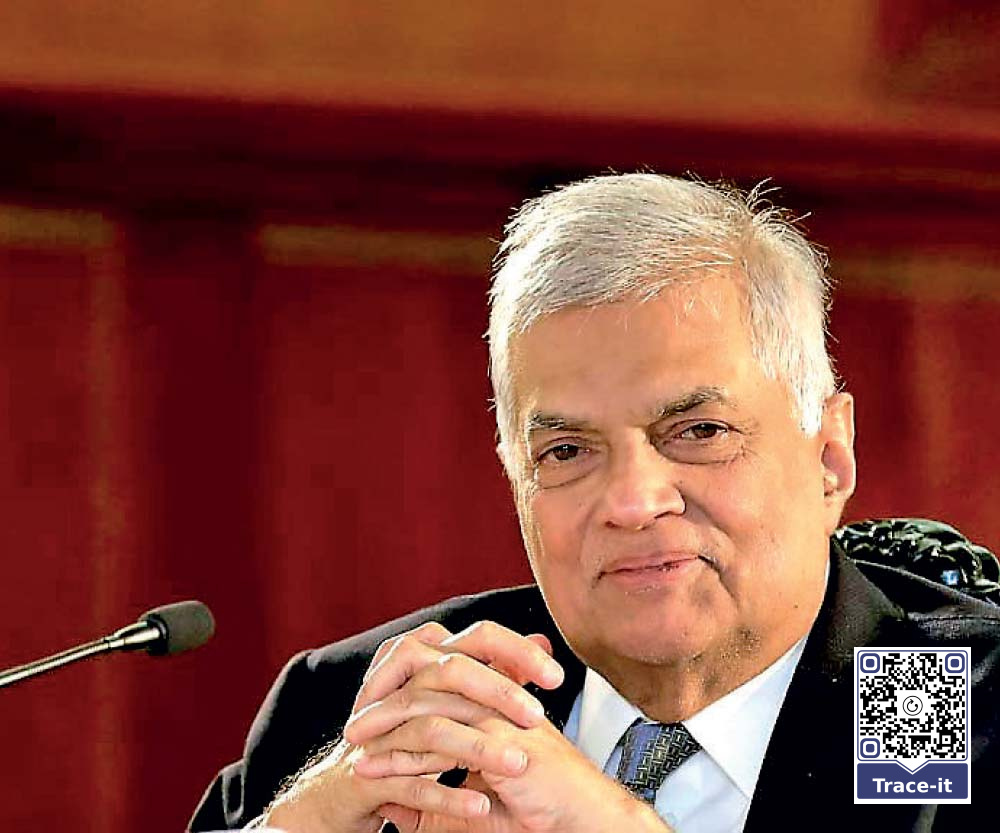
Should dock UNP as junior partner with SJB, under Sajith’s leadership
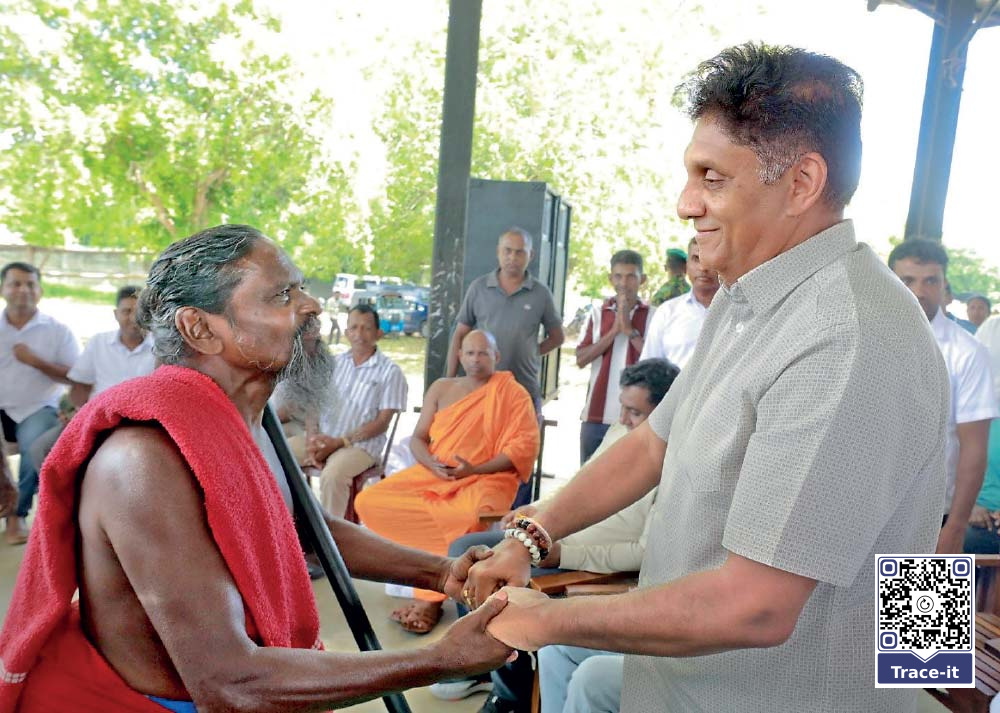
Sajith is the SJB ex-UNP personality with the broadest base, not limited to the urban areas
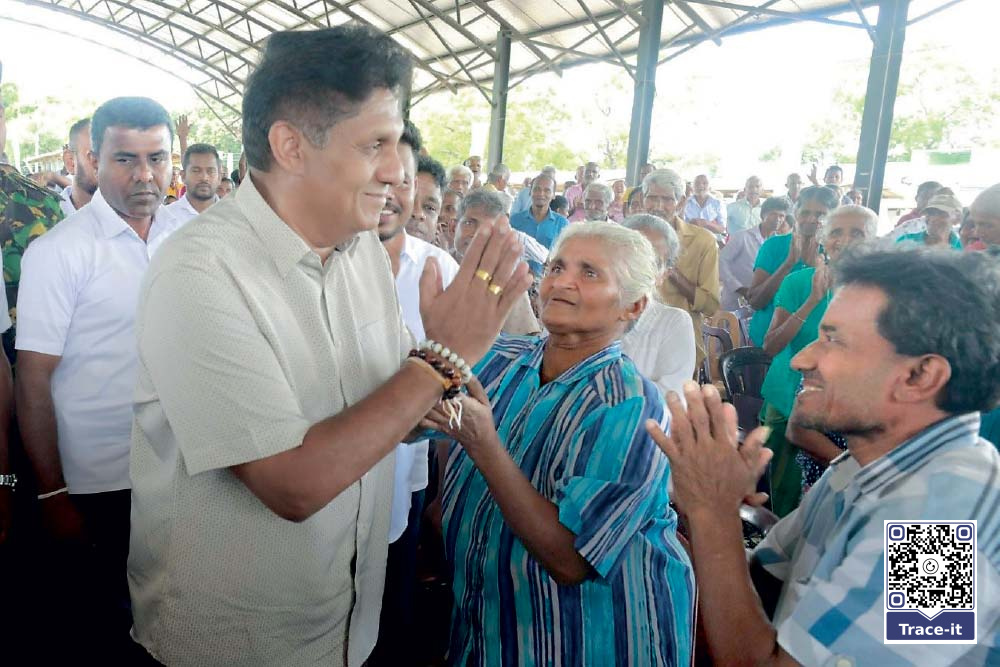
Neither SJB nor UNP has another figure with such popular rapport
 The serial defeat of the SJB is the ‘genetically transmitted’ continuation of the decades-long crisis of the UNP, its parent party from which it has chosen not to cut the ideological, doctrinal-programmatic and narrative umbilical cord. If AKD and the JVP-NPP are to be defeated, a repetition of 2024 (and 2019)—yet another defeat and failure—are simply unaffordable; cannot be risked
 If the AKD-JVP-NPP Government is to be defeated, it must be grasped that its victory was caused by the main Opposition party ‘snatching defeat from the jaws of victory’ from its competitor who had merely 3% of the vote and 3 seats.
This is the exact opposite of Ranasinghe Premadasa who ‘snatched victory from the jaws of defeat’ in 1988, beating the formidable Sirimavo Bandaranaike and prevailing over a lethal JVP boycott.
The serial defeat of the SJB is the ‘genetically transmitted’ continuation of the decades-long crisis of the UNP, its parent party from which it has chosen not to cut the ideological, doctrinal-programmatic and narrative umbilical cord.
If AKD and the JVP-NPP are to be defeated, a repetition of 2024 (and 2019)—yet another defeat and failure—are simply unaffordable; cannot be risked.
UNP’s Achilles Heel
The UNP was flawed from the outset. It was perceived as:
 The party of the privileged traditional classes—which is why the left did so well at the 1947 General Election and came within striking distance of forming a Government, self-sabotaging by its own sectarian refusal to form a coalition with independents such as SWRD Bandaranaike.
 Pro-Western and anti-national, unpatriotic.
 Minoritarian, out of touch with the sentiments of the majority community.
These three strategic weaknesses caused the UNP Government within the first decade of Independence to:
 Lose SWRD Bandaranaike (1951)
 Have PM Dudley Senanayake ejected by the Hartal (1953)
 Be swept out by the SWRD-led ‘Silent Revolution’ (1956).
These structural weaknesses of the post-Independence UNP were patched up sufficiently by the seven-party Senanayake coalition of 1965 to enable victory, but the superficiality of the change—there was no internal transformation of the UNP itself—caused the 1965 coalition Government to develop internal fissures on ethnic reforms (as did Yahapalanaya 2015-2019), and be defeated by a centre-left United Front that obtained the first ever two-thirds majority in Parliament in 1970.
Longest defeat
(A) Why was the Presidential election of 1988 the very last time that the voters elected the UNP to lead the country?
(B) Why did this long failure continue in the UNP-derivative successor party and ‘offspring’ the SJB, which still calls the UNP its ‘parent’?
(C) Why hasn’t a UNP or UNP-derivative/para-UNP leader been elected to lead the country by popular vote for 38 years and counting—over three-and-a-half decades?
(D) Why did it take this country less time to defeat Prabhakaran and the LTTE, than it is taking for the UNP and its derivative the SJB to be elected to lead the country?
(E) Why did the JVP recover from devastating military defeat (1989) and be popularly elected to the presidency in a shorter duration (2024) than the UNP and its SJB successor?
That’s because the UNP:
(i) Turned its back on the scientific formula that pulled it out of a deep rut in the 1970-1977 period, saved it from physical extinction in 1988-1989, and kept it on top until 1993 when the LTTE assassinated the formula’s author.
(ii) Never returned to the socioeconomic policy paradigm that kept the UNP winning elections during that period of exception.
Inexplicably, the successor SJB didn’t act rationally and return to the formula that saved the UNP twice, nor to the policy paradigm that ensured economic success and electoral popularity.
After the UNP Government sabotaged President Premadasa’s funeral in May 1993, turning away the huge crowds coming into Colombo by declaring a curfew on specious grounds, and then proceeded to dump Premadasa’s policy paradigm, discourse and team, it never won a Presidential election.
It took almost 15 years between the first (2001) and second (2015) time Ranil’s UNP held the Prime Ministership.
Even after Ranil Wickremesinghe was selected by Parliament as President and ran at the Presidential election in 2024 having ‘stabilised’ the economy, and enjoying the backing of SLFP-SLPP defectors (‘Gas Cylinder’), he won only 20% of the vote, coming third. Sajith beat him by 12%.
The UNP was subjected to four-prolonged exposures to politico-ideological ‘Kryptonite’.
1. After President Premadasa’s assassination, the UNP had the choice of a Ranil Wickremesinghe-Karu Jayasuriya-Sirisena Cooray troika, proceeding along a neo-Premadasaist path, consolidating the electoral base built by the various programs of President Premadasa. Instead, the anti-Premadasa breakaway faction, the DUNF which arose out of the impeachment conspiracy, was unconditionally re-inducted into the post-Premadasa UNP; the Premadasa image and programs were jettisoned.
2. Ranil affiliated the UNP with the International Democratic Union (IDU) of the global conservative, right-wing and centre-right. This ended the Premadasa populist-social democratic orientation in and of the UNP, losing the party’s appeal to and votes of the underprivileged, rendering it reliant on the minorities. Since the SJB inherited and embraced the IDU and International Republican Institute nexus, the ability to learn from and play the role of the US Democrats and UK Labour has been blocked.
3. Ranil Wickremesinghe signed the Liam Fox agreement committing the UNP to a negotiated solution with the Tigers. The claim that Ranil’s Ceasefire Agreement with Prabhakaran split the LTTE and helped win the war, paled into pathetic insignificance when compared to the military downside of Ranil’s appeasement and Mahinda Rajapaksa’s victorious, historically indelible war-time leadership.
4. The UNP (containing today’s SJB members) compounded its wartime blunders during the postwar Yahapalanaya years 2015-2019 by co-sponsoring with the West, a resolution at the UNHRC in Geneva (2015) supporting a hybrid court with international participation to judge allegations of war crimes and crimes against humanity. This confirmed the long-held public perception—with President Premadasa as outstanding exception—that the UNP was supinely pro-Western, unpatriotic.
Cumulatively these deviations resulted in the longest stretch of continuous electoral defeat of a politico-ideological ‘brand’ and project at Presidential elections, extending from 1994 to date.
Principles and formula for victory
In the crucible of the harsh authoritarianism and mass austerity of the SLFP-LSSP-CPSL Government wielding the island’s first-ever 2/3rds majority, the UNP in Opposition transformed itself from a party with a paltry 17 MPs in Parliament to one that won a 5/6ths majority within a single term in 1977.
That transformation which generated the 1977 victory ushered in the Open Economy. But the choice not to adhere to that formula in the post-1977 period (despite warnings from the formula’s author), contributed to the Southern social uprising of the 1980s that threatened the UNP’s very survival.
In this hour of the UNP’s high-intensity existential crisis (1988), the party turned to the principal author of the formula which had transformed the UNP from the twice-defeated party of 1956 and 1970 into the winning party of 1977. The return to that formula (of 1973-1977), enabled the UNP win the 1988 Presidential Election, the 1989 Parliamentary Election, and defeat Wijeweera’s JVP by November 1989. It also enabled the ruling UNP to win the Local Government election of 1991 despite the impact of the impeachment motion of that year, which had been rolled-back.
What then are (a) the formula, the principles, for turning UNP-SJB defeat into success and (b) the doctrine for socioeconomic success in Government, which the UNP abandoned and the SJB never adopted?
Here’s the testimony of Lalith Athulathmudali, no fan of the formula’s author, writing on the UNP’s history as Minister of Trade and Commerce in 1980 in the Lanka Guardian retrospective Special issue on the 1970s:
“… It [the UNP] had to change its image in theory and in practice. It had to stand on the side of the underprivileged; it had to provide answers to their problems.
The one-rupee membership campaign not only changed the money sources of the party but it also helped to democratise its internal politics.
A new policy and program proposed by a committee headed by R. Premadasa was adopted.
Family power and privileged group power were dethroned and the fact that these very monstrosities were being strengthened in the other parties only served to consolidate the UNP.
In the popular mind the UNP often thought of as being concerned with the few, came to be considered as the party of the masses. The UNP had built itself a new political base”.
(Lanka Guardian, Vol. 2 No 17, 1980 p13-14).
This describes the structural transformation of the party and its character. It had a backstory.
Frustrated by the Dudley Senanayake-led UNP’s slow pace and continued conventionality in Opposition, R. Premadasa had stepped away and formed the Puravesi Peramuna (Citizens’ Front), the island’s first populist-democratic party, embarking on a frontal offensive against the powerful Govt, holding packed public meetings at Hyde Park and other venues (1972-1973).
When Jayewardene assumed party leadership (1973), he invited Premadasa to return and re-make the UNP itself along the lines of his Citizens’ Front. Thus, the Puravesi Peramuna became the prototype of the restructured UNP which won the 5/6th majority landslide in 1977.
The second part of the winning formula pertained to project and paradigm, defined by Premadasa:
“…That in brief, is what JSP [Janasaviya Program] is all about…I see it as the basis for a new Political, Social and Economic Democracy.”
This is from President Premadasa’s interview given to Neville Jayaweera, re-submitted to him for amendments and approval, published as ‘Sri Lanka Towards a Multi-ethnic Democracy: Report of a Fact-Finding Mission’, International Peace Research Institute Oslo (PRIO),1990, Appendix 3, p 139. (https://www.prio.org/publications/14177)
“A New Political, Social and Economic Democracy” is the political ‘sutra’ that should have guided the UNP after Premadasa just as during his leadership, and should surely have been the basis on which the SJB was founded. But it wasn’t.
Structural stagnation
SWRD Bandaranaike and his SLFP, the core of which—including DA Rajapaksa—broke from DS Senanayake’s UNP (1951), never looked back, lost its first election (1952) but spectacularly won the second in five years since its founding (1956). However, the SJB left the UNP but always looked back in policy terms, never evolved its own distinctive ideology and identity. To this day it hasn’t or can’t state its distinctive identity and policies as demarcated from the UNP—even Ranil’s UNP.
Since the SJB preferred not to return to the Premadasa paradigm at its founding or in the years after, and regards itself as on a continuum with “our Government” by which it explicitly means the administrations of Wickremesinghe as PM (2001-4, 2015-2019), it has logically, inevitably shared the fate of the post-Premadasa UNP: defeat at Presidential elections.
Just as Ranil lost elections for six years, being elected PM only seven years after he became UNP leader, the SJB has lost parliamentary elections twice (and the crucial Colombo Municipal Council too) in the six years it has been in existence.
Unable to recognise that any serious political party is by definition primarily political, and to understand that James Carville’s watchword for Bill Clinton’s campaign, ‘It’s the economy, stupid!’, meant the attack on the Bush Sr. administration should focus on the economic hardships of the people, ‘Putting People First’ rather than statistics of economic performance, the SJB economic troika endorsed President Ranil Wickremesinghe’s stabilisation package which turned out to be one of the harshest austerity programs on the record globally. This compromising entanglement and role conflict cleared the space for the AKD-JVP-NPP victory in 2024.
In his last May day speech (1992) Premadasa said that had SWRD been alive he would have been on the UNP stage because under him (Premadasa) the UNP had changed to the extent that SWRD would have not felt compelled to leave as he did in 1951. Premadasa was always sensitive to the need to win over/win back the SLFP voter.
The SJB however, pitches to win with ‘generic’ UNP votes alone. The Dullas-GL group of 13 SLPP dissenters which had allied with the SJB, had been so marginalised and alienated by the ‘Blueprint’ neoliberals that they were unavailable to swing SLFP-SLPP votes for Sajith in 2024. AKD reaped those votes.
JR and Premadasa in Opposition were able to win massively in one term because they ‘put politics in command’ not liberal economic dogma, despite the extreme economic crisis. When Sirimavo pivoted rightwards, sacking Dr. NM Perera, the JR-Premadasa UNP escalated its attack on (foreign-investment seeking) Finance Minister Felix Dias Bandaranaike while moving No Confidence Motions with the LSSP against the Government. UNP stalwart Gamini Fonseka’s post-1977 film ‘Sagarayak Meda’ recreated the anti-Felix mood.
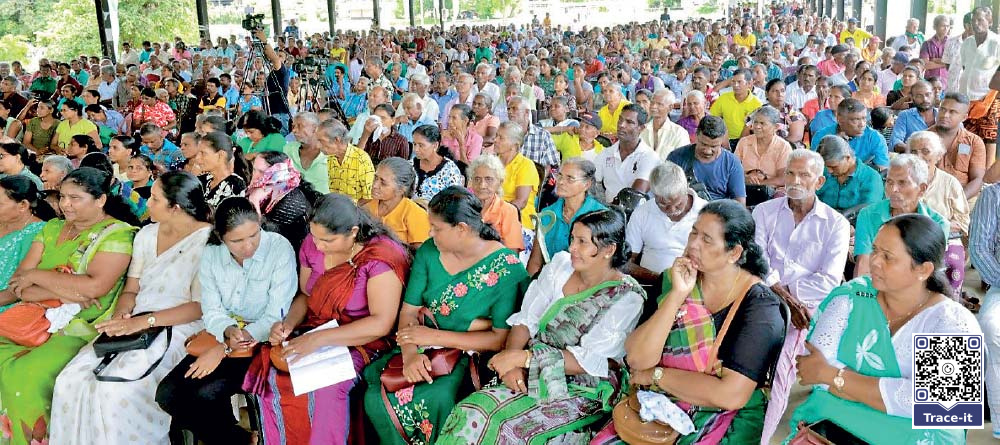
Sajith’s audience at Dehiattakandiya, Ampara district
 The UNP has run out of road. Its only viable move is to do what it did in 1988: hand the leadership over to Premadasa, this time Sajith, and become the SJB’s junior partner. The SJB has to be restructured and reoriented, politically rectified and renovated along the ‘new social, political and economic democracy’ agenda, if it is to secure elections on schedule in 2029, lead a campaign for a victorious NO vote at a referendum, and not trip itself up yet again electorally
1965 scenario
Countering Wimal Weerawansa’s scenario based on the Buddhist monks’ march, that Sri Lanka is headed for ‘another 1956’ in 2029, the pro-SJB e-paper Mawrata counterposes an alternative scenario: ‘another 1965’, illustrated with photographs of Sirimavo Bandaranaike and Dudley Senanayake. In 1965, the UNP headed a coalition which beat the SLFP-LSSP alliance.
There are two more conspicuous models of victory to inspire the SJB and UNP: Jayewardene 1977 and Premadasa 1988. Furthermore, the Dudley Senanayake UNP was the one that both JR Jayewardene and Ranasinghe Premadasa publicly dissented against, deviated from, and replaced, enabling their far more stunning victories.
Ironically, the Dudley Senanayake 1965 model which succeeded in winning the 1965 election, flies in the face of the SJB’s current practice. The hallmark of the UNP’s 1965 formula, crafted by strategist Esmond Wickremesinghe, brilliant former Trotskyist, was a broad coalition of ideologically diverse elements. By contrast, the hallmark of the SJB today is its unwillingness to form any ideologically pluralist equation.
Far from emulating the Dudley Senanayake 1965 model, the SJB seems unaware of the bedrock of the 7-party coalition: partnership with the father of the Marxist movement in Ceylon, Philip Gunawardena who was by no means a convert to UNP ideology when he was made Minister of Industries (in which role he excelled). SJB spokespersons and ideologues see any equation containing ideological disparity as counterproductive and dysfunctional. They should ponder why JR chose Ronnie de Mel of MEP-SLFP provenance and a brilliant left-leaning radical, as Finance Minister to pilot the Open Economy.
The hope generated by the in-gathering of all Opposition parties at the Opposition Leader’s office and chaired by him on 23 July, has been shattered. The ‘Marikkar Mode’ disintegrated at the last moment, the multi-party convergence that was building up under the SJB’s leadership for the Polduwa demonstration against 22A. The uncouth abruptness involved made even the UNP’s Navin Dissanayake pull out. It will probably take a minute before the full complement of Opposition leaders gathers under SJB chairmanship at No 30 again.
Conclusion
The SJB’s potential progress is blocked because the political culture of the post-Premadasa UNP, has come to inhere in its successor. Through transmission or osmosis, the UNP’s reflexes-habits-instincts, have caused sporadic, episodic action, lack of drive and direction, and absence of strategic initiative in the SJB.
The UNP has run out of road. Its only viable move is to do what it did in 1988: hand the leadership over to Premadasa, this time Sajith, and become the SJB’s junior partner.
The SJB has to be restructured and reoriented, politically rectified and renovated along the ‘new social, political and economic democracy’ agenda, if it is to secure elections on schedule in 2029, lead a campaign for a victorious NO vote at a referendum, and not trip itself up yet again electorally.
(https://dayanjayatilleka.webflow.io/)




