Thursday Oct 15, 2026
Thursday Oct 15, 2026
Thursday, 19 March 2026 03:13 - - {{hitsCtrl.values.hits}}
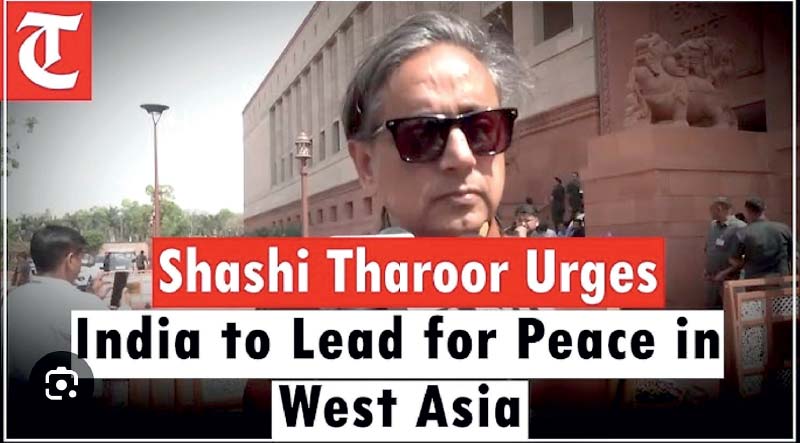
Time for India to rise as third force for peace in West Asia conflict, says Shashi Tharoor
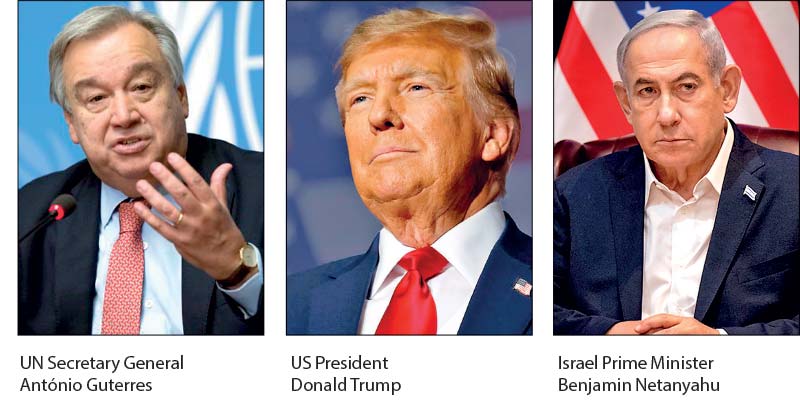
 The fact that figures such as Donald Trump and Benjamin Netanyahu cannot be compelled by international pressure to halt military escalation illustrates the limits of the current global order. When major powers—or their allies—pursue military options without restraint, institutions designed to mediate conflict are often reduced to issuing statements rather than shaping outcomes
For nations like Sri Lanka—still struggling with inflation, heavy debt, and slow growth, and heavily dependent on remittances and tourism—the effects of another major, protracted geopolitical crisis could be severe
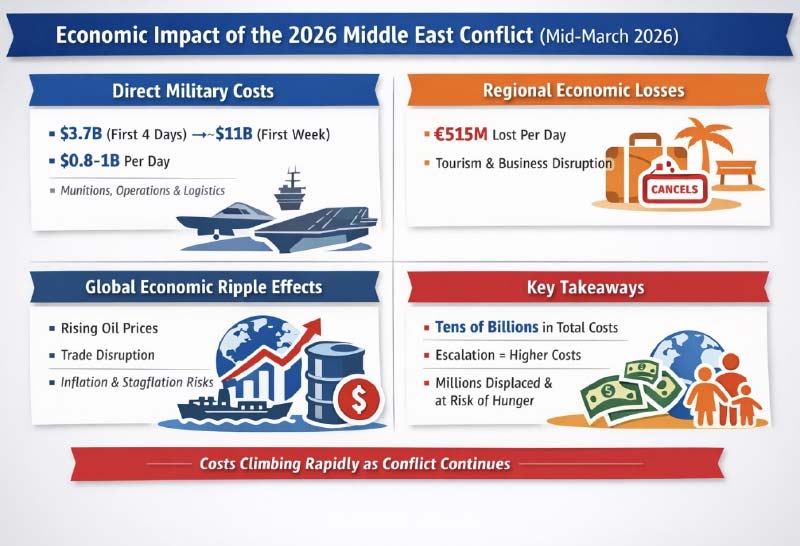
 What was anticipated by many to be a limited and swift engagement has now stretched into its 18th day. Beyond the devastating human toll, the conflict is exacting a massive economic price—costing the global economy billions of dollars (see chart). The international community’s inability—particularly that of the United Nations—to broker a ceasefire in this escalating Middle East crisis represents a profound global failure. In addition to the immediate suffering, the economic fallout threatens to push millions more people below the poverty line. At a moment when responsible leadership and urgent diplomacy are desperately needed, the very system designed to prevent such crises appears increasingly paralysed.
United Nations
The United Nations was created in the aftermath of the Second World War precisely to prevent conflicts from spiralling out of control and to provide a forum where all nations could resolve disputes through dialogue rather than confrontation . Yet today, as tensions escalate and the risk of a wider regional confrontation grows, the organisation appears unable to fulfill that founding mission. At the centre of the crisis are powerful leaders whose decisions carry consequences far beyond their borders. The fact that figures such as Donald Trump and Benjamin Netanyahu cannot be compelled by international pressure to halt military escalation illustrates the limits of the current global order. When major powers—or their allies—pursue military options without restraint, institutions designed to mediate conflict are often reduced to issuing statements rather than shaping outcomes.
Astute businessmen
President Trump is widely regarded as an astute businessman, and many hope that his instincts for protecting economic stability will ultimately encourage a resolution that avoids severe disruption to global commerce. The global economy is already fragile in many regions, and prolonged conflict in one of the world’s most strategically sensitive areas could have serious consequences. Equally concerning is the absence of a coordinated global diplomatic effort to persuade Tehran to step back from confrontation and reassess the costs of continued escalation. Without sustained diplomatic engagement, the risk of the conflict widening remains very real.
Conflicts
History repeatedly demonstrates that regional conflicts rarely remain contained when geopolitical rivalries intersect with deep-rooted political tensions. The Middle East has long been a theatre where global power struggles play out—and the consequences are typically borne not by leaders, but by ordinary citizens. With every additional missile strike, retaliatory attack, or diplomatic breakdown, the risk of a chain reaction that could destabilise the broader international economy grows. The tragedy of the current situation lies not only in the destruction itself, but also in the apparent inability of global institutions to intervene effectively to halt the mayhem. The United Nations Security Council—often divided by competing national interests and constrained by veto powers—struggles to produce unified action precisely when it is most urgently needed. What was designed to ensure consensus among major powers has too often become an obstacle to decisive peacemaking. Meanwhile, the human cost continues to rise. Civilians inevitably bear the brunt of prolonged conflict, while the economic consequences ripple far beyond the region. Rising energy prices, disrupted trade routes, and growing geopolitical uncertainty place additional burdens on already fragile economies. For nations like Sri Lanka—still struggling with inflation, heavy debt, and slow growth, and heavily dependent on remittances and tourism—the effects of another major, protracted geopolitical crisis could be severe. Higher oil prices alone have the potential to slow global growth, increase fiscal pressures, and deepen economic hardship across much of the developing world. The world cannot afford a prolonged conflict that risks drawing in additional States and deepening divisions among global powers. Responsible leadership requires recognising that escalation rarely produces lasting solutions. Diplomacy, compromise, and restraint remain the only viable options. For this reason, renewed diplomatic engagement is urgently needed. Major powers—including the United States, China, Russia, and leading nations of the European Union—must recognise their shared responsibility in preventing a wider conflict. Quiet diplomacy, back-channel negotiations, and coordinated international pressure remain essential tools that must be deployed immediately—before it is too late.
Conclusion
Ultimately, the failure to secure a ceasefire is more than a diplomatic setback; it is a stark warning about the fragility of the international order itself. While many argue that the UN has lost its relevance and its ability to enforce peace, Indian MP Shashi Tharoor offers a more pragmatic perspective. When asked whether the UN had become irrelevant, he emphasised that the UN still matters as a platform for diplomacy, dialogue, and multilateral engagement—even if its power to compel compliance is limited. The ultimate tragedy is that the world’s most vulnerable populations—civilians, the poor, and those least responsible for the conflict—bear the heaviest burden. Peace remains both possible and essential, but only if global leadership chooses diplomacy over confrontation before the crisis spirals further out of control and engulfs other regions.
At this critical moment, the world can only hope that reason prevails before the conflict escalates into a far more destructive war, potentially involving catastrophic means. Recent efforts by regional partners to initiate ceasefire discussions with Iran were rejected, underscoring the immense challenges facing diplomatic de-escalation. In this context, the United Nations must urgently raise its game—though how exactly it should set about doing so remains an open question.
The world cannot afford a prolonged conflict that risks drawing in additional States and deepening divisions among global powers. Responsible leadership requires recognising that escalation rarely produces lasting solutions. Diplomacy, compromise, and restraint remain the only viable options. For this reason, renewed diplomatic engagement is urgently needed. Major powers—including the United States, China, Russia, and leading nations of the European Union—must recognise their shared responsibility in preventing a wider conflict
The failure to secure a ceasefire is more than a diplomatic setback; it is a stark warning about the fragility of the international order itself. The ultimate tragedy is that the world’s most vulnerable populations—civilians, the poor, and those least responsible for the conflict—bear the heaviest burden. Peace remains both possible and essential, but only if global leadership chooses diplomacy over confrontation before the crisis spirals further out of control and engulfs other regions
References
https://youtu.be/_A4SRnYCPbU?si =03ХqROSsiwy7auuR
https://apnews.com/article/35d15d7cbcfa65fd7d180c28d38e7f31?utm_source=chatgpt.com
https://youtu.be/Z0B7IJmYP20?si =oqSi86DU1LBnCXJ8
https://youtu.be/cMBtTplEsAs?si =utx5Ryhoug5djMEe
https://theprint.in/politics/time-for-india-to-rise-as-third-force-for-peace-in-west-asia-conflict-says-shashi-tharoor/2881337/?amp




