Monday Sep 14, 2026
Monday Sep 14, 2026
Friday, 6 February 2026 02:34 - - {{hitsCtrl.values.hits}}
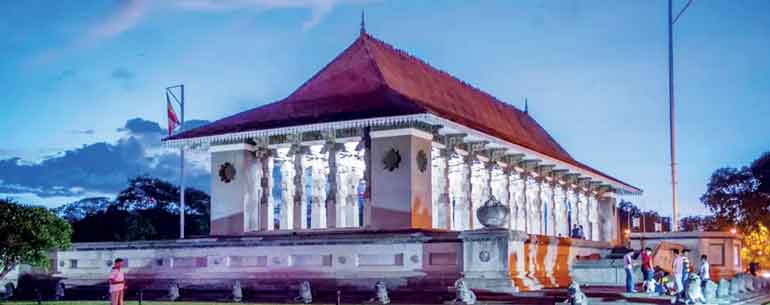
 On August 15, 1947, Ceylon emerged from British colonial rule as an independent nation brimming with promise. We inherited a functioning parliamentary democracy, relatively high literacy rates for the region, and economic indicators that placed us ahead of many Asian neighbors. Yet today, 78 years later, as we commemorate another Independence Day, we must confront an uncomfortable truth: we have squandered our inheritance and betrayed the aspirations of those who fought for our freedom.
The numbers tell a damning story. Since 1965, we have sought International Monetary Fund bailouts 17 times—an average of once every 3.5 years. Seven of these programs were terminated before completion, a pattern of failure that speaks to our chronic inability to maintain fiscal discipline and implement necessary reforms. This is not mere economic mismanagement; it is a systematic abdication of responsibility to future generations.
From promise to perpetual crisis
The comparative snapshot from 1947–48 reveals how far we have fallen. While India at independence faced a divided and bleeding nation with GDP less than 4% of current levels, 32-year life expectancy, and 12% literacy, Ceylon stood on firmer ground. Our per capita GDP was higher than our neighbors’, our social indicators were improving, and we had inherited better institutional foundations. Japan, devastated by war, had its GDP collapsed but maintained high literacy and was positioned for rapid recovery.
Today, the tables have turned dramatically. India, that ‘divided, bleeding, and broken country’ of 1947, now sets terms with the United States, trades confidently with Moscow, competes with China, builds partnerships with Japan, and yes—still exports vegetables and fruits—but also software, pharmaceuticals, and automobiles to the world. When the US economy slows and the EU struggles with recession, India runs with 7.8% GDP growth. It is on course to become the world’s third-largest economy by 2027, ahead of Germany and Japan. Perhaps most telling: India’s per capita income has surged from INR 250 at independence to INR 250,000 today—a thousand-fold increase that reflects genuine transformation, not merely inflation. Today, the world is in search of India—actively negotiating and signing major trade deals with the UK, US, EU, New Zealand, and Oman. They are a partner that others seek out, not a supplicant begging for assistance.
This transformation did not come easily. In 1991, India faced a crisis remarkably similar to our 2022 catastrophe—foreign exchange reserves depleted to the point where they could barely cover two weeks of imports. The government was forced to physically airlift 47 tons of gold reserves to the Bank of England and pledge them as collateral just to secure emergency loans for importing basic necessities. It was a moment of profound national humiliation. But here is the critical difference: India’s leaders chose that moment to wake up. They implemented fundamental economic reforms, liberalised their economy, dismantled the License Raj that had strangled entrepreneurship, and committed to fiscal discipline. Three decades later, they are a rising superpower. We, meanwhile, had our gold-pledging moment in 2022, received our 17th IMF bailout, and show little evidence of the fundamental transformation required to prevent an 18th.Meanwhile, Sri Lanka has lurched from crisis to crisis, each more severe than the last. Our debt-to-GDP ratio stood at 96.1% in 2024, down from a peak of 120.9% in 2022 but still dangerously elevated. For context, experts suggest that developing economies should not exceed a 40% debt-to-GDP ratio on a sustained basis; anything above 77% makes countries vulnerable to default. We have consistently exceeded these thresholds since 1976, when our debt surpassed 60% of GDP and never returned to sustainable levels.
The wounds we inflicted upon ourselves
Our economic failures are inseparable from our political and social catastrophes. The communal riots of 1958, 1977, 1981, and 1983 were not mere disturbances—they were self-inflicted wounds that destroyed social cohesion, displaced hundreds of thousands, and set in motion a civil war that would consume the nation for 26 years. These were not the actions of a mature democracy but of a society that had lost its moral compass.
Political violence became our defining characteristic. We witnessed the assassination of a sitting Prime Minister in 1959. We saw militant uprisings in 1971, 1987-89, and the long nightmare of separatist terrorism from 1983 to 2009. In 2022, we experienced the Aragalaya—a people’s uprising born not of revolutionary fervor but of utter desperation when citizens could not afford food, fuel, or medicine.
Each cycle of violence destroyed not just lives but the institutional foundations necessary for development. Capital fled. Talent emigrated. Investment dried up. The social trust essential for economic cooperation evaporated. And through it all, successive governments proved incapable of learning from their mistakes, preferring instead to exploit ethnic, religious, and regional divisions for short-term political gain.
A nation hemorrhaging its future
Perhaps the most telling indicator of our failure is not foreign employment—which remains a vital source of remittances and economic lifeline for the nation—but rather the unprecedented skills drain we are experiencing. While over 311,000 Sri Lankans left for foreign employment in 2022 (contributing significantly to our foreign exchange earnings), a separate and more alarming trend emerged in 2023-24: an estimated 600,000 citizens migrated, not for temporary work contracts, but in search of permanent opportunities abroad. These are not remittance workers; they represent doctors we trained at public expense (Rs. 4.18 million per doctor), engineers, dentists (Rs. 8.62 million per dental surgeon), specialists (Rs. 11-13 million), teachers, nurses, IT professionals, and skilled workers who have concluded that Sri Lanka offers them no future worth staying for.
The brain drain index for Sri Lanka reached 7.6 in 2023, far above the world average of 5.17. Professional-level departures increased by 4.6% in 2022, while low-skilled migration surged by 33.92%. Research suggests these numbers will continue to double in the coming years. We are witnessing the wholesale abandonment of the nation by those who should be building its future.
The government’s response? A circular permitting five years of no-pay leave for public servants seeking foreign employment, with no prejudice to seniority or pensions. In effect, we are subsidising our own decline, training professionals at public expense and then facilitating their departure while guaranteeing their return to claim retirement benefits funded by those too poor to leave.
The architecture of failure
Our successive governments have exhibited a remarkable consistency in their incompetence and venality. Campaign after campaign promised transformation; each delivered rupture instead. The pattern is depressingly familiar: populist promises, unsustainable subsidies, massive infrastructure projects with limited economic returns financed by expensive commercial loans, rampant corruption, and eventual fiscal collapse requiring IMF intervention.
Consider our track record with the IMF. Of 16 programs prior to the current bailout, we successfully completed only nine. The others were terminated early, typically because governments lacked the political will to implement reforms that might cost votes. The current Extended Fund Facility, our 17th IMF program, was necessitated by our first-ever sovereign default in 2022—a humiliation that sent poverty rates soaring from 13.1% in 2021 to over 25% by 2022, and which still persists at 24.5% today despite modest economic recovery.
The legal system and police, which should serve as bulwarks against authoritarianism, have too often been weaponised to intimidate critics, silence journalists, and harass political opponents. The rule of law—essential for investor confidence and economic development—has been subordinated to political convenience. Is it any wonder that capital prefers safer havens?
Selling our sovereignty
In our desperation for foreign exchange and investment, we have compromised our sovereignty repeatedly. The Port of Hambantota, built with Chinese loans at exorbitant interest rates for a project with dubious economic justification, was eventually handed over on a 99-year lease when we could not service the debt. This was not development; it was asset stripping disguised as diplomacy.
Our pawning portfolio—assets held as collateral against loans—exceeds Rs. 1.3 trillion. We play great powers against each other, accepting aid and investment from the US, India, and China while maintaining genuine strategic autonomy with none of them. This is not non-alignment; it is transactional opportunism that leaves us beholden to multiple masters and trusted by none.
The pillars are crumbling
Agriculture, once the backbone of our economy, is deteriorating. The disastrous overnight shift to organic farming in 2021—implemented without planning or preparation—destroyed livelihoods and contributed to food shortages that helped trigger the 2022 crisis. We have transformed from a rice-exporting nation in the 1960s to one dependent on imports for basic food security.
Education, long considered one of our few success stories with high literacy rates, is failing the current generation. Universities are understaffed due to migration, underfunded due to fiscal constraints, and producing graduates unemployable in the modern economy. Our education system prepares young people for a world that no longer exists rather than equipping them for the digital economy that India has embraced and we have largely missed.
Healthcare, once a point of pride with universal access and good outcomes relative to our income level, is collapsing. Specialists are concentrated in urban areas or have emigrated entirely. Essential medicines are often unavailable. The system runs on the dedication of overworked staff rather than adequate resources. Maternal and child health indicators, while still better than some neighbors, have stagnated or worsened.
The symptoms of decay
The social fabric is fraying. Drug abuse is rising, particularly among youth who see no future worth staying sober for. Prostitution, often driven by economic desperation, is increasing. Crime indices have worsened, with property crimes surging as poverty deepens and violent crimes reflecting a general breakdown in social cohesion and respect for law.
These are not isolated pathologies but symptoms of a society in distress. When legitimate opportunities disappear, illegitimate ones proliferate. When institutions fail to protect and provide, citizens turn to informal and often destructive alternatives. When the social contract is repeatedly violated by those in power, cynicism and anomie replace civic virtue and solidarity.
The deficit between what we promised ourselves in 1948 and what we have delivered is enormous. Closing it will require more than economic reforms or political change. It will require a fundamental transformation in how we understand citizenship, leadership, and our obligations to future generations. The choice is ours. History will judge us not by the independence we inherited, but by what we did with it
A moment for honest reckoning
As we mark 78 years of independence, we must ask ourselves uncomfortable questions. What does sovereignty mean when we have mortgaged our future to foreign creditors and great powers? What does democracy signify when each government simply enriches itself and its cronies before being replaced by another equally corrupt regime? What is the value of literacy when our educated youth must flee abroad for opportunity?
The current government, elected with a mandate for change, faces the same IMF conditionalities and structural constraints as its predecessors. The completion of debt restructuring with 98% bondholder participation is a positive step, but debt sustainability requires more than financial engineering—it demands fundamental economic transformation we have proven unwilling or unable to undertake.
More troubling still is the evidence that we are already reverting to the very policies that destroyed us. Money printing—the direct cause of the 2022 crisis—appears to remain the Sri Lankan government’s primary economic remedy. From 2020 to 2022, we printed approximately Rs. 1.6-2.0 trillion, with Rs. 1.2 trillion printed in 2021 alone, the highest on record. This reckless monetary expansion caused reserve money to grow 49 percent, broad money 52 percent, and food prices to surge 51 percent in just two years. The rupee collapsed from 182 to 360 to the dollar. Reports now suggest substantial money printing resumed in 2024, despite the new Central Bank Act supposedly prohibiting such actions. Money printing seems to be the only economic recovery remedy successive Sri Lankan governments can conceive—a narcotic we cannot quit despite nearly fatal overdoses.
We cannot simply grow our way out of this crisis. GDP growth of 5% in 2024 is encouraging, but it follows a catastrophic 9.5% contraction between 2021-2023. We are recovering from our own self-inflicted wounds, not building something new. Without structural reforms—genuinely reforming state-owned enterprises, broadening the tax base beyond regressive VAT increases, investing in productive sectors rather than white elephant projects, rebuilding institutions captured by political interests, and restoring the rule of law—we will simply be setting up the next crisis.
The choice before us
Independence Day should be more than patriotic rhetoric and flag waving. It should be a day of honest self-examination. We must acknowledge that we have failed—failed to build a just society, failed to manage our economy competently, failed to maintain social harmony, failed to provide our children with a future worth staying for.
But acknowledgment of failure is only the first step. We must then commit to genuine transformation, not the cosmetic variety promised in every election. This requires:
Demanding accountability from our leaders, not just voting them out every five years but insisting on transparency, prosecuting corruption, and building institutions that constrain executive excess.
Rejecting the ethnic and religious demagoguery that has poisoned our politics for decades. Our diversity should be a strength, not a weapon for political mobilisation.
Insisting on fiscal responsibility even when it means accepting painful adjustments. Populism is a sugar rush that leads inevitably to the bitter crash we experienced in 2022.
Investing in our people—particularly in education and healthcare—not as welfare expenditure but as productive investment in human capital. India’s digital economy explosion was built on education investments decades ago.
Creating conditions that make our talented citizens want to stay—not through prohibitions but through opportunity, rule of law, and a society that values merit over connections.
Seventy-eight years ago, we were handed the gift of independence. We have spent those decades squandering it. The question on this Independence Day is whether we have the wisdom and courage to reclaim it—not from foreign powers, but from ourselves, from our own worst instincts, from the corruption and incompetence that have become our defining characteristics.
True independence—economic sovereignty, institutional integrity, social cohesion, and a future our children would choose to inherit—remains an unfinished promise. The deficit between what we promised ourselves in 1948 and what we have delivered is enormous. Closing it will require more than economic reforms or political change. It will require a fundamental transformation in how we understand citizenship, leadership, and our obligations to future generations.
The choice is ours. We can continue down the familiar path of crisis, bailout, temporary recovery, and renewed crisis. Or we can finally undertake the difficult, unglamorous work of building a functional state, a productive economy, and a just society. History will judge us not by the independence we inherited, but by what we did with it.
(The author MBA Sri J; FIB; is a former senior banker, educationist, transformation strategist, and certified coach with extensive experience in both public and private sector leadership. He has served on the boards of state and private institutions and was formerly Chief Operating Officer of a Public-Private Partnership unit, bringing a unique perspective on governance, institutional reform, and economic development in Sri Lanka)




