Monday Oct 12, 2026
Monday Oct 12, 2026
Thursday, 2 July 2026 00:25 - - {{hitsCtrl.values.hits}}
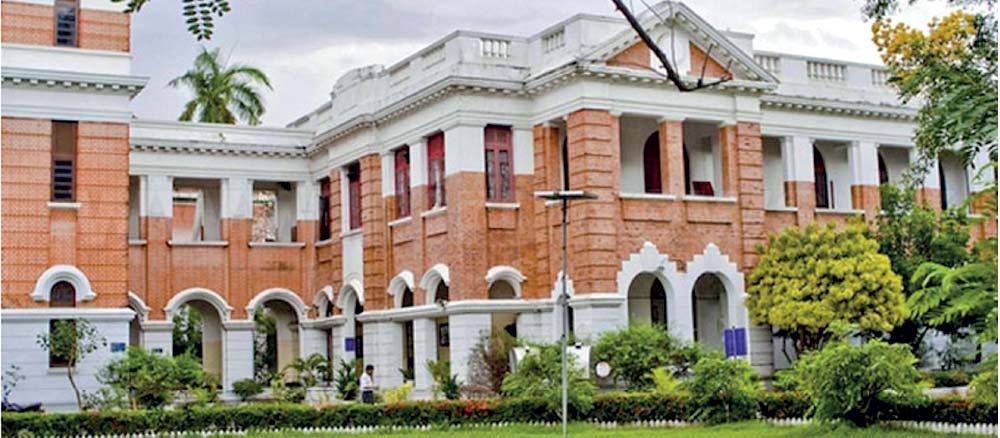
 The stakes: A national responsibility
The Royal College Hostel is not merely a boarding facility—it is a national institution. Since its reopening in 1971, it has been the "home away from home" for over 300 of Sri Lanka's brightest rural children, all of whom are Grade 5 scholarship winners from the remotest parts of the island. These children arrive at the tender age of 11, leaving behind their families and familiar surroundings to enter what is, for many, an overwhelming and regimented environment.
The hostel's history has been one of closures and reopenings—first established around 1868, shut down in 1905 due to illness, reopened in 1939, closed again in 1967, and finally reopened in 1971. Each reopening has carried the same solemn responsibility: to transform these rural scholarship winners into national leaders and global professionals. This is not an orphanage where mere shelter and meals suffice. It is a crucible for the nation's future talent.
The decision of who becomes the next Warden is therefore a decision of national importance.
The case against the incumbent
The blog posts cited in the question paint a deeply troubling picture of Major Gunewardene's tenure as Warden. While these are allegations from concerned parents and Old Royalists, they are serious enough to warrant close scrutiny.
Extortionate fees:
One father describes how the Warden demanded Rs. 13,000 from children—many from impoverished rural families already struggling to pay the monthly hostel fee of Rs. 7,500—for building cleaning. The writer, himself from a rural background, expresses outrage: "I see this as bullying, thuggish, despicable work. Can any person with a heart and conscience do this?"
Lack of empathy:
The same father describes visiting the homes of these children—some accessible only after a half-hour climb from where the car stops, others in areas where wild elephants roam after 5 PM. His point is devastating: these children have overcome extraordinary hardship to be at Royal College. "These people are not here to be pushed against a wall and cornered," he writes—they deserve support, not exploitation.
Disconnect from Royal College's values:
The former Warden has been accused of understanding nothing about Royal College. For an institution as steeped in tradition and pride as Royal College, this is a profound failure.
The broader blog describes an "organised resistance of Old Royalists and parents fighting to reclaim our school from the corruption and favoritism that are destroying its standards and legacy". This is not the language of casual discontent—it is the language of a community in crisis.
The problem with the current appointment process
The question raises a critical point: "If there are no Teachers capable of managing a Hostel of 350 plus students, who are passionately committed to mold each one not only as a useful citizen but a dependable leader, isn't it time to recruit a suitable candidate from outside?"
The current system—where the Warden must be a teacher at the school—has produced mixed results. Historically, the hostel has had remarkable Wardens: B.C. Anghie, who renovated the hostel; C.E. Bellath, who served from 1952 to 1966 and is "remembered with great gratitude for uplifting the standards of the hostel"; Ernest Amarasekara, first Warden of the current Hostel and H. Nanayakkara who followed him. More recently, Janaka Jayasinghe has served as Warden.
However, the question suggests that in recent years, the quality of Wardens has declined, with "unquestionable loyalty to the Principal" becoming the primary qualification. This is a familiar pattern in institutional decay: when loyalty replaces competence, the institution suffers.
The administrative structure already exists to support a Warden: the Principal, Senior Deputy Principal, Warden and Sub-Warden work together with the Board of Prefects (removed soon after Gunewardene assumed duties, throwing the Hostel into chaos and an administrative nightmare). A Hostel Management and Advisory Board exists, along with ROCOHA (Royal College Old Hostellers Association) who are actively involved in hostel development projects. These bodies could provide guidance and support to an external appointee.
What the next Warden must be
Based on the historical record and the current crisis, the next Warden must embody several qualities:
A Father Figure, not a taskmaster:
The question rightly notes that "Rules must be imposed with kindness and compassion." The Wardens of earlier, kinder times were "mature, sensitive and responsible" figures who "understood each one of us better than ourselves" and "knew how each one needed to be molded." This is the gold standard.
Empathy for rural children:
The next Warden must understand—truly understand—where these children come from. The father who wrote the blog post made this point painfully clear: these are children from remote villages, from families who have sacrificed everything for their education. They need to be nurtured, not exploited.
Administrative competence:
Managing over 300 children in a residential setting requires serious organisational skills—budgeting, staff management, discipline, health and safety, and the ability to work with the Hostel Management and Advisory Board and ROCOHA.
Commitment to the Royal College tradition:
The next Warden must understand and respect what Royal College represents. The blog speaks of "the pioneers who built this school and this name" and laments how "the honorable Royal name" is being degraded. The Warden is the guardian of that legacy.
Independence from factional politics:
The next Warden must be someone whose primary loyalty is to the children and the institution, not to any individual or faction.
A path forward
The Secretary of the Ministry of Education has the authority to approve such appointments. If the current system—which restricts the Warden position to teachers at the school—cannot produce a suitable candidate, then the Ministry should exercise its authority to appoint an external candidate on an experimental basis.
This is not unprecedented. The hostel has been closed and reopened multiple times in its history, each time requiring fresh thinking. The experiment would be supported by the existing infrastructure: the Hostel Advisory Board and ROCOHA could work closely with the new Warden, providing guidance and institutional memory.
The selection criteria should be transparent and merit-based, focusing on:
Conclusion
The Royal College Hostel is more than a building—it is the vessel for the dreams of over 300 rural children and their families. The children who enter its gates at age 11 are not just students; they are the future leaders of Sri Lanka. They deserve a Warden who understands this sacred trust.
Major Gunewardene's reported conduct—demanding extra fees from struggling families, showing no understanding of where these children come from—suggests that change is urgently needed. The question is not merely who should be the next Warden, but what kind of person should be entrusted with this responsibility.
If no teacher at Royal College can meet this standard, then the Ministry of Education must look beyond the school's walls. The stakes are too high for anything less. As the father wrote: "Are there no Royalists outside who can break in, clean this up, and take it forward along the Royal path?"
The answer must be yes. And the time to act is now. FLOREAT!!!!!!!!




