Monday Oct 12, 2026
Monday Oct 12, 2026
Monday, 25 May 2026 03:25 - - {{hitsCtrl.values.hits}}
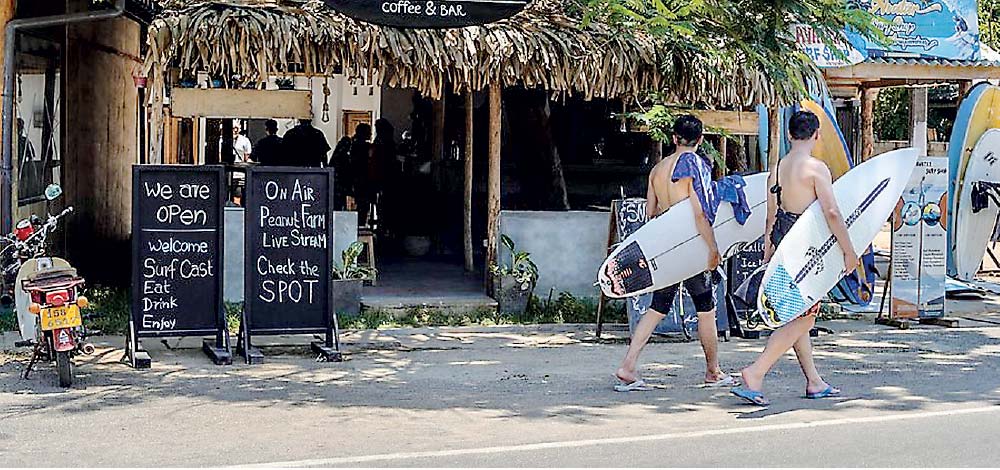
 Dark tourism ecosystems are generally facilitated by informal and often illegal operators promoting narcotics, underground parties, sex tourism, and uncontrolled nightlife experiences. In many cases, these businesses operate through loopholes in existing laws. The real operators are often foreign entities using locals as fronts while marketing aggressively within nationality-based WhatsApp bubbles and closed social media circles.
This has been happening quietly for almost a decade.
The difference today is that the difficult business environment and economic pressures are exposing what was previously ignored. The most dangerous aspect is that these operators contribute very little to the formal economy
 The recent discussions surrounding “dark tourism” in Sri Lanka raise an uncomfortable but necessary question: are we slowly losing control of the tourism industry we worked so hard to build?
To answer this honestly, we must first understand how Sri Lankan tourism evolved.
The evolution of the tourism industry in Sri Lanka
Over the last four decades, Sri Lanka’s tourism industry has largely followed the same trajectory as other Asian leisure destinations such as Goa, Bali, Phuket, Pattaya, and parts of Thailand. Sri Lanka was initially introduced to the world through charter operators and mass-market tourism built around the classic “SSS” concept — Sun, Sand, and Sea.
At that stage, tourism was formal, operator-driven, and largely controlled through licensed travel agents, hotels, and recognised tourism stakeholders.
However, the tourism landscape globally has changed dramatically over the last decade.
Today, tourism is considered an invisible export. Travel decisions are increasingly influenced not by National Tourism Organisations (NTOs), but by Instagram reels, TikTok trends, WhatsApp communities, YouTube vloggers, underground social media networks, and informal digital promoters. Destinations can become globally popular overnight without a single official tourism campaign.
Unfortunately, this same system has also created fertile ground for what many now refer to as “dark tourism.”
Dark tourism
Who provides for dark tourism? It is rarely the mainstream tourism industry.
Dark tourism ecosystems are generally facilitated by informal and often illegal operators promoting narcotics, underground parties, sex tourism, and uncontrolled nightlife experiences. In many cases, these businesses operate through loopholes in existing laws. The real operators are often foreign entities using locals as fronts while marketing aggressively within nationality-based WhatsApp bubbles and closed social media circles.
This has been happening quietly for almost a decade.
The difference today is that the difficult business environment and economic pressures are exposing what was previously ignored.
The most dangerous aspect is that these operators contribute very little to the formal economy.
Their foreign exchange earnings often do not flow through the country’s banking system and therefore cannot genuinely be considered inward remittances or tourism revenue. Most do not pay statutory dues such as VAT, TDL, EPF, ETF, income tax, or tourism levies. Many openly violate immigration, labour, licensing, environmental, and tourism regulations.
Ironically, while they profit from Sri Lanka’s destination appeal, the country itself gains very little.
This also partly explains why there is often a visible mismatch between actual tourist presence in certain hotspots and the official revenue reflected through formal tourism channels.
Meanwhile, the mainstream tourism industry — licensed hotels, travel companies, transport providers, compliant operators, national tour guides and national chauffeur guides — continue carrying the burden of regulation, taxation, and maintaining international standards.
Even more concerning is the damage caused to Sri Lanka’s destination positioning.
Sri Lanka has spent years attempting to reposition itself as a high-value, experiential destination focusing on wellness, nature, culture, sustainability, Ayurveda, wildlife, luxury travel, and meaningful experiences. Yet uncontrolled dark tourism clusters can quickly damage that positioning internationally.
In many tourism areas today, genuine travellers paying upwards of USD 150 per day for a peaceful holiday experience are increasingly disturbed by the unruly behaviour associated with uncontrolled party tourism.
Sound pollution continues well into the early morning hours. In certain destinations, loud parties continue until dawn, only to merge into amplified religious worship sessions beginning around 4 a.m. from surrounding temples and mosques. Guests travel to Sri Lanka seeking rest, wellness, relaxation, and nature. Quality sleep is not a luxury in hospitality — it is a fundamental expectation.
When that basic expectation is disrupted, the destination suffers.
This issue cannot simply be brushed aside as “tourism freedom” or “changing traveller behaviour.” Every destination must decide what kind of tourism it wishes to attract and sustain long term.
Tourism growth without regulation is not development.
It becomes a disorder.
This is precisely why Sri Lanka now needs a serious industry cleanup initiative.
The Clean Sri Lanka campaign should not only focus on physical cleanliness. It should also include a dedicated effort towards cleaning and regularising the tourism industry itself. Informal tourism operators who function outside the legal framework must either be brought into the mainstream system or removed entirely.
The Governors appointed to represent the President across various regions should proactively work alongside tourism authorities, police, immigration, labour departments, and local administrations to identify illegal operations, enforce regulations, and restore order within tourism zones. The objective is not to destroy tourism activity. The objective is to protect Sri Lanka’s long-term tourism future
Regulating the industry
The Clean Sri Lanka campaign should not only focus on physical cleanliness. It should also include a dedicated effort towards cleaning and regularising the tourism industry itself. Informal tourism operators who function outside the legal framework must either be brought into the mainstream system or removed entirely.
The Governors appointed to represent the President across various regions should proactively work alongside tourism authorities, police, immigration, labour departments, and local administrations to identify illegal operations, enforce regulations, and restore order within tourism zones.
The objective is not to destroy tourism activity.
The objective is to protect Sri Lanka’s long-term tourism future.
No country can build a sustainable premium tourism brand while the informal and unregulated tourism sector continues to grow at a faster pace than the formal industry.
Sri Lanka possesses one of the most naturally diverse and culturally rich tourism offerings in Asia. We have the potential to compete globally in wellness tourism, sustainable tourism, experiential travel, Ayurveda, eco-tourism, MICE, luxury boutique travel, and authentic cultural experiences.
But achieving this requires discipline, regulation, and strategic direction.
The world is watching Sri Lanka closely once again.
The question is whether we want to be known as a destination of authenticity, culture, wellness, and meaningful travel — or merely another uncontrolled party hotspot slowly losing its identity.
The choice we make now will define the future of Sri Lankan tourism for decades to come.
(The author is a pioneer in travel and tourism industry)




