Wednesday Oct 21, 2026
Wednesday Oct 21, 2026
Friday, 27 March 2026 00:01 - - {{hitsCtrl.values.hits}}

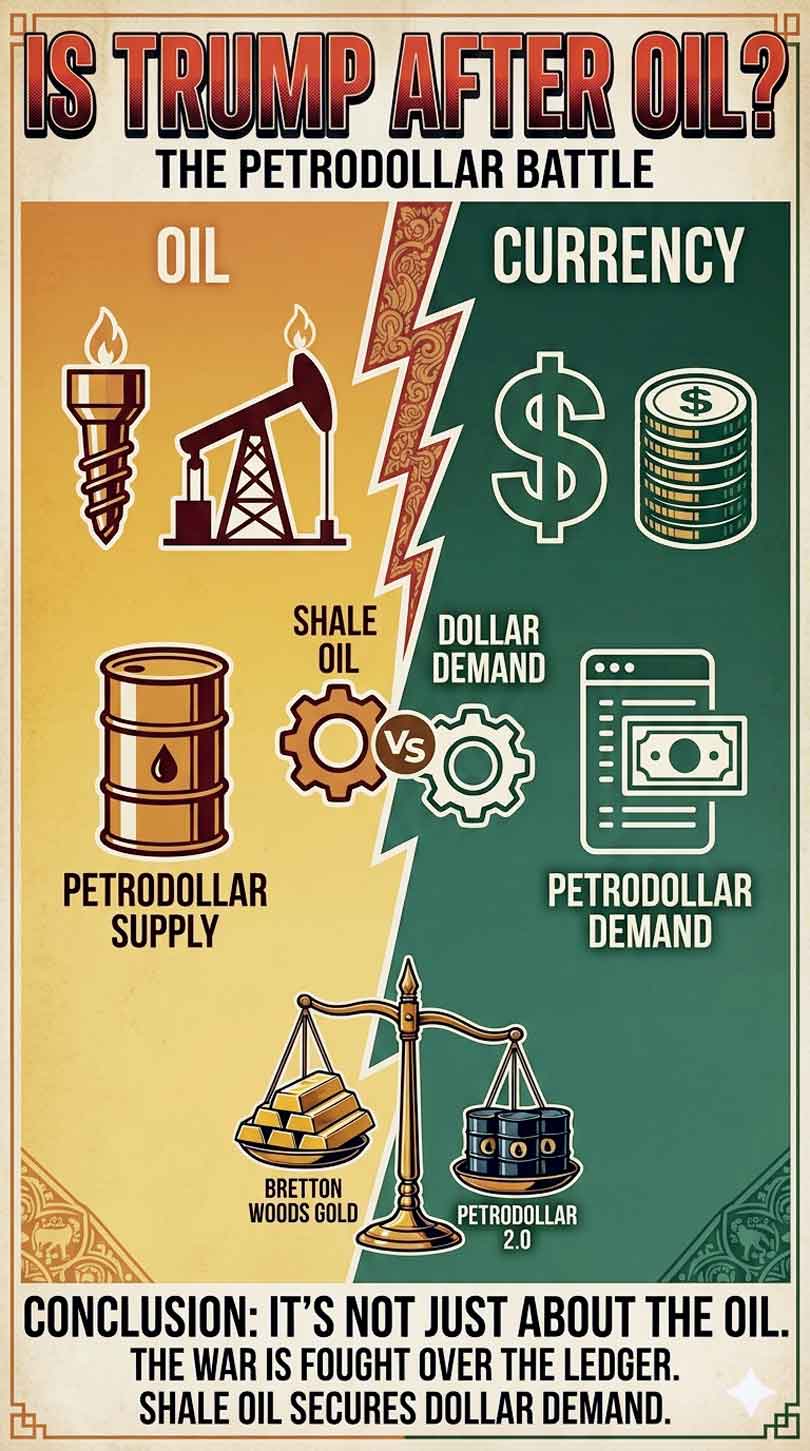
While the world watches the pipelines, the real war is being fought on the ledger. Is the ‘Energy Dominance’ of 2026 about the fuel in our tanks, or the currency in our banks? As the US hits record production of 13.6 million barrels per day, the goal isn’t just to sell oil—it’s to ensure the world still can’t live without the Dollar.”
In the high-stakes world of global economics, there is a story that begins not with a bank, but with a “golden” betrayal and a secret desert deal. This is the narrative of how the US Dollar became the undisputed king of the world, and why the current global manoeuvres by China, Russia, and the BRICS nations are more about currency than they are about crude oil.
The day the gold vanished
The year was 1971. The United States was facing a reckoning. For decades, under the Bretton Woods Agreement, the world had operated on a simple promise: the US dollar was as good as gold, redeemable at $35 an ounce. But the costs of the Vietnam War and massive domestic spending had drained the American vaults.
Foreign nations, led by a skeptical France, began demanding their gold back. They saw the dollar losing its lustre and wanted the real metal. On 15 August 1971, President Richard Nixon appeared on national television. In what history calls the “Nixon Shock,” he slammed the “gold window” shut. The dollar was no longer backed by anything but a promise. Its value plummeted, and the American era seemed to be sunsetting.
The secret deal in the sand
Washington knew it needed a new “anchor” to save the dollar. In 1974, Nixon’s Secretary of State Henry Kissinger and Treasury Secretary William Simon embarked on a mission to the Middle East. They didn’t go for the oil itself—America had its own—they went for the transaction.
In a landmark (and largely secretive) arrangement with Saudi Arabia, a new world order was born: The Petrodollar. The deal was simple: The US would provide the Saudi Kingdom with military protection and high-tech weaponry. In exchange, Saudi Arabia—the kingpin of OPEC—would price every single barrel of its oil exclusively in US Dollars.
Suddenly, every country on Earth, from Japan to Germany, had to hold stacks of U.S. dollars just to keep their lights on and their cars running. This created an artificial, global demand for the greenback that has lasted for 50 years. It allowed America to print money and run massive debts because the rest of the world had to buy those dollars to buy energy.
The great shift: From crude to currency
Fast forward to today. A common misconception is that America fights wars in the Middle East to “steal” oil. According to reports from the US Energy Information Administration (EIA), the US is now the world’s top oil producer. It doesn’t need the Middle East’s oil for survival.
So, why the tension? The real threat isn’t a shortage of oil; it’s the “De-dollarisation” of the oil trade.
Right now, the BRICS nations (Brazil, Russia, India, China, and South Africa) are leading a campaign to break the dollar’s monopoly. China has successfully launched “Petro-Yuan” contracts. Russia, following heavy sanctions, now settles the vast majority of its energy trade with China and India in local currencies rather than the dollar. Even Saudi Arabia, under Crown Prince Mohammed bin Salman, has signaled a historic willingness to trade oil in currencies other than the greenback.
The final stakes
The strategy has always been about maintaining the dollar as the #1 global reserve currency. If the world stops needing dollars to buy oil, the “exorbitant privilege” of the American economy vanishes. The value of the dollar would fall, and the US would no longer be able to finance its global influence so easily.
As we watch the headlines about shifting alliances in Asia and the Middle East, remember: it isn’t a battle for the black liquid in the ground. It is a strategic campaign for the paper in your wallet. The crown of the “Leading Country” is tied to the “Leading Currency,” and for the first time since 1971, that crown is being challenged.
The Sri Lankan perspective: A ripple in the Indian Ocean
For a nation like Sri Lanka, the “Petrodollar” is not just a high-level geopolitical theory; it is a daily economic reality that dictates the cost of living. As the global battle for currency dominance intensifies, the impact on the island nation is profound and multifaceted.
1. The debt and dollar trap
Sri Lanka’s recent economic crisis highlighted a brutal truth: because the world prices essential commodities like oil and gas in US Dollars, a country must earn dollars to survive. When the dollar strengthens due to American strategic policy, the cost of Sri Lanka’s fuel imports skyrockets, leading to the fuel queues and power cuts that defined 2022. Furthermore, much of Sri Lanka’s foreign debt is denominated in dollars. As the US maintains the dollar’s high value to remain the “number one currency,” the real-world cost for Sri Lanka to pay back those loans becomes an ever-growing mountain.
2. The shift toward “Bilateral Settlements”
In response to the global trend of de-dollarisation, Sri Lanka has already begun exploring alternatives. There have been active discussions regarding settling trade with India in Rupees and exploring currency swap arrangements with China. If the world moves away from a dollar-only oil trade, Sri Lanka could potentially buy its energy using the currencies of its major regional trading partners. This would reduce the desperate need for “Greenbacks” and provide a buffer against U.S. monetary policy.
3. Navigating a multi-polar world
As the US manoeuvres to keep the dollar stable and the BRICS nations push for the Yuan or a new shared currency, Sri Lanka sits at a strategic crossroads. The island’s ports and energy hubs are of great interest to both sides. For the Sri Lankan editor and reader, the takeaway is clear: the country’s path to stability may no longer lie in a dollar-centric world, but in a “multi-currency” future where the nation is no longer at the mercy of a single foreign central bank.
By understanding that the US is fighting to keep the dollar as the global anchor, Sri Lanka can better position itself to negotiate trade deals that protect its own sovereignty and economic future.