Friday Nov 06, 2026
Friday Nov 06, 2026
Friday, 6 November 2026 00:16 - - {{hitsCtrl.values.hits}}
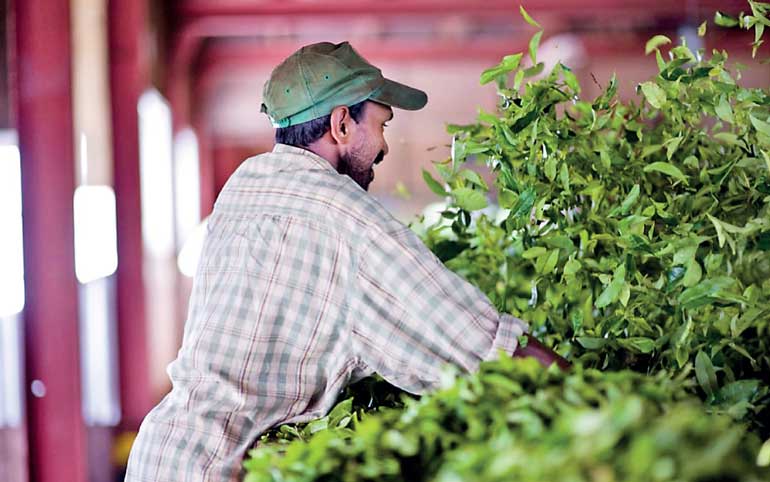
The price of tea reflects more than what is on the shelf. It also represents the people, work and resources behind its production
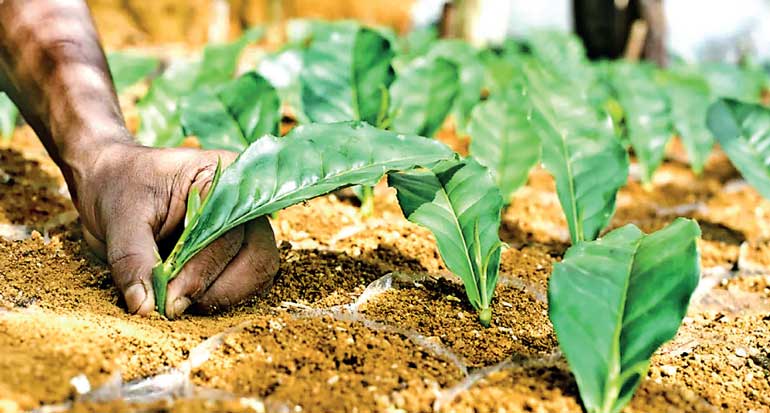
Responsible production begins long before the finished product reaches the market. Growing tea requires investment in people, time, resources and careful cultivation – costs that are often overlooked when consumers focus solely on price
 The calm before the storm has become the storm. October’s ‘Big Deal Days’ have barely ended, Black November has begun. Singles Day arrives on 11 November, and Black Friday follows on the 27, stretching into a Cyber Week that now runs closer to a month. Bain expects US retail sales from Black Friday to Cyber Monday to exceed $ 85 billion this year, growing 8.75%, almost twice as fast as the holiday season as a whole. Adobe forecasts discounts climbing from 14% in early November to 30% by Cyber Week, the deepest of the year.
In China, where Singles Day began, discounts of 40 to 50% became far more common as growth slowed. The frenzy is no longer an event. It is a season, and increasingly a culture.
Everyone loves a deal. I wrote three years ago that Black Friday is not what you think, because someone always pays for the deal. This year I want to ask a different question. What would happen to a genuinely good business, one that refuses to compromise on people or nature, if it tried to begin its life today?
If Dilmah were born in 2026
My father was 55 when he launched Dilmah, after 35 years of rejection by traders who resented a native of the colonies brandishing his own brand. His proposition was disarmingly simple: tea grown, picked, perfected and packed at source, single origin, never blended down to a price, with profits shared with workers and the less fortunate. That was genuine fair trade, long before the term became a logo.
Imagine that same proposition entering the market this week. Before long the conversation would move away from taste, provenance and the families who made the tea, and toward the promotional calendar. What depth of discount can you sustain for Singles Day? For Black Friday? For the half-price fortnight in February? How much will you invest to stay visible, and how much will you give back each time the price is cut? A product that costs more to make, because it pays fairly, conserves soil and refuses to blend cheaper origins into the pack, is in effect asked to finance its own erosion.
The start-up that says no faces three doors. It can stay small and invisible, a premium curiosity. It can quietly compromise, blending, cutting wages or deferring the conservation work, to survive the promotional cycle. Or it can walk away, as we told The Australian in 2023 that we would rather do than compromise. Only one of those doors preserves integrity, and it is the one that rarely builds a business. That is the pressure discount culture places on every genuine producer: not a single choice, but a thousand small invitations to compromise.
Who pays for the deal
A discount is rarely absorbed where it appears. It travels upstream, and in tea the upstream is already starved. Research by BASIC for Oxfam found that in the United States, brands and retail together capture almost 94% of the price of a pack of black tea, with less than 1% reaching the workers on tea estates. Some 13 million people sustain the global tea industry, two-thirds of them smallholders, and IISD reports that in some producing countries smallholders make no profit at all because their costs exceed what they earn.
In Sri Lanka the first quarter of 2026 brought lower production and lower exports, while auction prices in dollar terms fell across every elevation. Our costs move in the other direction. Wages, fertiliser and energy rise, and after floods last year that took more than 600 lives and struck our highest tea-growing regions hardest, the adaptation we know is needed remains largely unaffordable.
A 30% discount is therefore not free. It is borrowed from a worker’s wage, a watershed, a child’s school meal, a hillside left un-terraced. A Ceylon Tea planter complained to The Times in 1898 that the cut-price methods of a famous tea merchant were legitimate yet ruinous to producers. 128 years later, the method has a hashtag.
The supreme irony
We have never been more conscious of climate and inequality. PwC’s survey of more than 20,000 consumers in 31 countries found that 85% had felt the disruptive effects of climate change first-hand, and that 80% would pay more for sustainably produced goods, an average premium of 9.7%. Yet the same shoppers are trained, season after season, to wait for 30% off.
The arithmetic is unforgiving. A 9.7% premium for integrity cannot survive a 30% discount for its absence. The consumer’s conscience says one thing; the promotional calendar teaches another, and the calendar is louder.
The cost does not disappear; it is merely hidden. The FAO estimates that our agrifood systems carry hidden costs of at least $10 trillion a year, nearly 10% of global GDP, from degraded nature, poverty and diet-related disease. Low-income countries bear the heaviest share, more than a quarter of their GDP. We are, in effect, discounting the price on the shelf by adding to a bill that growers, nature and future generations will pay.
This is the self-perpetuating crisis. The world needs products with integrity, and farmers who conserve nature and assure food security. It can afford neither, because the fiction of deep discounting tells it that cheap is normal. As Ellen Ruppel Shell warned, when enough merchants water the milk, customers forget what milk tastes like. Then the growers who refused to water it are told they are overpriced.
There is no deal
Here lies the cruellest twist. Producers are among the most powerful allies humanity has in confronting its gravest crisis. Growers decide whether soils are regenerated or exhausted, whether watersheds are protected, whether forest edges are restored or cleared. They decide whether rural families earn enough to stay, educate their children and lift women into leadership, and whether the food on our tables is safe and nourishing. The frontline of climate action and the fight against inequality runs through farms, not boardrooms.
Yet at the very moment the world most needs these allies, it is forcing them into a crisis of their own. We ask growers to conserve nature, adapt to a changing climate and pay a living wage, then reward them with prices that make each of those commitments harder to keep. We ask them to be the solution, and then make them the casualty. A grower in crisis cannot rescue anyone, and a system that bankrupts its stewards will one day find there is nobody left to steward.
So, before the next click, ask who funded the deal. All of us in the food chain, brands like ours included, should measure our success by the health of the people who supply us, not only by our margins. Policymakers carry true cost accounting out of FAO reports and into trade, procurement and competition rules. And to fellow producers being pressed to compromise in order to survive: hold on. The world will need your integrity long after it has forgotten this year’s discounts.
Price is not value. A bargain that costs a grower their livelihood and nature’s resilience was never a bargain at all. There is no deal. There is only a bill, and it is being sent to the wrong address.
(The author is CEO and Chairman of Dilmah Ceylon Tea Company PLC. He also serves as the Chairman of Dilmah Ceylon Cinnamon Company and Kahawatte Plantations PLC. The younger son of Dilmah Founder Merrill J. Fernando, he has a deep dedication to his father’s philosophy of “Business as a Matter of Human Service.” He is an Adjunct Professor of Practice in Sustainability at Edith Cowan University’s School of Business and Law, Australia, and Chairman of Biodiversity Sri Lanka and Global Compact Network Sri Lanka)



