Wednesday Oct 21, 2026
Wednesday Oct 21, 2026
Saturday, 18 July 2026 05:26 - - {{hitsCtrl.values.hits}}
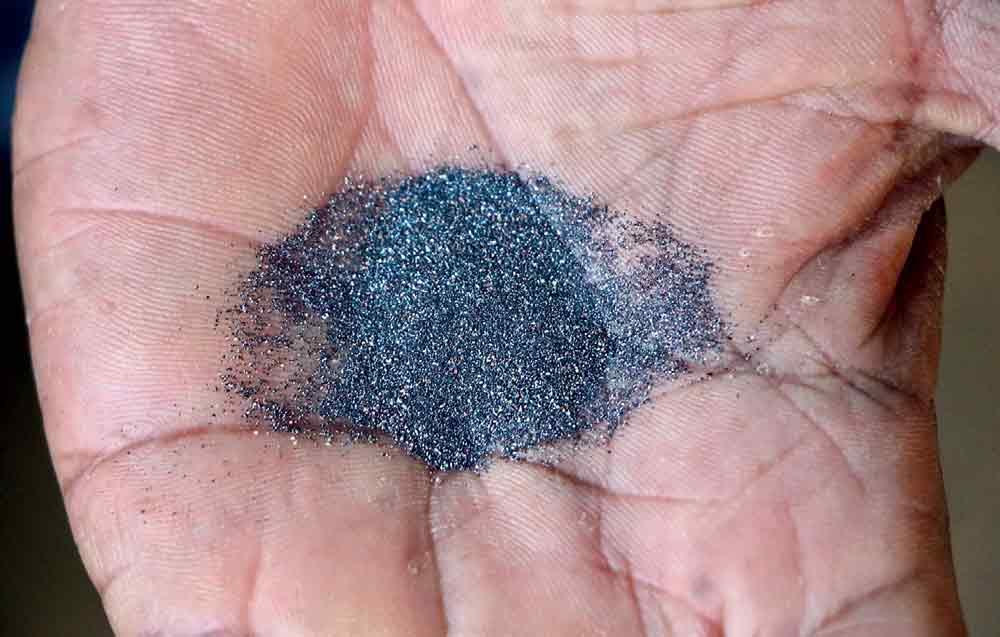
 Rare Earths mining in coastal Sri Lanka lays bare capitalism at its most predatory form. Mining lobbies, both domestic and international, are capitalising on the country’s debt distress to push commercial extraction of heavy mineral sands (HMS) from public beaches. In doing so, they not only exploit the country’s vulnerability but also undermine the right to development that working people in the global south have been advocating for years. By instrumentalising the desperation of the Government, these private interests are advancing an extractive economic model at the cost of the ecological and economic well-being of local communities and future generations, while simultaneously jeopardising key sectors that generate foreign revenue, such as tourism, coconut and fisheries. Taking advantage of the bad-debt deal that has left a sizeable debt servicing burden, set to tighten after 2028, Sri Lanka is usurped within the global commodity chains that service the consumption and development interests of the global North. In other words, the Rare Earths rush consolidates Sri Lanka as a cheap destination not only for labour but also for commodities.
Walk, before you run
The National Mineral Policy that the Government of Sri Lanka unveiled in June 2026 articulates the “imperative to harness the potential of mineral wealth”, ensuring “equitable benefits” while “safeguarding the environment”. The “holistic objective” of the new policy highlights the significance of “maximising value addition to minerals, stimulating local processing and manufacturing industries to utilise mineral resources and reduce reliance on exports, and promoting research and development within the sector” (page 01, National Mineral Policy).
 A cost-benefit analysis that a Government would do before any investment project shows that heavy mineral sands mining is not an economically profitable industry for Sri Lanka to pursue. Taxes and royalties that the Government will earn are neither adequate to compensate for the costs on livelihoods, environment, coconut and tourism industries. Nor would these investments create backward linkages, contributing to the industrialisation of our economy
But Capital Metals PLC, joined by Ambeon Capital PLC as the major local partner, thinks differently. Their Taprobane Minerals project located along a 60 KM stretch of the Eastern coast from Komari to Oluvil, is built on extraction, not value addition. The Capital Metals Executive Chairman Greg Martyr, states, “In developing countries, often politicians talk about value addition. When they say, “We want you to go this far downstream and build a pigment plant or sludge plant”, we say, “Hey, hey, walk before you run. Start getting some cash flow in. The rest of the world has been doing it on a stage basis. Start with concentrate and work your way up.”
Martyr’s YouTube video (May 15, 2026) is intended to build investor confidence in the financial viability of the Taprobane Minerals Project in Sri Lanka. What it does is reveal how the extractive mining intent of transnational companies shapes public policy and institutions while disregarding the developmental interests of developing countries. Martyr boasts of active lobbying and influence not only over the Government, but also of “shak[ing] up” the Geological Survey and Mining Bureau (GSMB), shifting GSMB from the Ministry of Environment to the Ministry of Industries. On top of these, the brutal and dirty track record of Capital Metals in its former avatar as the Equatorial Palm Oil PLC in Liberia in 2008 , as well as of individuals leading the company, GCM Resources, involved with the Phulbari massacre in Bangladesh in 2006 , illustrates the predatory nature of mining companies and the dangers of disasters to come. The midwifery role that the Ceylon Chamber of Commerce plays in this dirty business illustrates short-term profiteering interests of the local corporate élites to the detriment of the livelihoods, health of local people and the environment.
The scramble for rare earths
The green to advanced technologies, i.e., wind turbines, smartphones, Electric Vehicles (EVs), glass and ceramics, batteries, polishing agents, military hardware and weapons, rely on Rare Earths. It is a big business tipped to grow at a rate of 10.34% per year between 2026 and 2034, according to Fortune Business Insights. The dominance of China in isolating and refining 92% rare earth elements (REEs), has led to geopolitical tensions augmented by the spillovers from the US trade war on China. Apart from the US, Australia, the EU, Japan, South Korea and India are driving the mineral sands rush, articulating REEs as critical strategic reserves upon which they should acquire control and dominance. In May 2026, India and the US signed a critical minerals and rare earths cooperation framework to “engage in international efforts to protect sensitive supply chains from coercive market practices and reduce [their] collective vulnerability to single-source monopolies” (U.S. Mission India Statement). In parallel, QUAD Critical Minerals Initiative Framework was announced, committing public and private sector financing up to $ 20 billion to consolidate critical mineral supply chains from mining, processing and recycling.
Reminiscing about erstwhile colonial resource grabs, developing countries endowed with Rare Earths are under geopolitical pressure and are forced to pay the price. The scramble for minerals in the Democratic Republic of Congo (DRC) has coincided with increased fighting, deaths and displacement of people. In Myanmar, REE mining has been aided by armed groups and has caused human rights violations, extensive damage to livelihoods and ecosystems. Quest for green energy in Mozambique has passed on toxic waste, leading to public health issues, groundwater pollution and land degradation. In Ganzhou in Jiangxi Province, China, reputed as the Rare Earths Kingdom, extractive mining has led to soil acidification and water contamination. Environmental degradation around the Bayan Obo mining sites in Inner Mongolia province, due to toxic chemicals used in processing, heavy metals and radioactive elements such as thorium, has contaminated groundwater, destroying agricultural and pastureland.
Sri Lanka, too, has been swallowed by the expanding rare earth commodity frontier. Heavy mineral sands, considered a strategic resource, have attracted foreign investors from India, Australia, and South Korea. In contrast to countries with scarcely populated, large land masses, for a small Island nation like Sri Lanka, with a high population density, and coastal areas already vulnerable to erosion and sea level rise, beach mining pose an existential threat.
The Balance Sheet of extractivism
Foreign direct investments in coastal mining in Sri Lanka reveal a larger logic – that capital preys on indebted countries to extract resources, not for local benefit, but to feed global supply chains – EVs, electronics and military hardware, controlled by the Multi-National Corporations (MNCs) of the Global North. Having failed to meaningfully reduce its debt burden, Sri Lanka continues on the edge, susceptible to crisis profiteers. Coastal mining is not development. It is pillage dressed in investor rhetoric.
Stage one of the Taprobane Minerals Project forecasts a $ 40 million return with $ 25 million initial capital expenditure ($ 18 million debt financed from local banks). The 1st stage – concentrate stage, involves extracting 125,000 tons of heavy mineral sands composite of Ilmenite, Garnet, Rutile and Zircon. Mining will be carried out along a 60 km stretch between Komari and Oluvil, from inland up to high tide. If the Government gives in to the persuasions of Capital Metals, there will be no value addition in Stage One. All-in costs for stage one for Capital Metals are $ 18 million
,which includes costs of production, taxes and royalties. As taxes and royalties, the Government of Sri Lanka will only be earning $ 2.8 million (7% of $ 40 million), leading to $ 93.9 million over the nine years that the project is expected to last. According to Capital Metals, drilling and mining work will create 300 jobs.
The income of $ 93.9 million over nine years will have a significant impact on the tourism, coconut and fisheries industries. While eastern beaches such as Arugam Bay are major attractions for tourists, Thirukkovil also hosts major coconut plantations. In addition, fisheries and agriculture provide livelihoods to people. Not only will mining take away communally held coastal land from the people, but excessive use of water and chemicals at the concentrate stage will also poison land, groundwater and destroy the marine ecosystem. To earn $ 93.9 million in 9 years, the Government is effectively damaging the coconut industry, which brings in $ 1.2 billion, and the tourism industry, which brings in $ 3.2 billion, annually. The social, health and environmental costs that will be shifted on the local people are incalculable in economic terms. 300 jobs that heavy mineral sands mining will create would mostly be low-paying, backbreaking jobs, with workers exposed to radioactive material such as thorium, not only from direct contact, but also from radon gas emitted during processing and respirable dust, hazardous to their health.
A cost-benefit analysis that a Government would do before any investment project shows that heavy mineral sands mining is not an economically profitable industry for Sri Lanka to pursue. Taxes and royalties that the Government will earn are neither adequate to compensate for the costs on livelihoods, environment, coconut and tourism industries. Nor would these investments create backward linkages, contributing to the industrialisation of our economy. Removing the black out of the beach will not only destroy the natural character of the beach, which attracts tourists, wildlife like sea turtles, but also remove the natural barrier against erosion.
No doubt that the green turn in production and consumption has created a profitable market for a few. Expeditious implementation of projects such as Taprobane Minerals also indicate possible cases of corruption profiting local bureaucrats and politicians. However, it only entrenches Sri Lanka and its people deeply in the unequal exchange that we have been located as a peripheral country – a destination for cheap labour and commodities, at the disposal of the growth and wealth generation interests of advanced economies. Developed countries like Australia, the US, China, Japan, South Korea, and even India manoeuvre commercial and geopolitical power through their private firms to capture labour and resources from countries like Sri Lanka. It is not a way out of debt distress but a way to getting further ensnared within the vicious cycle.
Rare Earths as commons
People on the island of Mannar have already demonstrated that mining for Rare Earths should not be a justification for denying people their homes. People in Thirukkovil and Panama are echoing these concerns. Thirukkovil and Pottuvil Pradeshiya Sabhas have proven to be more visionary and have halted mining projects. Rare Earths are the Commons, and it is for the people, not private investors, to decide what and how Rare Earths would be used for local needs. The Government and the private sector should recognise the legitimate demands of the people and steer away from green extractivism. As Ditwah points out, in the recent climate change-induced disaster, the Government and people would be better served by centring life and not profit in the form of US dollars at the heart of economic and development policymaking.
(The author (PhD, Hawai‘i) is a feminist political economist, a senior researcher at the Bandaranaike Centre for International Studies and a member of the Collective for Ecological and Economic Justice)




