Saturday Oct 03, 2026
Saturday Oct 03, 2026
Wednesday, 3 June 2026 00:24 - - {{hitsCtrl.values.hits}}
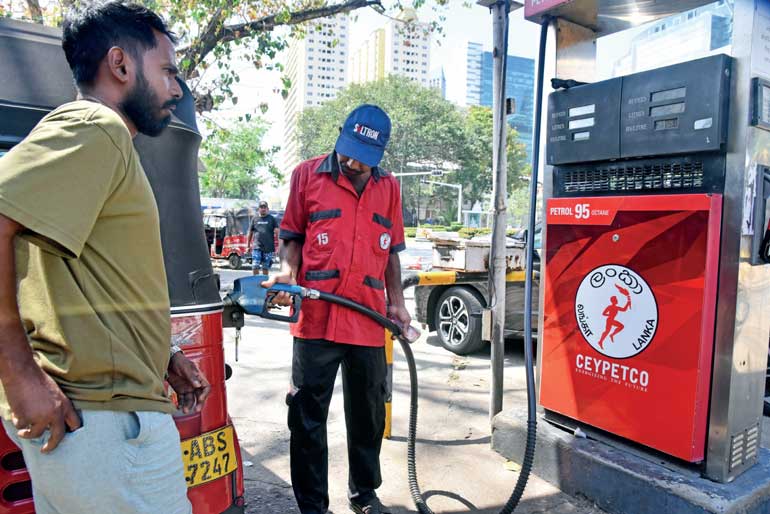
 Low prices are better than high prices, especially for the intermediate goods that are petrol and diesel. They are called intermediate because they are used to make other goods and services that we need to live and for exports. When fuel prices increase, the prices of other things which have it as an input go up. What we can buy with our salaries becomes less. Exports become uncompetitive (but recall, all countries are affected by this supply shock). Low prices are intrinsically desirable.
Today, we have serious economists making detailed submissions to the Government about how to keep fuel prices from going up. They want to tweak the mysterious fuel-price formula to subsidise users of diesel and petrol. One could negotiate better prices for crude and refined products, but that would be reflected in the formula anyway. The only elements that can be reduced are taxes (excise and VAT).
What’s wrong with a partial tax holiday?
So, what is being proposed is a partial tax holiday. Tax holidays are popular among politicians. Right now, a full tax holiday for fuel is under discussion in the US Congress. When the JVP/NPP was in the opposition they too proposed tax cuts to prevent price rises.
There are many reasons why partial or full tax holidays for fuel are unwise, some that apply to all countries and all times and some that are perhaps unique to Sri Lanka in 2026. Reducing excise taxes of fuel will benefit users who use a lot of fuel (like the owners of fuel-guzzling V8s and those who are currently bypassing the rationing scheme) more than those who use a little (like the 6.5 million two- and three-wheelers on our roads), or do not use any (like the many without private vehicles).
Reducing the VAT rate on fuel would bias consumption of these products vis-à-vis other products and services. There is no justification for treating fuel like medicine. Prescribed medicines and pharmaceutical products for therapeutic or prophylactic purposes are exempt. This exemption applies to drugs, raw materials used to manufacture them, and recognised Ayurvedic, Unani, Siddha, or Homeopathic preparations (excluding cosmetics). Humanitarian and other reasons for exempting medical items are understandable. It would be a huge leap to go from charging excise taxes on fuel to granting VAT exemptions.
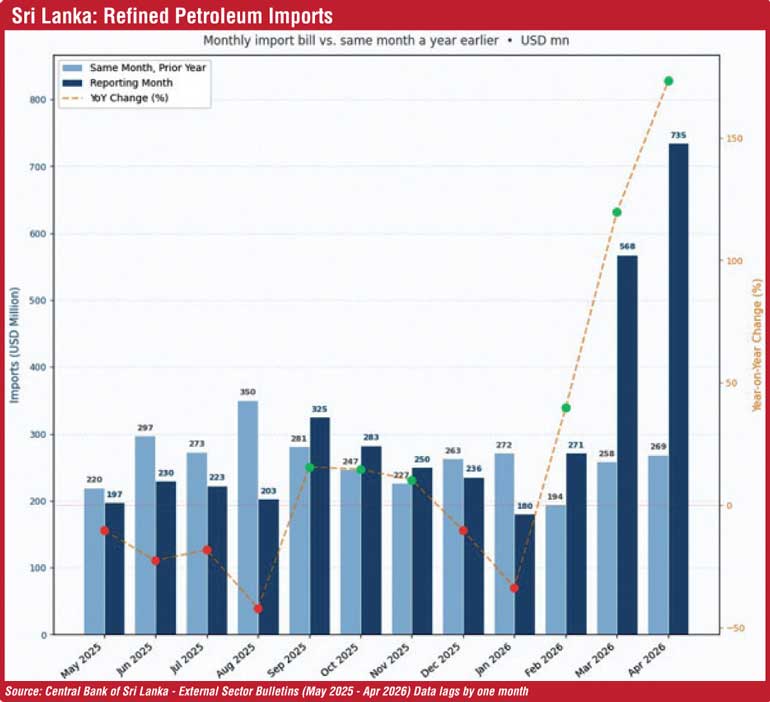
Now we come to Sri Lanka-specific reasons. As a country with a history of fiscal indiscipline and incidents of insane tax reductions (2019), Sri Lanka has bound its hands through the Public Financial Management Act, No. 44 of 2024. Expenditures must be limited to 13 percent of GDP, and at least 15.3% of GDP must be raised as revenue. Taxes on foreign trade, income tax, and taxes on domestic trade (VAT) are three main sources. When one source of revenue goes down, others must compensate. The holiday proponents argue that taxes on fuel imports are going up because the base prices are increasing; they are simply asking the Government to decline the increment. They have a point in terms of fiscal impact.
However, the proposal is bad for a different powerful reason. Sri Lanka has to curb demand. All projections are that international oil prices will remain elevated for the near future and possibly spike up in June-July. In mid-May, the Economist said: “Some two billion barrels, or 5% of the world’s yearly oil supply, have already been lost because the Strait of Hormuz is shut. Every day it remains closed the deficit grows by 14m barrels.”
 The Chevron CEO warned at a recent conference that “the buffers and the shock absorbers are being steadily drawn down, and the ability for the market to absorb this imbalance is drastically diminished today versus where we started.” US commercial crude inventories ended last week at 441.7 million barrels, about 2% below their five-year average at this time of year. The US Strategic Petroleum Reserve has fallen to 365.1 million barrels, down from 415.4 million barrels before the war began, which was well below its 714 million barrel capacity. “We’re approaching unheard of inventory levels,” warned Exxon senior vice president Neil Chapman at the same conference. Chapman warned that: “You can debate whether that’s going to hit those really low levels, in two weeks or three weeks. Once you get to that point, then you’ll see the price shoot up.”
The above predictions are for North America and Europe. But it’s Asia that was most dependent on oil transiting the Strait of Hormuz. The effects are therefore likely to be more serious for Asian countries dependent on oil from the Gulf region. They are even more serious for small countries with limited reserves. The Energy Minister
has said, correctly, that Sri Lanka can afford to spend what it’s spending on oil since the start of the war. The corollary is that it cannot afford to encourage consumption using tax holidays.
Reducing demand
There is no alternative to curbing demand. The Minister wants to make QR code-based rationing less leaky. Now it’s possible to measure the leakage by station very accurately. It’s more difficult to prevent workers at the pumps issuing extra fuel to vehicle owners willing to pay extra, without adding a lot of bells and whistles to the current system.
Rationing has been in place since March. Some demand destruction has occurred, but as the Minister notes, it’s not enough. The most effective way to reduce consumption is to raise prices. As the holiday proponents note this will automatically raise excise and VAT revenues. Using this money, the Government can engage in targeted relief: subsidies for the battas that carry our food and supplements for Aswesuma. 
Demand destruction is needed to buy time for real reductions in demand that also support economic growth that will take time to show results. But a crisis is a good platform to launch the needed reforms.
Fast-tracking the Government’s initiative to develop a national energy policy, strategy, and action plan with the assistance of external consultants is imperative. This must include a plan for derisked oil refining, pipeline and storage systems that ensures dependence on multiple sources, implementation of storage requirements through the distribution licence, while
recognising that storage is not costless. What China can do, little Sri Lanka cannot.



