Friday Oct 16, 2026
Friday Oct 16, 2026
Monday, 6 April 2026 03:28 - - {{hitsCtrl.values.hits}}
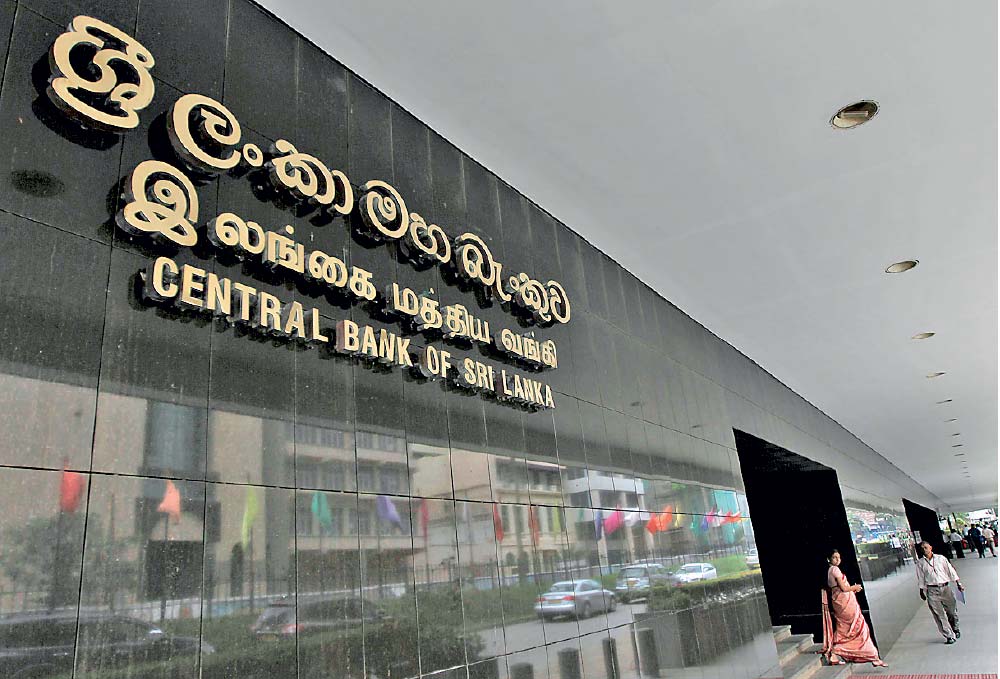
 IN the late 1990s, the "Quantum" speculation of George Soros sent a cold shiver through the counting-houses of South Asia.
As the Thai baht and the Malaysian ringgit buckled under the weight of "hot money" flight, the region’s central bankers learned a painful lesson: liquid capital is a fair-weather friend.
In 2001, seeking a more stable class of suitor, Sri Lanka’s policymakers looked north to India’s "Non-Resident Indian" model. The result was the Rupee Account for Non-resident Sri Lankan Investment (RANSI)—a sovereign pact designed to lure the diaspora’s wealth into the ultimate "sticky" asset: real estate.
The pitch made in the wood-panelled boardrooms of London and Hong Kong was seductive. If investors assumed the massive currency risk of the rupee, the state would guarantee a tax-exempt exit.
Thus the November 2000 Budget Speech promised: “Investments made through these accounts will be indemnified from tax inquiry and all realised profits, including capital gains, will be permitted to be repatriated tax-free.”
This was not mere rhetoric; it was codified in the Finance Act, No. 11 of 2002 (Section 10), which granted the 2001 Budget proposals the full force of law.
Today, that contract is being shredded by a silent, lethal stroke of a bureaucrat’s pen. A "minor" administrative oversight in a 2024 IRD Gazette has transformed a golden bridge into a procedural trap, threatening to brand Sri Lanka as a nation where sovereign promises come with an expiry date.
The math of loyalty
To understand the "RANSI fiasco," one must look at the math of loyalty. In 2001, an investor converting dollars did so at 90 LKR/USD. Twenty-five years later, that same investor faces a currency that has cratered by over 300%, trading near 310 LKR/USD.
This staggering depreciation was the calculated risk the State asked investors to swallow to provide the country with dollar stability.
The promised tax exemption was the only fiscal parachute provided to offset this erosion of value.
To now levy "Capital Gains Tax" on the nominal rupee appreciation of an asset that has effectively lost value in original foreign exchange terms is not a tax on profit—it is a punitive confiscation of capital.
Institutional amnesia
Legally, the Government's current stance faces a formidable obstacle: the Doctrine of Legitimate Expectation.
Furthermore, the Foreign Exchange Act, No. 12 of 2017 (Section 31) explicitly "saved" and protected all permissions and exemptions granted under the old regime.
The Inland Revenue Act, No. 24 of 2017 (Section 203) further mandates that legacy exemptions must continue until they expire.
Yet, in December 2024, the Inland Revenue Department (IRD) issued Gazette No. 2414/14, establishing a "Negative List" of transactions exempt from Tax Clearance Certificates (TCC).
In a catastrophic lapse of institutional memory, RANSI property exits—the very bedrock of the country's long-term reserves—were omitted.
The result is a Kafkaesque nightmare. While "hot money" in the stock market exits with ease under Item (ii) of the list, the property investors who stayed through war and economic collapse find their funds held hostage.
This "selective enforcement" is a patent violation of Article 12(1) of the Constitution, which guarantees equality before the law.
The cure is effortless: a supplementary Gazette under Section 86(7) to restore sovereign honour.
Capital is a coward; it only settles where the rules are unshakeable. To ignore the promises of 2001 is to invite a death sentence for trust in Sri Lanka’s emerging market.
In the global race for capital, the winner is rarely the one with the flashiest roadshow. It is the one whose word remains unshakeable across decades.
To restore its sovereign honour and avoid a barrage of Fundamental Rights lawsuits and Writs of Mandamus, the Sri Lankan Government must move with the same urgency it showed in 2001.
Until then, the ghost in the Gazette remains a warning to all: in the world of emerging markets, the fine print can be a death sentence for trust.
The RANSI Sovereign Guarantee:
I. The legislative and policy foundation (2000–2002)
1. Verbatim: November 2000 National Budget Speech
Presented to Parliament for the 2001 Financial Year.
"To encourage Sri Lankans living and working abroad to invest their foreign exchange earnings... I propose to introduce a special investment scheme [RANSI]... Investments made through these accounts will be indemnified from tax inquiry and all realised profits, including capital gains, will be permitted to be repatriated tax-free."
2. Verbatim: Finance Act, No. 11 of 2002 (The codification)
Section 10: Validation of Acts done for the purpose of giving effect to the Budget Proposals of 2001/2002
"Every act or thing done or omitted to be done... by the Minister or the Central Bank of Sri Lanka... for the purpose of giving effect to the proposals contained in the Budget for the year 2001 and 2002... shall be deemed to have been and to be, validly and lawfully done and made."
Note: This provision retroactively legalised the RANSI tax-exempt status and the CBSL instructions issued in May 2001.
3. Verbatim: Inland Revenue Act No. 38 of 2000
Section 9(1): Statutory Exemption
"The profits and income arising to any person from any investment made through a Special Account approved by the Central Bank of Sri Lanka for non-resident investors [RANSI]... shall be exempt from income tax, provided such funds were remitted into Sri Lanka in convertible foreign currency."
II. The Central Bank Operating Framework (2001–2013)
4. Verbatim: CBSL Operating Instruction Ref: 06/04/05/2001 Date: May 28, 2001
Paragraph 5(ii):
"The permission of the Controller of Exchange is hereby granted... to remit abroad the sale proceeds... This includes the original capital, any interest, dividends, and the realised capital gains. No further individual approval from the Department of Exchange Control is required."
5. Verbatim: CBSL Annual Report 2001 (Part III)
"The RANSI scheme was introduced to provide a seamless portal... The primary incentive for these investors is the unconditional right of repatriation of both the principal and the appreciation of the asset."
III. The 2017 "Grandfather” protection clauses
These provisions prove the new laws cannot overwrite 2001 rights.
6. Verbatim: Foreign Exchange Act No. 12 of 2017
Section 31(2)(a): Savings and Vested Rights
"Every permission, exemption, direction, notice, order or other thing given, issued or made under the repealed Act [Exchange Control Act] and in force on the day immediately preceding the date of the commencement of this Act, shall, in so far as it is not inconsistent with the provisions of this Act, be deemed to be a permission, exemption, direction... given, issued or made under this Act."
7. Verbatim: Inland Revenue Act No. 24 of 2017
Section 203(1): Transitional Provisions (Savings of Exemptions)
"The repealed Act [Inland Revenue Act No. 10 of 2006] shall continue to apply to— (b) any tax holiday or exemption granted under the repealed Act... until the expiration of the period for which the holiday or exemption was granted."
Note: Since the RANSI exemption was granted "perpetually" for the life of the investment at the point of entry in 2001, this section mandates that the IRD must continue to honor it.
IV. The Consolidation and General Permissions (2013)
8. Verbatim: CBSL Gazette Extraordinary No. 1814/39
Date: June 12, 2013
"Authorised Dealers are permitted to remit such proceeds abroad, including capital gains, provided the initial investment was made through a RANSI or SIA account, without the requirement for individual Tax Clearance Certificates... under the General Permission granted herein."
V. The media validation (VERBATIM 2001)
9. The Sunday Times (Business Section) / Daily News (2001)
"The Government has assured that both the principal investment and all realised profits (including capital appreciation) can be remitted abroad... providing an indemnity from tax inquiry."
VI. The procedural gap (2024)
10. IRD Gazette No. 2414/14
Date: December 11, 2024 | Section 86(7)
The Problem: Section 3 of this Gazette (The Negative List) facilitates TCC-free exits for Quoted Shares and Bonds but omits RANSI/SIA property exits.
The Legal Remedy: Under Section 203 of the IR Act (2017) and Section 31 of the FX Act (2017), this omission is a technical error. The Commissioner General is bound by the "Grandfather Clauses" above to include RANSI exits in the Negative List to prevent a breach of the 2002 Finance Act mandate.
The Commissioner General of IRD must specifically examine Provision #2 (Finance Act 2002) and Provision #7 (IR Act 2017 Section 203).
It explains that:
(The author is the former head of the National Council for Economic Development (NCED), Strategic Enterprise Management Agency (SEMA), and the National Ocean Affairs Committee ( NOAC) and the head of UNEP's Blue Green Economy Finance Facility (BEFF) and INTEL and SOFTBANK funded PCCW venture capital fund)




