Thursday Sep 24, 2026
Thursday Sep 24, 2026
Saturday, 13 June 2026 05:27 - - {{hitsCtrl.values.hits}}

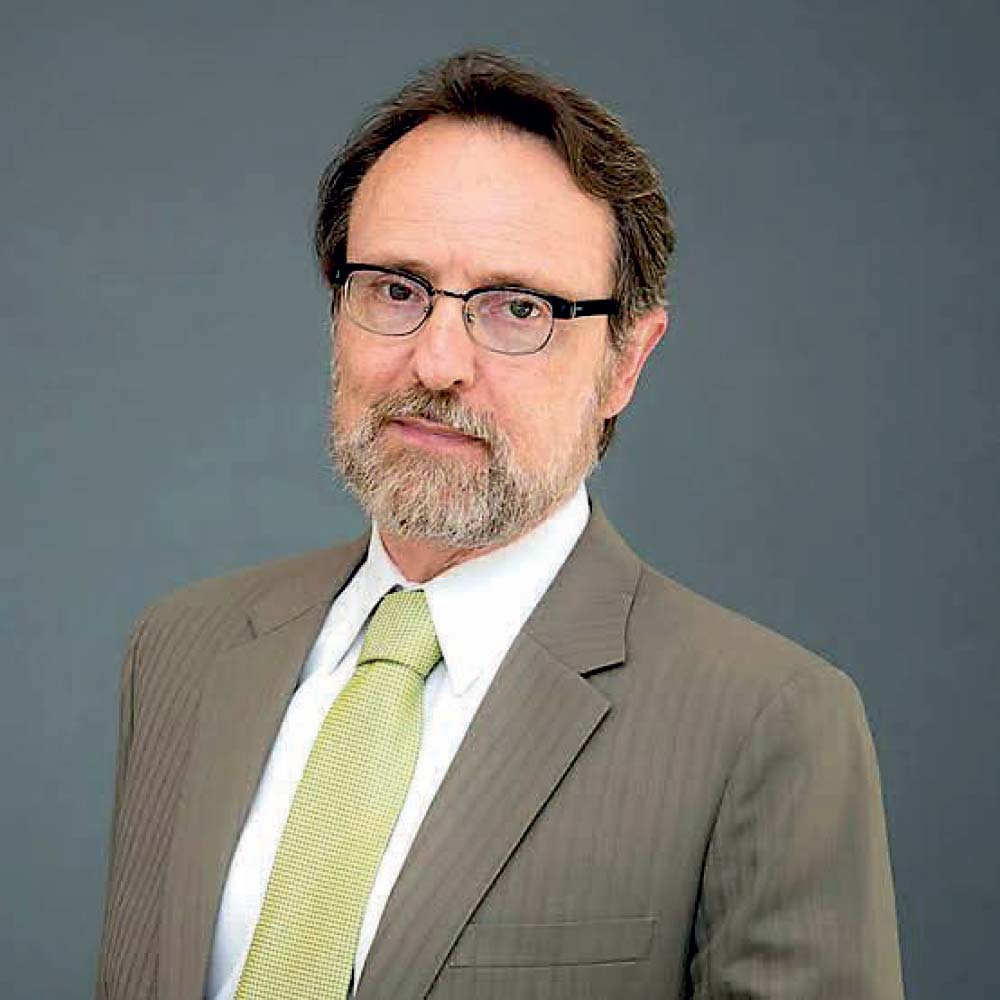
Prof. Peter Cappelli notes HR decisions are often driven by short-term cost accounting logic rather than long-term capability building
 Many Boards continue to operate with incomplete visibility into their leadership pipelines and what is going on in the business. In too many cases, decisions around senior appointments are made under pressure, with limited depth of succession planning and insufficient assessment of internal talent. As a result, organisations often find themselves “groping in the dark” on many issues, especially when leadership transitions arise—reactive rather than prepared
 Wharton Management Professor and Wharton's Centre for Human Resources Director Prof. Peter Cappelli observes that “despite all the rhetoric about investing in our people, training and development are not considered investments; they are categorised as a current expense, a type of fixed cost—just as carpeting is.”
In an era defined by heightened governance expectations, rapid technological disruption, fraud, scandals, and increasingly complex financial and regulatory environments, both public and private sector institutions face an unmistakable reality: sustainable organisational performance is no longer determined solely by capital allocation or strategy, but fundamentally by the quality of human capital at the top and the Board’s ability to deploy it wisely and effectively.
Nowhere is this more evident than in the financial services sector, where risk, trust, and performance are tightly interwoven. In such environments, the responsibility placed on Non-Executive Directors has expanded significantly. Boards are no longer passive overseers of compliance and financial reporting; they are active custodians of leadership quality. The selection, development, and retention of the right management team has become one of the most critical governance imperatives of our time.
Incomplete visibility
Yet, despite this heightened responsibility, many Boards continue to operate with incomplete visibility into their leadership pipelines and what is going on in the business. In too many cases, decisions around senior appointments are made under pressure, with limited depth of succession planning and insufficient assessment of internal talent. As a result, organisations often find themselves “groping in the dark” on many issues, especially when leadership transitions arise—reactive rather than prepared.
The best line of defense for any Board is not only robust systems and controls, but the integrity and capability of its leadership bench strength. A strong bench is not accidental; it is built deliberately through continuous identification, development, and evaluation of high-potential leaders. Boards that fail to engage with this process meaningfully expose their institutions to unnecessary strategic and operational risk. Certainly this is no easy task.
Ultimately, human capital governance is no longer an operational detail—it has become a strategic responsibility central to the survival of Boards led by Independent Directors. Boards that recognise this shift will be better positioned to navigate uncertainty, sustain performance, prevent fraud and governance failures, and build institutions that are both resilient and trusted
Human capital
Human capital, therefore, must be treated as a balance-sheet-level asset. While traditional accounting frameworks do not fully capture its value, the economic reality is clear: the quality of leadership directly influences organisational resilience, innovation, risk management, and long-term shareholder value.
In regulated sectors, particularly banking and insurance, weak leadership choices can translate into systemic vulnerabilities that extend beyond individual institutions. This requires a shift in how Boards conceptualise governance itself. Effective governance is no longer only about monitoring performance outcomes; it is about shaping the capability system that produces those outcomes. This includes the rigorous assessment of leadership depth, succession readiness, and cultural alignment within the organisation.
Future of governance
A critical dimension of this responsibility is the measurement of leadership quality. Unlike financial metrics, leadership capability is often treated as intangible and subjective. However, leading Boards globally are increasingly adopting structured approaches to evaluate leadership effectiveness—incorporating indicators such as execution capability, ethical judgment, adaptability, team development, and crisis management performance. These measures, while not perfect, provide Boards with a far more grounded understanding of organisational strength than reliance on financial results alone.
Closely linked to this is the issue of compensation and performance alignment. Boards must ensure that reward structures reinforce long-term capability building rather than short-term financial outcomes. Misaligned incentive systems have historically contributed to excessive risk-taking and leadership volatility. A governance framework that integrates compensation with sustainable performance and leadership development outcomes is essential to building institutional stability.
Equally important is the Board’s role in overseeing workforce resilience. In a world defined by demographic shifts, digital transformation, and evolving skill requirements, organisations must continuously adapt their human capital base. Boards must therefore extend their oversight beyond the executive suite and ensure that talent systems are capable of producing future-ready leaders at every level of the organisation.
Ultimately, human capital governance is no longer an operational detail—it has become a strategic responsibility central to the survival of Boards led by Independent Directors. Boards that recognise this shift will be better positioned to navigate uncertainty, sustain performance, prevent fraud and governance failures, and build institutions that are both resilient and trusted. Those that do not risk becoming observers of failure rather than architects of success. In today’s rapidly evolving governance landscape—shaped by fraud risks, systemic vulnerabilities, and the accelerating AI revolution—capital will still matter, and strategy will still matter, but human capital will matter most of all for institutional survival.
References
https://www.amazon.com/Why-Good-People-Cant-Jobs/dp/161363014X
https://youtu.be/DdBDWbSFWQ?si=eQrjnBM66SvHr8eb
https://youtu.be/CMNjsSoMjxc?si=RPCsfdSUnLsTT0Dw




