Saturday Oct 03, 2026
Saturday Oct 03, 2026
Tuesday, 9 June 2026 03:53 - - {{hitsCtrl.values.hits}}
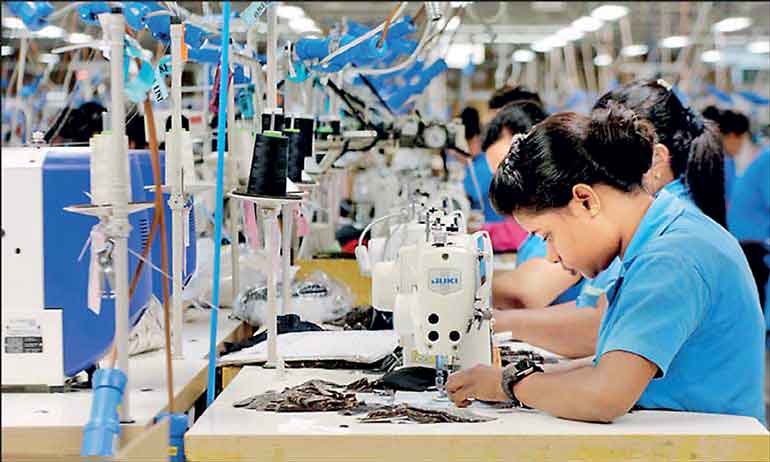
The depreciation argument is not just insufficient — it is actively harmful, because it removes the pressure to do the hard work
 Every time the Sri Lankan rupee comes under pressure, a familiar chorus rises from the export lobby. A cheaper rupee, they argue, makes our products more attractive to buyers abroad. It helps our tea farmers, our garment factories, our rubber producers. It is, they insist, good for exports.
A depreciation does not make you competitive. It makes you cheaper. Those are very different thingsLook at SingaporeIf a weak currency is the path to export success, Singapore should be a cautionary tale. The Singapore dollar has appreciated beyond 30% against the US dollar since 2002. The Monetary Authority of Singapore does not even set an interest rate — it manages the exchange rate deliberately, and it has consistently allowed the Singapore dollar to strengthen as a tool to keep inflation low.Singapore has no natural resources. No oil. No tea estates. No rubber. It has a small population and extremely high wages by regional standards.And yet. Singapore’s exports grew from around $ 130 billion in 2002 to over $ 500 billion by 2023. It is the world’s third-largest foreign exchange trading centre. Its per capita income now exceeds that of the United States (in PPP terms). Its pharmaceutical and semiconductor exports have expanded even as its currency has appreciated.6 7 8How? Because Singapore made a different choice. It decided that it would not compete on price. It would compete on what you cannot easily get anywhere else. Precision engineering. Financial services infrastructure. Pharmaceutical manufacturing with international certification. Semiconductor supply chain integration. These are not products where a buyer shops around for the cheapest option. These are products where Singapore is one of a small number of places in the world that can reliably deliver them.A strong Singapore dollar does not hurt those exporters. It actually helps them — because it makes imported capital equipment cheaper, keeps inflation low, holds down production costs in real terms, and signals to international investors and partners that Singapore is a stable, trustworthy place to do business.Honest conversation Sri Lanka needs to haveThe depreciation argument is not wrong for everyone. If you are a pure commodity exporter with no imported inputs and no alternative buyer pressure, a weaker currency does give you a temporary margin improvement. Sri Lanka has some exporters in that position.But Sri Lanka is not building an export economy on the back of those marginal cases. It is trying to build a serious, growing share of global trade. And for that ambition, the depreciation argument is not just insufficient — it is actively harmful, because it removes the pressure to do the hard work.When a garment factory can survive on the back of a cheap rupee, there is no incentive to invest in design capability, in international certification, in ethical supply chain standards that would allow it to become a preferred supplier rather than a price-dependent one. When a tea producer can recover margins through currency moves, there is no urgency to build a premium brand, a geographical indication, a product that commands a price above the commodity floor.Sri Lanka is emerging from its worst economic crisis in living memory. The rupee has reset. Real interest rates are now positive for the first time in years. The IMF program provides a fiscal anchor. This is actually the moment — perhaps the best moment in a generation — for the export sector to look honestly at its own structure.The exporters who use this window to invest in differentiation, in quality certification, in moving up the value chain, will be genuinely competitive in 2030. The exporters who wait for the next depreciation cycle to restore their margins will find the same buyers, the same price pressure, and the same structural trap — with compound interest.9 10Singapore decided it would not compete on price. It would compete on what you cannot easily get anywhere else. A strong currency helped, not hurt(The author is a Chartered Financial Analyst with 25 years of experience in Corporate Finance, Investment Banking, and Restructuring. The views expressed are the writer’s own and do not represent institutional endorsements)References1. ILO (2020). The Garment Sector in Sri Lanka. International Labour Organization, Colombo.2. Berman, N., Martin, P. & Mayer, T. (2012). ‘How do different exporters react to exchange rate changes?’ Quarterly Journal of Economics, 127(1), pp. 437–492.3. FAO (2022). World Tea Production and Trade: Current and Future Development. Food and Agriculture Organization, Rome.4. Central Bank of Sri Lanka, Annual Report, various years. cbsl.gov.lk5. IMF (2023). Sri Lanka: 2023 Article IV Consultation and First Review Under the Extended Arrangement. IMF Country Report No. 23/116. International Monetary Fund, Washington DC.6. Singapore Department of Statistics (2024). Singapore’s External Trade 2023. singstat.gov.sg7. World Bank Open Data (2024). GDP per capita, PPP — Singapore. data.worldbank.org8. Monetary Authority of Singapore (2023). Monetary Policy Statement, October 2023. mas.gov.sg9. World Bank (2023). Sri Lanka Development Update: Macroeconomic Stability for Sustained Recovery. World Bank, Washington DC.10. Kelegama, S. (2009). ‘Ready-made garment exports from Sri Lanka.’ Journal of Contemporary Asia, 39(2), pp. 579–596.Recent columns
COMMENTS



