Wednesday Nov 25, 2026
Wednesday, 25 November 2026 03:39 - - {{hitsCtrl.values.hits}}
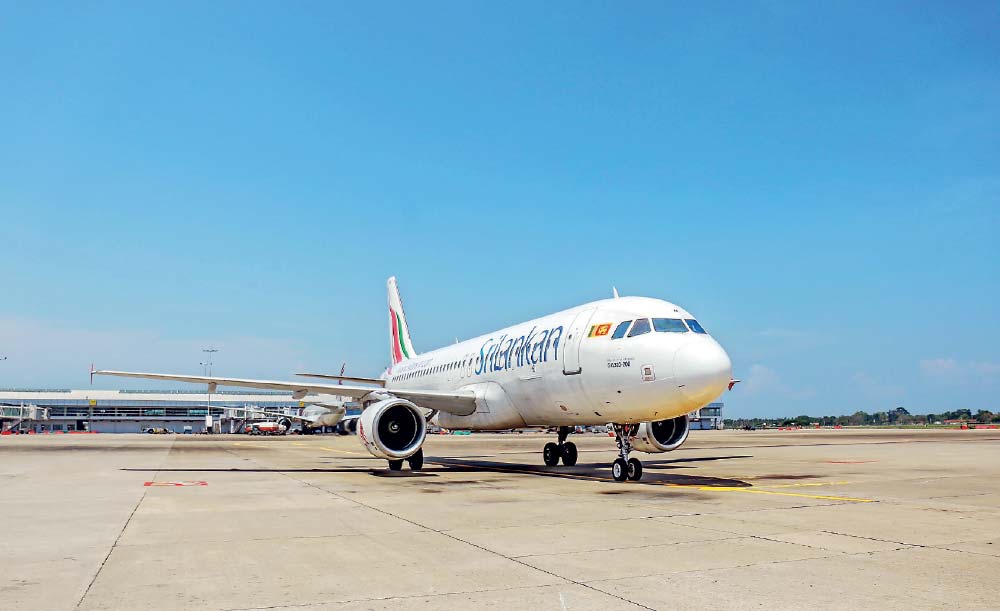
SriLankan Airlines has once again announced an ambitious five-year plan aimed at restoring profitability, expanding its fleet and improving operational efficiency.

The plan was discussed before Parliament’s Sectoral Oversight Committee on Infrastructure and Strategic Development, where attention was given to aircraft shortages, technical delays, mounting debt and procurement difficulties.
These are undoubtedly serious matters requiring immediate attention. However, there is another equally important question that deserves national discussion.
Before expanding the airline, have we properly identified and stopped the financial leakages, unnecessary expenditure, poor management practices and potential irregularities that may be contributing to its continuing losses?
A simple business principle that should not be ignored
Imagine running a small shop that continuously loses money. Would the first solution be to open another five branches, purchase additional equipment and employ more staff? Certainly not.
Any responsible business owner would first examine the accounts, identify where money is being lost, investigate unnecessary expenses and take immediate corrective action.
Only after bringing the existing business under control would expansion become a sensible option. Why should this basic principle be any different for SriLankan Airlines?
An airline is undoubtedly more complex than a small shop. Aircraft availability, network connectivity and operational reliability are essential to generating revenue. Nevertheless, expanding a business that is already making substantial losses without properly addressing its underlying weaknesses could increase the financial burden rather than resolve it.
Billions lost, yet fundamental questions remain
According to the Finance Ministry’s Mid-Year Fiscal Position Report, SriLankan Airlines recorded a loss before tax of approximately Rs. 35.6 billion during the first three months of the 2026/27 financial year.
The same report identified substantial increases in fuel expenditure, foreign exchange losses and continuing structural financial difficulties.
Meanwhile, the President has reportedly informed Parliament that the airline’s accumulated losses between 2008 and 2025 reached approximately Rs. 528 billion. These figures should concern every Sri Lankan citizen.
The airline’s financial problems cannot simply be attributed to corruption or management failures. Fuel prices, exchange rates, aircraft maintenance, financing costs and international disruptions all have significant consequences.
However, these external challenges should not prevent a thorough investigation into expenditure that management can actually control. Why are overseas stations and GSA contracts not receiving greater attention?
One area that deserves particular scrutiny is SriLankan Airlines’ overseas station operations, including General Sales Agent (GSA) agreements, ground handling arrangements, staffing structures and other contracted services.
Across international stations, expenditure is often incurred in foreign currencies such as Singapore dollars, US dollars and euros.
When converted into Sri Lankan rupees, even relatively small amounts of avoidable expenditure can become substantial.
Are all overseas GSA arrangements still commercially necessary? Are the services being billed actually delivered? Are staffing levels justified by the workload? Are contracts being regularly reviewed against market rates? Could some activities be managed more efficiently through alternative arrangements?
These are not accusations against every GSA or overseas station. Many such arrangements are essential and provide valuable services.
However, every agreement involving the airline’s money should be independently examined to establish whether it represents genuine value.
Where there are credible allegations of overbilling, unsupported invoices, conflicts of interest or services not delivered, they should be investigated using contracts, invoices, duty rosters, operational reports and payment records.
Any wrongdoing established through proper investigation must lead to accountability and, where legally possible, the recovery of funds.
An independent audit must come before major expansion decisions
The airline should commission a genuinely independent financial and operational audit, prioritising areas of greatest risk across its major departments and overseas operations.
This examination should include aircraft leasing, maintenance expenditure, procurement, crew accommodation, transportation, station administration, staffing, GSA contracts and ground handling agreements.
The objective must not simply be to produce another report that remains on a shelf.
The findings should identify unnecessary expenditure, weaknesses in internal controls, commercially unjustified contracts and opportunities for immediate savings.
The Government should also establish a clear process for referring suspected criminal conduct to the appropriate independent authorities.
An investigation must be based on evidence, conducted transparently and remain free from political interference.
Fleet expansion alone cannot guarantee profitability
The proposal to increase the fleet from 23 aircraft to at least 29 by 2029 may be operationally justified.
Aircraft shortages can cause delays, cancellations, missed connections, additional accommodation expenses and serious damage to customer confidence.
However, additional aircraft also introduce leasing costs, maintenance commitments, insurance, staffing requirements and other financial obligations.
Therefore, every aircraft acquisition should be supported by a transparent business case demonstrating expected revenue, route profitability, operating costs and financial risks.
The airline must also review routes that consistently perform poorly, aircraft utilisation, scheduling efficiency, maintenance planning, cargo opportunities and revenue management.
A larger fleet is not necessarily a healthier airline.
The objective should be a financially sustainable airline, not simply a bigger airline.
Accountability must begin at management level
SriLankan Airlines has experienced numerous leadership changes and restructuring proposals over the years.
Each new leadership team arrives with expectations of improvement, yet the underlying financial difficulties remain.
The time has come to move beyond announcements and establish measurable accountability.
Every department should have clearly defined financial and operational targets.
Senior management should be required to explain significant budget overruns, recurring inefficiencies and failures to implement agreed corrective measures.
A confidential and independently supervised reporting mechanism should also protect employees and former employees who provide credible evidence of financial irregularities or misconduct.
Those raising legitimate concerns should not face retaliation merely for requesting an investigation.
A practical roadmap to recovery
A credible recovery plan should begin with immediate action rather than waiting several years for results.
Within the first 90 days, the Government should initiate independent reviews of expenditure presenting significant financial risks, major overseas contracts and areas where credible financial irregularities have been reported.
Within six months, the airline should begin implementing verified cost-saving measures, renegotiating unjustified expenditure and correcting weaknesses in procurement and financial controls.
Within 12 months, management should publish measurable results showing savings achieved, operational improvements, route performance and progress towards financial sustainability.
The longer-term fleet and network strategy should proceed alongside these measures, but every major investment must be justified by independently reviewed financial projections.
Parliament should receive regular progress reports, with sufficient information made public to demonstrate that genuine corrective action is taking place.
The people of Sri Lanka deserve better
Sri Lanka is a country where many families continue to struggle with the cost of living.
Public resources are precious, and every rupee committed to supporting a State enterprise that continues to make losses carries an opportunity cost.
That money could otherwise support healthcare, education, infrastructure and essential public services.
SriLankan Airlines remains an important national institution, with experienced employees, international connections and the potential to contribute meaningfully to tourism and the economy.
Its dedicated workforce should not be unfairly blamed for failures beyond its control.
But protecting the airline must also mean protecting public money.
The Government, Parliament, Finance Ministry and airline leadership have a responsibility to ensure that recovery is built on transparency, financial discipline, operational efficiency and accountability.
The question Parliament must answer
The five-year plan may contain worthwhile proposals. But the public deserves to know whether it includes a sufficiently independent investigation into existing expenditure, contracts and financial controls.
Before approving further major expansion, Parliament should demand clear answers.
Why is the airline losing money? Which losses are unavoidable, and which can be prevented? What has management already done to stop unnecessary expenditure? Who is responsible for implementing corrective action, and how will success be measured?
SriLankan Airlines does not need another recovery plan that merely promises a brighter future.
It needs a recovery program that identifies the real problems, takes corrective action and demonstrates measurable results.
Stop the financial bleeding. Investigate the leakages. Eliminate unnecessary expenditure. Establish accountability. Restore financial discipline. Then expand responsibly.
That is how SriLankan Airlines can begin rebuilding its financial strength, public confidence and long-term future.
(The author is a former SriLankan Airlines Representative in Singapore, with over 13 years of aviation experience at Changi Airport)