Monday Nov 09, 2026
Monday Nov 09, 2026
Monday, 9 November 2026 04:13 - - {{hitsCtrl.values.hits}}
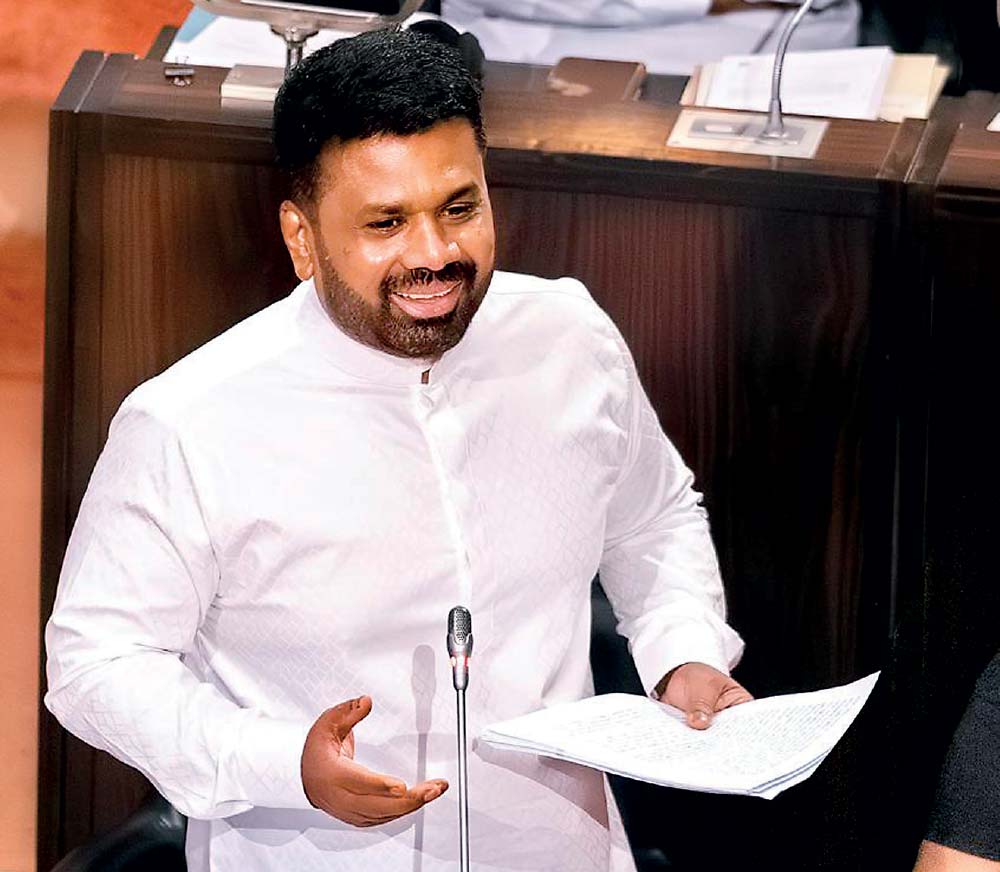
President and Finance Minister delivering his second Budget in November 2025. His third Budget will be read in Parliament this Thursday (12) amid growing concern over high taxes and poor public services
 The third Budget’s ultimate test will be neither the enthusiasm surrounding revenue achievements nor the generosity of promised concessions. It will be whether ordinary citizens believe they are treated fairly and their money is used responsibly. Failure to honour this moral contract could deepen dissent and undermine even worthwhile policies, including good-governance and anti-corruption programs
 President Anura Kumara Dissanayake’s third Budget is approaching amid growing concern over high taxes and poor public services. The AKD Government, closely following International Monetary Fund (IMF) prescriptions, takes pride in exceeding revenue targets. Yet its satisfaction is not shared by many taxpayers, who question whether they receive value for the money they surrender to the State. Fiscal success means little to citizens unless it translates into better services and improved living conditions.
With the Opposition capitalising on these grievances, pressure for tax relief is mounting. AKD and his senior ministers have promised reductions in the forthcoming Budget without compromising revenue targets. The challenge is to turn these assurances into meaningful relief while preserving the hard-won gains in fiscal stability.
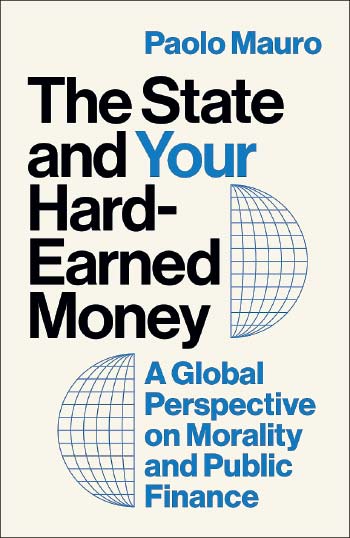
For guidance, AKD would do well to read Paolo Mauro’s recently published book, ‘The State and Your Hard-Earned Money’. Its subtitle, A Global Perspective on Morality and Public Finance, captures its relevance to Sri Lanka’s predicament. The former senior IMF economist explores two fundamental questions: how much of citizens’ earnings is the State morally entitled to collect, and what does it owe those who pay? These questions place the taxpayer, rather than the revenue target, at the centre of fiscal policy.
This is more than a book about taxation and expenditure. It examines the moral relationship between the State and its citizens, urging policymakers to look beyond fiscal targets and consider fairness, integrity and public purpose. Those preparing Sri Lanka’s next Budget should keep these principles firmly in view.
Taxation: More than a Government revenue exercise
Mauro begins with a fundamental question: what is the right thing to do when a Government collects and spends public money?
Taxation is usually debated in terms of revenue, deficits, debt sustainability and growth. Governments need resources to provide services, maintain infrastructure and meet social obligations. The need for taxation is rarely disputed; the harder questions are how much to collect, from whom and for what purposes.
Yet taxation is also a moral issue. Every rupee collected comes from income that individuals or businesses could otherwise spend, save or invest in education and better living standards. The State must therefore offer a convincing public justification for taking part of those earnings.
Citizens have a duty to contribute to the common good, and a functioning State requires adequate resources. But this obligation is reciprocal: the State’s authority to tax carries a corresponding responsibility to serve its people.
|
This is more than a book about taxation and expenditure. It examines the moral relationship between the State and its citizens, urging policymakers to look beyond fiscal targets and consider fairness, integrity and public purpose
|
Fairness: Who should pay and how much?
Mauro explores the growing concern over fairness in taxation and the distribution of income and wealth.
Different philosophical approaches emphasise different principles: contributing according to ability to pay, retaining the rewards of work and enterprise, and ensuring equal opportunities so that disadvantaged people are not excluded from the benefits of development.
These principles need not conflict. A fair tax system should recognise individual effort without placing a disproportionate burden on those least able to finance public services. Fairness requires balancing these concerns.
In Sri Lanka, taxes affect groups differently. Salaried employees taxed at source have little scope to avoid or defer payment, while small businesses face substantial compliance costs. Consumption taxes weigh especially heavily on lower-income households, which spend a larger share of their earnings on essentials. These differences matter when assessing who bears the burden of taxation and whether the system treats citizens fairly.
The test is not merely whether the Government raises enough revenue, but whether the burden is shared fairly. Fairness does not require cutting every tax or shielding wealthy individuals and profitable businesses from higher contributions. It requires a system citizens can understand and accept.
AKD’s forthcoming Budget should therefore target genuine inequities and ease disproportionate burdens, rather than use tax relief to reward selected groups for political advantage. Fairness, not favouritism, should guide relief.
The expanding State and the quality of public services
Mauro examines the State’s expanding role. Beyond law and order and basic administration, modern governments are responsible for education, healthcare, transport, infrastructure and social protection.
These obligations require more revenue, but also demand greater efficiency and accountability. A larger State must demonstrate that it uses public money well.
Sri Lankan taxpayers’ frustration is therefore understandable. Despite paying income taxes, VAT and other levies, they face difficulties in public hospitals, poorly resourced schools, inadequate transport and neglected infrastructure. Public institutions are frequently criticised for delays, inefficiency and indifference to citizens’ needs.
Not all these failures originated with the present Government. It inherited serious economic and institutional problems, limited fiscal space, heavy debt obligations and competing demands. Nevertheless, its performance must be judged by the services it delivers, not simply the revenue it collects.
Fiscal consolidation cannot indefinitely justify high taxes while the quality of public services remains inadequate. Taxpayers deserve tangible benefits in return for their contributions.
The next Budget must therefore be assessed not only against revenue targets and the IMF’s primary-balance requirement, but also against visible improvements in daily life. The State must learn to spend as carefully as it collects: fiscal discipline and better services must advance together.
Corruption: The enemy of the taxpayer
Corruption is among the most important issues Mauro examines, particularly for Sri Lanka. He explores why it persists and how institutional opportunities and incentives enable public resources to be diverted for private gain.
The damage extends beyond missing money: corruption undermines the relationship between the State and its citizens.
An ordinary taxpayer works hard, pays taxes and expects that money to serve the public. Inflated contracts, wasteful spending, political patronage and outright theft betray that expectation. The sense of injustice deepens when those responsible escape accountability. Taxpayers are entitled to feel cheated when their contributions enrich private interests rather than meet public needs.
Corruption also fuels a destructive cycle. Perceived misuse of public money weakens willingness to pay taxes and makes evasion and avoidance more socially acceptable. Falling compliance then prompts stricter enforcement or higher rates, further increasing resentment.
Fighting corruption is therefore not separate from sound public finance. It is essential to sustaining a tax system that citizens trust and are willing to support.
For the AKD Government, elected on a strong mandate for good governance and ending corruption, the stakes are particularly high. Its anti-corruption program is more than a political pledge: it is essential to restoring public trust in the State.
Citizens asked to sacrifice for economic recovery must see public officials held equally accountable. The Government must uphold one law for everyone, award contracts transparently and act against those who misuse public funds, without political interference or favouritism.
Once taxpayers lose confidence, securing cooperation for necessary reforms becomes much harder. Public trust is therefore not an optional benefit of sound fiscal policy; it is vital to its success. Mauro’s lesson is simple: the State must earn the trust of those whose money it collects.
The IMF program and the Government’s responsibility
Sri Lanka’s IMF program is central to its economic recovery. Following the crisis, restoring fiscal discipline, rebuilding foreign reserves and reducing public debt became unavoidable priorities.
The Government deserves credit for maintaining discipline and exceeding programme targets. According to the IMF’s 2026 review, total revenue reached 16.6% of GDP in 2025, against an estimate of 14.6%. Tax revenue was 15.4%, compared with a 13.6% target. The primary surplus reached 5.4%, well above the 2.3% target.
Yet the sources of this overperformance matter. The IMF attributes much of the revenue increase to surging motor vehicle imports and related taxes, while noting that capital expenditure fell below budgeted levels.
Exceptional import receipts do not necessarily signal a lasting improvement in the tax system. Nor does a surplus achieved partly by underspending on capital projects demonstrate better financial management. Collecting more while postponing essential infrastructure and development investment cannot secure long-term prosperity. Fiscal results must therefore be assessed for their durability and the expenditure choices behind them, not celebrated solely for exceeding targets.
The IMF recommends stronger tax administration, a broader tax base, rationalised exemptions and a medium-term revenue strategy to improve efficiency and equity. These reforms provide a framework for recovery, not a substitute for the Government’s judgement. Within that framework, elected leaders must make choices reflecting Sri Lanka’s social and moral priorities. They remain responsible for explaining unpopular decisions and ensuring that public money serves citizens. The IMF should neither become a blanket excuse for fiscal decisions nor a scapegoat for domestic failures in administration, expenditure management or service delivery.
The moral contract between State and citizen
Mauro’s most valuable contribution is his insistence that fiscal policy must draw on broader moral perspectives. Citizens judge taxation not simply by calculations, but by fairness, officials’ conduct, public services and the opportunities available to their families. They may accept higher taxes when public money is used honestly and efficiently, yet resent even modest levies when it is wasted or institutions appear corrupt and indifferent. The legitimacy of taxation therefore depends not only on what the State collects, but also on how it behaves and what it delivers.
This is the moral contract between the State and the citizen. Citizens contribute to common objectives; in return, the State provides security, essential services, equal treatment, economic opportunities and governance that protects the public interest. Neither side’s responsibilities can be considered in isolation. The contract is more than an abstract ideal: it should shape budget priorities, spending decisions and everyday administration. It links the citizen’s duty to pay with the Government’s duty to justify the use of that money. Revenue collection and public service are thus reciprocal obligations, not separate exercises.
For Sri Lanka, fulfilling this contract means practising good governance: collecting revenue fairly, spending prudently and accounting transparently. Public institutions must serve citizens rather than political or private interests. Decisions must be explained, officials held accountable and corruption rejected. The Government must also listen to grievances and revise policies that cause unnecessary hardship. The AKD Government has repeatedly pledged good governance and action against corruption. It must now translate those promises into the management of public finances. The forthcoming Budget should make the moral contract an explicit guiding principle, connecting fiscal decisions with citizens’ expectations of fairness and responsible Government.
What should the next Budget deliver?
The next Budget gives AKD an opportunity to move beyond celebrating revenue targets and address citizens’ legitimate concerns through six priorities.
Fiscal discipline and social justice need not conflict. A well-designed Budget should advance both, making public finances sustainable while ensuring that citizens receive fair treatment and tangible value for their contributions.
The forthcoming Budget gives AKD an opportunity to turn that principle into practice. He should seize it before frustration becomes a deeper crisis of confidence, placing responsible stewardship at the heart of fiscal policy. The State may have the power to collect our hard-earned money. But it has a moral obligation to earn the right to spend it
A Budget that restores trust
Mauro’s book reminds us that successful public finance cannot be measured by revenue alone. A Government may meet fiscal targets, record a primary surplus and satisfy international creditors without winning its citizens’ confidence. Economic recovery must ultimately improve people’s lives. Fiscal stability is essential to that goal, but it is a means, not an end. The distinction matters when judging a Budget that asks citizens to make sacrifices.
AKD can use the forthcoming Budget to renew the relationship between the State and the taxpayer through fair taxation, efficient spending, integrity and accountability. Tax relief should not be a political concession to silence the Opposition, but part of a broader effort to make Government more responsive and responsible. Citizens, too, must recognise that taxation sustains essential services, supports recovery and protects future generations from excessive debt. The goal is not a State without taxes, but one that justifies what it collects. Both sides must honour their obligations if this relationship is to endure.
The third Budget’s ultimate test will be neither the enthusiasm surrounding revenue achievements nor the generosity of promised concessions. It will be whether ordinary citizens believe they are treated fairly and their money is used responsibly. Failure to honour this moral contract could deepen dissent and undermine even worthwhile policies, including good-governance and anti-corruption programs. Once taxpayers lose confidence, securing cooperation for necessary reforms becomes much harder. Public trust is therefore not an optional benefit of sound fiscal policy; it is vital to its success.
Mauro’s lesson is simple: the State must earn the trust of those whose money it collects. The forthcoming Budget gives AKD an opportunity to turn that principle into practice. He should seize it before frustration becomes a deeper crisis of confidence, placing responsible stewardship at the heart of fiscal policy.
The State may have the power to collect our hard-earned money. But it has a moral obligation to earn the right to spend it.
(The writer, a former Deputy Governor of the Central Bank of Sri Lanka, can be reached at [email protected])