Tuesday Oct 06, 2026
Tuesday Oct 06, 2026
Tuesday, 6 October 2026 06:10 - - {{hitsCtrl.values.hits}}
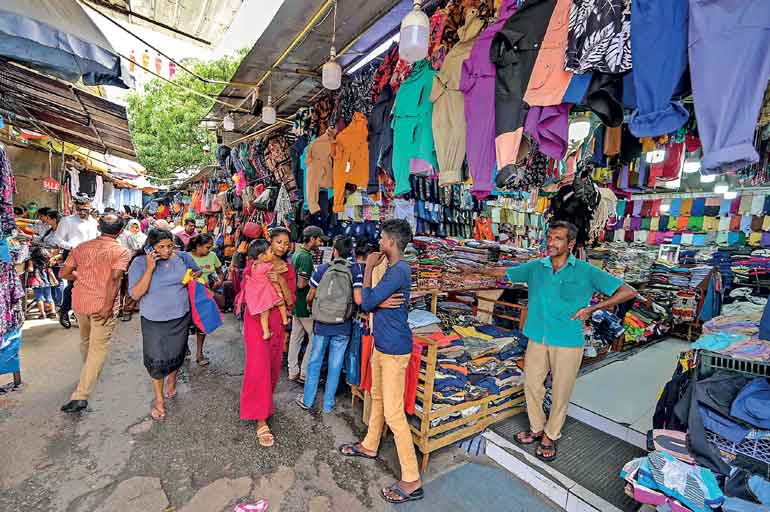
 How does a Sri Lankan family decide where to spend its money each month?
The answer may look different today than it did a few years ago. Sri Lanka’s household consumption has recovered to a record level after a period of sustained economic pressure. Real household consumption, which fell from Rs. 8.2 trillion in 2019 to Rs. 8 trillion in 2023, rebounded to Rs. 8.9 trillion by 2025. Over 2023-2025, household consumption as a share of real GDP averaged 67%, reaffirming consumers as Sri Lanka’s largest demand engine and placing them firmly at the centre of the growth equation.
But this recovery in consumption does not tell the whole story. A survey of 2,272 consumers in Sri Lanka by BCG’s Centre for Customer Insight finds that over the next six months, 77% of consumers expect their household spending to increase, while 38% expect their income to rise. The survey points to a more deliberate allocation of household budgets and a consumer landscape in which overall spending is expected to rise, but spending priorities are shifting.
How the wallet is allocated
57% of consumers expect to spend more on essentials like staples and personal care, while 46% expect to maintain their spending on semi-discretionary and impulse items like clothing, footwear and packaged foods. On the other hand, 37% expect to cut back on their spending on low-outlay discretionary or occasional purchases like travel and home improvement. For high-ticket discretionary categories like vehicles and large appliances, 38% of consumers intend to defer their purchase. It is clear that consumers are being more careful in deciding what stays in the shopping basket, what gets reduced and what can wait.
There is no single
Sri Lankan consumer
Income plays a significant role in determining how households respond to spending pressures. Higher-income households earning more than Rs. 150,000 a month (Established+ households) demonstrate greater resilience. Their intent to cut back on or defer discretionary purchases is around 40% lower than the national average. Thus, a single national demand forecast does not adequately capture consumer behaviour.
What this means for businesses
A deeper look reveals how consumption patterns are evolving across income groups. Essentials like staples and personal care may offer the most dependable volume, but they are not immune to scrutiny. When household budgets remain under pressure, consumers can protect a category while still becoming more selective about brands, pack sizes, prices and value. Therefore, for businesses, the focus must move from simply being present in the basket to deepening customer loyalty.
But this recovery in consumption does not tell the whole story. A survey of 2,272 consumers in Sri Lanka by BCG’s Centre for Customer Insight finds that over the next six months, 77% of consumers expect their household spending to increase, while 38% expect their income to rise
Semi-discretionary and impulse items such as packaged foods, clothing and footwear are neither as protected as essentials nor as readily cut back as major purchases. Although consumers are likely to continue spending on these items, they will be ready to reconsider their choices, if the value equation changes. This is where brands may need to work harder to justify their proposition.
At the other end of the spectrum, larger commitments like vehicles and large appliances face a different dynamic. A sizable share of consumers are likely to defer the purchase of high-ticket discretionary items. For businesses, understanding what holds consumers back and what could give them sufficient confidence or motivation to act sooner, becomes as important as generating demand in the first place.
Sri Lanka’s consumer recovery is creating opportunities for businesses, but it calls for a more nuanced view of the consumer. Pricing decisions, portfolios and propositions need to reflect where consumer groups are able and willing to spend. Businesses that can read these differences in purchasing power, trade-offs and deferred demand will be better positioned to turn a broad recovery into sustained growth.
(Nishant Gupta is Managing Director and Senior Partner, at Boston Consulting Group (BCG); Parul Bajaj is India Leader – Marketing, Sales and Pricing and Managing Director and Partner, BCG)
Sri Lanka’s consumer recovery is creating opportunities for businesses, but it calls for a more nuanced view of the consumer. Pricing decisions, portfolios and propositions need to reflect where consumer groups are able and willing to spend. Businesses that can read these differences in purchasing power, trade-offs and deferred demand will be better positioned to turn a broad recovery into sustained growth



