Wednesday Oct 14, 2026
Wednesday Oct 14, 2026
Wednesday, 14 October 2026 00:22 - - {{hitsCtrl.values.hits}}
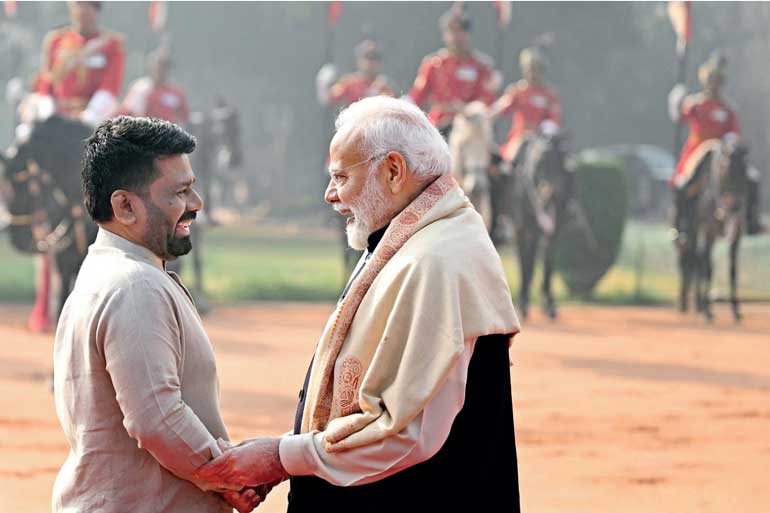
Attracting the high end Indian Tourist is a key strategy
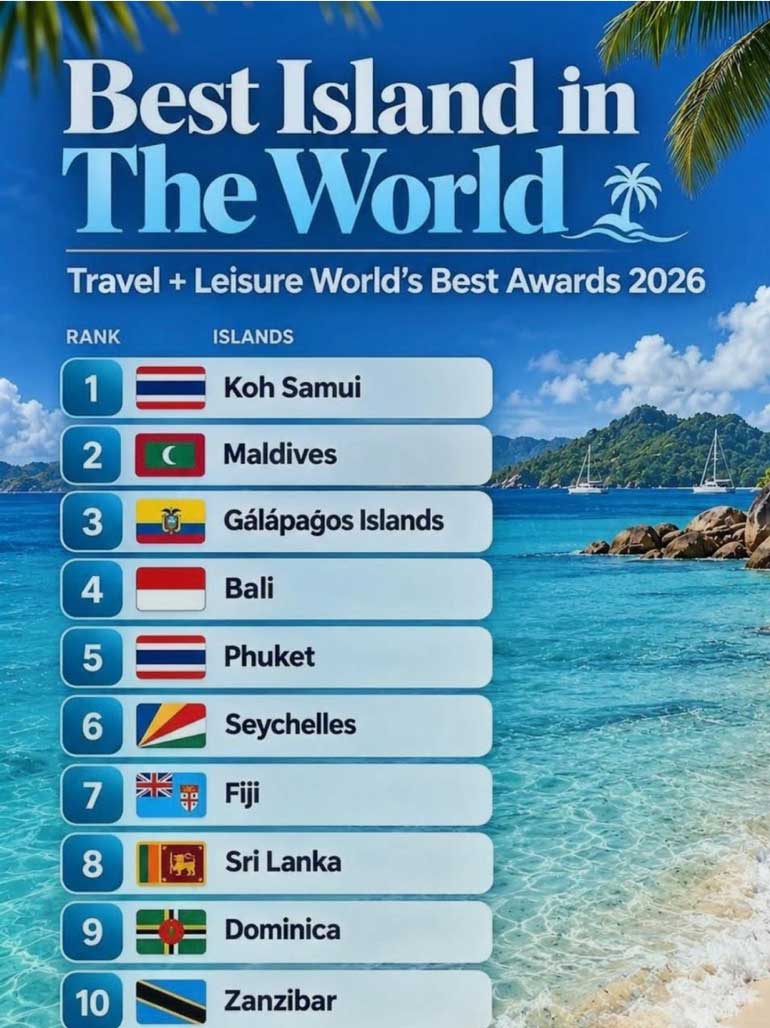
 Sri Lanka's tourism industry has much to celebrate. In 2025, the country welcomed a record 2.36 million international visitors, surpassing pre-pandemic arrival levels and reinforcing confidence that tourism has recovered from the combined shocks of the Easter Sunday attacks, COVID-19, and the economic crisis. Yet beneath this success story lies a troubling reality.
While Sri Lanka is attracting more visitors than ever before, the value generated from those visitors is declining. The latest tourism statistics, together with findings from the SLTDA-MDF Airport Survey, suggest that the country may be pursuing growth, but not necessarily the right kind of growth. The uncomfortable question facing policymakers and industry leaders is whether Sri Lanka Tourism is becoming increasingly successful at attracting tourists while becoming progressively less successful at attracting value.
Looking beyond arrival numbers
For decades, tourism success in Sri Lanka has been measured primarily through one indicator: visitor arrivals. The assumption was simple. More visitors would generate more foreign exchange earnings, create employment opportunities, stimulate local businesses, and contribute to economic growth.
However, the latest figures suggest that this relationship is weakening. Tourist arrivals increased by 15.1% in 2025 to reach 2.36 million visitors, yet tourism earnings grew by only 1.6% to $ 3.22 billion More concerning, visitor value declined significantly. Per capita expenditure fell from $ 1,544 to $ 1,363, representing a 12% decline, while average daily spending dropped from $ 171 to $ 148, a reduction of 14%.
In simple terms, Sri Lanka is welcoming more tourists but earning less from each visitor. This raises a critical strategic question: what has changed? Part of the answer lies in understanding who is now visiting Sri Lanka and how travel behaviour has evolved.
The survey results we cannot ignore
The Sri Lanka Tourism Development Authority (SLTDA), with support from Australia's Market Development Facility (MDF), recently unveiled what is arguably the largest tourism research exercise conducted in the country's history under the theme "From Data to Decisions: Strengthening Tourism Through Evidence and Collaboration."
Conducted between July 2024 and June 2025, the study captured responses from 11,731 inbound tourists and 5,000 outbound Sri Lankan travellers using a stratified random sampling methodology. The scale and rigor of the study make it one of the most statistically reliable tourism datasets produced in recent years.
The findings reveal a tourism market undergoing significant transformation:
At first glance, these findings appear highly encouraging. Sri Lanka is attracting educated, globally connected visitors seeking authentic experiences and meaningful engagement with destinations. The strong intention to revisit also suggests high levels of visitor satisfaction. 
However, when these findings are viewed alongside declining spending indicators, a different narrative emerges. The survey suggests Sri Lanka is increasingly attracting younger, digitally connected, experience-driven and highly price-conscious travellers. These visitors often prioritise experiences over material consumption. As the report notes, they prefer to collect stories rather than souvenirs.
There is nothing inherently wrong with this market segment. In fact, it is among the fastest-growing segments in global tourism. The concern is that it appears to be becoming the dominant segment within Sri Lanka's tourism portfolio. That is where the warning signs begin.
Have we really returned to pre-COVID performance?
A common narrative within the tourism industry is that Sri Lanka has returned to pre-pandemic performance. If arrivals are the only measure, that statement is accurate. In 2018, Sri Lanka welcomed approximately 2.33 million visitors and generated around $4.38 billion in tourism earnings. In 2025, arrivals reached 2.36 million visitors, almost identical to 2018 levels. Yet tourism earnings amounted to only $ 3.22 billion. The implications are significant. Sri Lanka is attracting almost exactly the same number of visitors as it did before the pandemic while generating more than $ 1 billion less in revenue.
A deeper examination of spending patterns strengthens this concern. Independent travellers, who now account for 62% of visitors, spend approximately $ 148 per day. While their spending is widely distributed across local businesses, restaurants, transport providers and community experiences, their overall expenditure remains relatively modest. In contrast, package travellers spend approximately $ 215 per day, almost 45% more than independent visitors. The United Kingdom remains a particularly important source market for this segment.
This distinction matters. If the fastest-growing segment consists primarily of independent travellers while higher-spending package travellers are growing more slowly, the result is exactly what Sri Lanka is experiencing today: rising arrivals accompanied by declining visitor value. This is not a statistical anomaly. It points to a fundamental shift in the economics of tourism. Arrivals have recovered. Value has not. And ultimately, value is what matters.
The 2026 reality is reinforcing the warning signs
If declining visitor yield in 2025 could be dismissed as a temporary post-pandemic adjustment, developments during 2026 make that explanation increasingly difficult to sustain. By August 2026, Sri Lanka had welcomed more than 1.5 million visitors and remained broadly on track toward annual tourism targets. India continued to dominate as the country's largest source market, while the United Kingdom, Russia, China, Germany and France remained among the leading contributors to arrivals. Yet concerns regarding tourism earnings have intensified.
Although tourism earnings exceeded $1.5 billion during the first half of 2026, industry discussions increasingly focused on whether revenue growth was keeping pace with visitor growth. Tourism authorities themselves have begun emphasising tourism value additions, premium experiences and higher-yield segments. This shift is important. The debate is no longer about whether Sri Lanka can attract tourists. The debate is whether Sri Lanka can attract profitable tourists.
The numbers are telling us a story
Statistics rarely exist in isolation. When arrivals grow by 15.1% while earnings increase by only 1.6%, the numbers are telling us something important about changing consumer behaviour. The survey paints a clear picture of the modern tourism consumer. Today's traveller books online, researches extensively, travels independently and actively seeks authentic experiences. This profile is dominated by educated professionals who value culture, heritage, nature and responsible tourism. They rely heavily on digital platforms and online reviews when making travel decisions.
Consequently, Sri Lanka's digital footprint and online reputation have become more important than traditional marketing channels. While this visitor profile aligns with contemporary tourism trends, it also presents challenges. These travellers are often highly informed consumers who spend selectively rather than extravagantly. They seek value rather than luxury. The challenge for Sri Lanka is therefore not attracting visitors. It is creating experiences compelling enough to increase spending while preserving authenticity.
Sri Lanka tourism is moving in the wrong direction
This is perhaps the most uncomfortable conclusion emerging from the evidence. Sri Lanka is not moving in the wrong direction because arrivals are increasing. It is moving in the wrong direction because the quality of tourism growth is deteriorating. The world's most successful destinations focus on maximising economic value while carefully managing environmental, cultural and infrastructure impacts. By that measure, Sri Lanka should be concerned.
Nearly half of visitors are young explorers. More than 60% travel independently. Most are first-time visitors. Almost half book through OTAs. At the same time, spending indicators continue to decline. These trends are not unrelated. Sri Lanka is increasingly attracting tourists who spend less, stay for shorter periods and display greater price sensitivity. While these visitors remain important, they cannot become the dominant segment in a small island nation with limited carrying capacity and fragile environmental assets. The consequences are already visible.
Yala National Park experiences overcrowding during peak periods. Sigiriya faces congestion pressures. Popular southern coastal destinations are experiencing growing stress on infrastructure, communities and environmental resources. Yet despite growing utilisation of these tourism assets, Sri Lanka generates less value per visitor than it did seven years ago. That is not sustainable growth. It is declining productivity. If a private company increased its customer base by 15% while generating only 1.6% revenue growth, management would immediately question whether it was attracting the right customers. Tourism should be no different.
How did we end up here?
Part of the explanation may lie in how Sri Lanka has positioned itself internationally. In the absence of a sustained global tourism campaign, destination promotion has increasingly relied on influencers, content creators and social media storytelling. Unlike the Maldives with its globally coordinated luxury positioning or India with its highly successful Incredible India campaign, Sri Lanka has struggled to maintain a consistent Integrated Marketing Communication strategy.
Digital creators naturally appeal to younger travellers, particularly Gen Z and younger millennials. Their content focuses on train journeys, surfing, cafés, beaches, wellness experiences and hidden destinations. Viewed through this lens, the Airport Exit Survey findings make perfect sense. The visitor profile Sri Lanka is attracting today reflects the marketing signals it has projected to the world. Visibility alone, however, is not a destination strategy.
Successful destinations combine digital influence with clear brand positioning, targeted consumer strategies and coordinated campaigns. This is precisely what Sri Lanka has lacked. There is hope that the proposed World Bank-supported tourism marketing initiative could provide a long-awaited solution. If implemented effectively, it could become one of the most important strategic interventions in the industry's recent history.
The challenge of source markets
The growing importance of India as Sri Lanka's largest source market has been vital for recovery and should be welcomed. However, the survey highlights important differences across source markets. European visitors are strongly attracted to wildlife and nature. Germans actively seek hiking and trekking. Indians are motivated by culture, spirituality and convenience. Russians and Americans favour beach tourism. Chinese and Western European visitors often travel as families and prioritise safety, authenticity and curated experiences. These findings demonstrate that Sri Lanka is not competing in a single tourism market.
It is competing across multiple tourism markets simultaneously. Yet much of the country's international marketing continues to rely on broad and generic messaging. The survey suggests Sri Lanka is increasingly becoming a multi-niche destination requiring multiple value propositions rather than a single tourism narrative. Growth from regional markets should therefore be complemented by targeted efforts to attract premium long-haul travellers, wellness tourists, luxury consumers and high-spending experiential travellers. Otherwise, arrival growth may continue to outpace revenue growth.
The good news hidden in the data
The survey also provides reasons for optimism. Sri Lanka continues to attract highly educated travellers with strong interests in culture, heritage, nature and authenticity. More importantly, tourism spending is becoming increasingly decentralised. Destinations such as Ella, Ahangama, Weligama, Mirissa, Dickwella and Matara are capturing larger shares of tourism expenditure, helping spread economic benefits beyond traditional tourism centres.
The strong intention among 45% of respondents to revisit Sri Lanka is another encouraging indicator. This suggests that while Sri Lanka may have a value challenge, it does not have a satisfaction challenge. Visitors clearly enjoy the destination. The opportunity therefore lies not in attracting entirely new customers but in increasing value from customers who already appreciate the Sri Lankan experience.
We have lost strategic focus
At its core, this is not simply a tourism challenge. It is a marketing challenge. One of the first principles taught in business schools is Segmentation, Targeting and Positioning. Who is the customer? Why should they choose us? What do we want them to think about our brand? The SLTDA-MDF Survey demonstrates that different visitor groups seek fundamentally different experiences. Young adults pursue adventure and exploration. Mid-career professionals increasingly combine business with leisure. Older visitors seek spirituality, wellness and culture.
This diversity should be viewed as an opportunity. However, it requires a far more sophisticated strategy than currently exists. Sri Lanka Tourism appears unable to clearly answer a fundamental question: Who exactly is our priority customer? Luxury traveller? Wellness tourist? Cultural explorer? Digital nomad? Affluent family? Adventure enthusiast? Backpacker? The answer appears to be all of them. Unfortunately, when a brand attempts to appeal to everyone, it often ends up standing out to no one.
The way forward
The solution is not to reject young explorers, backpackers or independent travellers. They remain an important part of Sri Lanka's tourism ecosystem. The solution is balance. Sri Lanka must decide who it wants to attract and then align its marketing, infrastructure, investment and product development accordingly. This requires a clearly defined target consumer strategy, stronger destination positioning, a compelling global tourism campaign and a new focus on visitor yield rather than visitor volume.
The SLTDA-MDF Survey may ultimately become the most important tourism study conducted in Sri Lanka during the past decade. More than simply describing visitor behaviour, it exposes a growing disconnect between tourism growth and tourism value. The evidence is clear. Sri Lanka does not have an arrivals problem. It has a yield problem.
The country has successfully rebuilt demand. The next challenge is rebuilding value. If the forthcoming Tourism Master Plan uses this evidence to reposition Sri Lanka around clearly defined market segments, premium experiences and higher visitor yield, record arrivals can be transformed into record earnings.
If not, Sri Lanka risks becoming a destination that is increasingly popular, increasingly crowded, yet progressively less profitable. The warning signs are already visible. Growth is no longer the challenge. Value is. The data has spoken. The real question now is whether policymakers and industry leaders are prepared to listen.
(The author is an alumni of Harvard University. The thoughts are strictly personal)



