Wednesday Oct 21, 2026
Wednesday Oct 21, 2026
Monday, 6 April 2026 03:08 - - {{hitsCtrl.values.hits}}
 The more unstable the world becomes, the more the map changes.
Wars in the Middle East, insecurity in Europe, volatile energy prices and disrupted supply chains have forced investors and governments alike to ask a harder question than before: which places will matter most in the next phase of the global economy?
Sri Lanka deserves to be one of the answers.
In recent years, the island has often been described in the language of failure — debt distress, political turmoil, institutional weakness, external dependence. None of this is imaginary. The economic collapse was real, and the rescue that followed was painful. But to see Sri Lanka only as a cautionary tale is to miss the more interesting possibility: that it may also be a country unusually well placed for the century now taking shape.
It does not possess the underground wealth that transformed the Gulf. There is no oil beneath Sri Lanka’s soil to promise effortless prosperity. But in a world less certain of hydrocarbons and more dependent on resilience, other forms of wealth are beginning to matter.
Geography
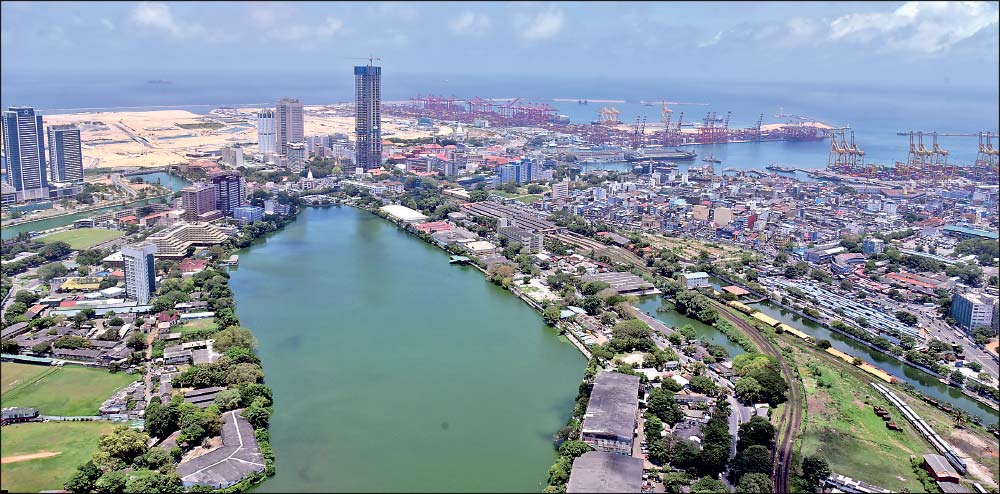
Start with geography. Sri Lanka sits near one of the busiest maritime corridors on earth, at the intersection of the routes linking East Asia, the Gulf, Africa and Europe. Colombo is not simply a national port; it is a regional hinge. In an era of fractured supply chains and renewed contest over trade routes, such proximity is no small asset. Countries once measured their fortune by what lay beneath the ground. Increasingly, it may be measured by where they stand on the map.
Then there is energy. Sri Lanka cannot become Saudi Arabia. But it need not. The future may reward those with sunlight, wind and water at least as much as those once blessed with crude. For a country burdened by imported fuel costs, renewable energy is not merely a green aspiration. It is a question of sovereignty: of conserving foreign exchange, reducing external vulnerability and lowering the economic cost of dependence.
Tourism, too, should be understood more seriously than it often is. Sri Lanka’s beaches, wildlife, sacred sites and historical landscapes are not simply attractions for brochures. Properly managed, they amount to economic soft power. Tourism does not only bring in money; it reshapes how a country is seen. And for a nation long associated abroad with war, crisis and default, reputation is itself a strategic resource.
Real dilemma
Yet this is precisely where caution is required. Potential is not performance. Geography is valuable only when institutions know what to do with it. Sunlight does not produce energy policy. Natural beauty does not create a tourism industry. Ports do not automatically generate prosperity. Without administrative competence, regulatory consistency and political discipline, strategic assets remain just that: assets, not outcomes.
This is Sri Lanka’s real dilemma. Its problem is not an absence of resources, but an inability, too often, to convert them into durable advantage.
The island is frequently portrayed as a vulnerable small state caught between larger powers. That is true, but only partly. Sri Lanka is also a country located where the world increasingly needs stability, connectivity and access. It may never become rich in the manner of the oil monarchies. But it could still become valuable in a different way: as a logistics hub, a renewable-energy frontier, a tourism economy and a service-oriented node in the Indian Ocean.
That would not be a miracle. It would be governance.
Sri Lanka has no oil. But in the twenty-first century, that may no longer be the most important question. The more important one is whether it can turn location into leverage, sunlight into strategy and vulnerability into value.
That future is not guaranteed. But nor is it out of reach.
(The author is Dean of the Faculty of International Liberal Arts and Sciences at Fukuoka Women’s University and a scholar of international politics and the Indian Ocean region.)




