Sunday Sep 13, 2026
Sunday Sep 13, 2026
Friday, 17 July 2026 00:22 - - {{hitsCtrl.values.hits}}
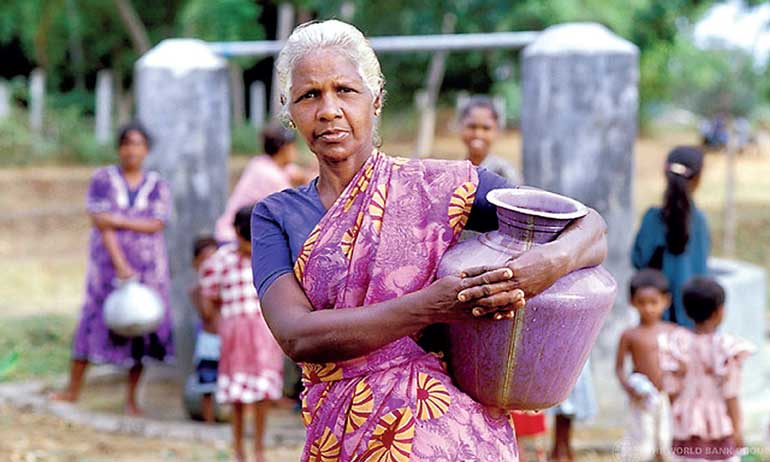
 On a Saturday morning in almost any town in Sri Lanka, the country's economic story unfolds in quiet, ordinary ways. A young couple carefully compares prices before deciding what they can afford to buy. A retired public servant postpones a medical check-up because the month's pension will not stretch far enough. Parents wonder whether they can continue paying for their children's tuition classes, while a small business owner worries about meeting payroll before the next customer walks through the door.
None of these conversations is about foreign exchange reserves, sovereign debt restructuring or inflation statistics. They are about school fees, electricity bills, transport costs, medicines and the rising price of everyday life.
Their experiences reveal an important truth. Although Sri Lanka has made remarkable progress in restoring macroeconomic stability, many households have yet to experience a meaningful improvement in their own financial well-being.
Country's greatest economic challenge
The country's greatest economic challenge is no longer restoring stability. It is ensuring that stability reaches the family budget of every Sri Lankan.
Sri Lanka has travelled a remarkable distance since the darkest days of its economic crisis. Foreign exchange reserves have strengthened, inflation has retreated sharply from its peak, tourism has rebounded, worker remittances have recovered, and progress on sovereign debt restructuring has restored a measure of international confidence. These achievements deserve recognition. They helped pull the country back from the brink of economic collapse.
Yet there is a crucial distinction between stabilising an economy and rebuilding prosperity.
Economic recovery cannot be measured by GDP growth, foreign reserves or sovereign credit ratings alone. Those indicators tell us whether the economy is becoming more stable, but they do not tell us whether people's lives are improving. A country truly recovers only when families regain purchasing power, workers earn higher real incomes and young people see genuine opportunities for a better future.
Sri Lanka has undoubtedly emerged from the emergency phase of the crisis. Inflation, which exceeded 70% during the height of the turmoil, has fallen dramatically. External accounts have improved, tourism is approaching pre-pandemic levels, and remittances continue to strengthen the country's foreign exchange position.
Yet the economy experienced by ordinary citizens tells a different story.
Cost-of-living recession
Prices remain substantially higher than they were before the crisis. Food, transport, electricity, rent, healthcare, education and many essential goods continue to consume a growing share of household incomes. Families are still reducing spending on nutrition, healthcare, education and recreation simply to meet their monthly expenses.
This is what economists describe as a cost-of-living recession—a period in which macroeconomic indicators improve while household welfare remains under pressure.
One of the greatest misunderstandings about inflation is the belief that lower inflation means lower prices. It does not. It simply means prices are rising more slowly than before. For households already struggling with permanently higher costs, that distinction offers little immediate comfort.
The official poverty line further illustrates the challenge. It measures only the minimum income required to meet basic consumption needs. It says nothing about savings, retirement, emergencies, children's education, home ownership or building wealth.
Escaping poverty is therefore not the same as achieving financial security.
Many families who are technically above the poverty line remain financially fragile, vulnerable to an unexpected illness, job loss or another economic shock.
Why positive economic headlines fail
Perhaps the most meaningful measure of recovery is the purchasing power of wages.
Although salaries have increased in several sectors, cumulative inflation has eroded much of those gains. Public servants, pensioners, middle-income employees, informal-sector workers and many small business owners continue to find that their incomes buy less than they did before the crisis.
This explains why positive economic headlines often fail to resonate with ordinary citizens. National accounts may be improving, but household accounts remain under pressure.
Sri Lanka's recent recovery has depended largely on tourism, worker remittances and international financial assistance, supported by debt restructuring. These have restored stability, but they cannot, by themselves, generate long-term prosperity.
Lasting economic progress requires something more fundamental: higher productivity.
Future growth must be driven by higher-value exports, advanced manufacturing, digital services, knowledge industries, innovation and globally competitive entrepreneurship. Without stronger productivity, real wages cannot rise sustainably, and improvements in living standards will remain limited.
2028 and beyond
The years leading towards 2028 may prove decisive. By then, ongoing reforms should begin to mature, private investment is expected to strengthen and export-oriented industries could generate broader employment opportunities.
But this outcome is not guaranteed. Economic growth without productivity risks producing another cycle of stagnant wages, widening inequality and household insecurity.
Government policy alone cannot prevent that outcome. The private sector will play the defining role.
Businesses that invest in technology, workforce skills, research and development, digital transformation and export competitiveness will not only strengthen their own performance but also create the conditions for sustainably higher wages. Prosperity has always been built through productivity, innovation and enterprise—not through subsidies alone.
Universities also have a vital responsibility. Sri Lanka possesses exceptional human capital, yet collaboration between academia and industry remains limited. Stronger partnerships in research, innovation, commercialisation and entrepreneurship can help transform knowledge into economic opportunity. Increasingly, ideas themselves will become valuable exports.
This also presents an extraordinary opportunity for young entrepreneurs. Every period of economic restructuring creates new markets for those prepared to solve emerging problems. Businesses that improve affordability, healthcare, education, logistics, agriculture, renewable energy and financial inclusion are likely to shape the next phase of Sri Lanka's development.
Supporting small and medium-sized enterprises with better access to finance, technology and export markets should therefore be viewed not simply as business policy, but as national economic strategy.
Ultimately, the success of Sri Lanka's recovery will not be judged by stronger foreign reserves or improved fiscal balances alone.
It will be judged by whether families can once again save with confidence, purchase a home, educate their children without financial anxiety, invest in their future, prepare for retirement and withstand unexpected financial shocks without falling into hardship. Those are the true measures of prosperity.
Sri Lanka has demonstrated extraordinary resilience. It has endured sovereign default, runaway inflation, fuel shortages, political upheaval and one of the deepest economic crises in its modern history. Restoring stability was an essential achievement, but it was never meant to be the final destination.
The next chapter requires a different kind of leadership—one that values productivity over consumption, innovation over dependency, exports over imports and long-term competitiveness over short-term political advantage.
The real task before us is no longer simply rebuilding the economy.
It is rebuilding confidence where it matters most—in the household.
A nation does not truly recover when its statistics improve. It recovers when its people do.
When every teacher, farmer, factory worker, entrepreneur, engineer, doctor, retiree and young graduate can look to the future with confidence rather than uncertainty, Sri Lanka's recovery will no longer be measured by economic indicators alone. It will be measured by the dignity, resilience and prosperity of its people.
Only then can we truly say that Sri Lanka has not merely stabilised its economy—it has rebuilt its future, one household at a time.
(The author is a communications professional with expertise in strategic communication, public affairs, and stakeholder engagement. They hold a Bachelor's degree in Business from RMIT University, Melbourne, Australia, and a postgraduate degree from Bournemouth University, United Kingdom. Drawing on an interdisciplinary background in business and communication, the author writes on issues relating to economics, public policy, governance, and international affairs)




