Saturday Oct 03, 2026
Saturday Oct 03, 2026
Tuesday, 9 June 2026 03:33 - - {{hitsCtrl.values.hits}}
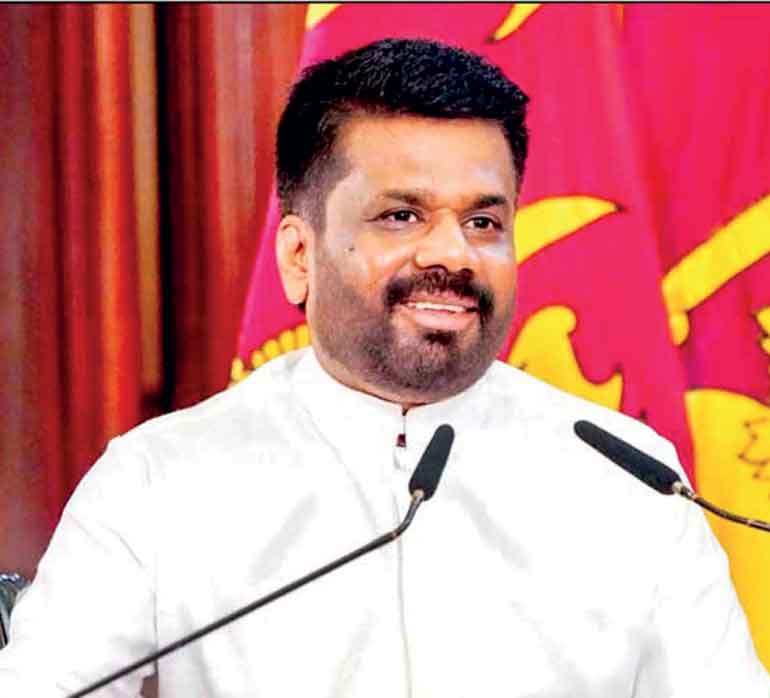
President and Finance Minister Anura Kumara Dissanayake
 Sri Lanka stands at a pivotal moment in its history. After enduring sovereign default, economic collapse, shortages of essential goods, and widespread social hardship, the country has achieved a degree of stability that seemed improbable during the darkest days of the crisis.
According to the IMF’s recent review of Sri Lanka’s Extended Fund Facility, most quantitative targets under the reform program have been met, debt restructuring is nearing completion, and governance and anti-corruption reforms continue to advance.
Yet the IMF has consistently emphasised that maintaining reform momentum remains essential, as the economy is still vulnerable to both domestic and external shocks.
However, stabilisation should not be mistaken for recovery, nor recovery for transformation. The fundamental question confronting Sri Lanka today is whether it will use this opportunity to build stronger institutions and a more resilient economy—or repeat the mistakes that led to its collapse.
The causes of the crisis are now well understood. Years of fiscal indiscipline, unsustainable borrowing, weak public financial management, political interference in economic decision-making, and inadequate accountability mechanisms created vulnerabilities that could no longer be ignored. The sovereign default was not simply the result of external shocks; it was the culmination of structural weaknesses that had accumulated over decades.
The greatest risk at this stage is complacency. Improving economic indicators, lower inflation, and debt restructuring may provide relief, but they do not guarantee long-term prosperity. Without deep and sustained governance reforms, Sri Lanka could easily slip back into a cycle of debt accumulation, fiscal stress, and recurring crises.
A national priority
Strengthening public institutions must therefore remain a national priority. Economic success cannot depend solely on the competence or goodwill of individual leaders. Strong nations are built on institutions that function effectively regardless of who holds office. Independent oversight bodies, transparent procurement systems, a professional civil service, and accountable state-owned enterprises are not administrative luxuries; they are essential safeguards against future instability.
Equally important is the fight against corruption. International governance research consistently highlights the relationship between institutional quality and economic development. The World Bank’s Worldwide Governance Indicators (WGI) identify control of corruption, Government effectiveness, and the rule of law as critical factors influencing long-term growth and investor confidence.
Corruption is not merely a moral concern; it is an economic one. It diverts scarce resources, discourages investment, erodes public trust, and weakens competitiveness. Addressing it requires more than political rhetoric. Transparency, digital governance, stronger public oversight, and independent enforcement mechanisms must become embedded in the daily functioning of Government.
At the same time, Sri Lanka must accelerate its transition toward a more competitive and export-oriented economy. Sustainable growth depends on generating foreign exchange through manufacturing, services, tourism, technology, and innovation-driven industries. The country’s strategic location in the Indian Ocean offers significant opportunities to position itself as a regional logistics and services hub connecting major global markets.
Realising that potential, however, requires policy consistency, modern infrastructure, and a regulatory environment that encourages entrepreneurship and attracts investment. Economic transformation cannot occur in an atmosphere of uncertainty.
Perhaps the most sobering warning comes from the IMF itself, which has observed that Sri Lanka has “no room for policy errors.” This is not a statement of pessimism, but a recognition that the costs of reversing reforms would be exceptionally high for a country only recently emerging from its most severe economic crisis since independence
Sri Lanka’s greatest asset remains its people. The country benefits from a highly literate population and a long tradition of educational achievement. Continued investment in skills development, technological capability, research, and higher education will be essential in an increasingly knowledge-based global economy. Creating opportunities for talented young people and reducing the incentives for emigration should be viewed as a national priority.
The lessons of the crisis are clear. Prosperity cannot be built on excessive borrowing, political patronage, or short-term populism. It must rest on productivity, accountability, innovation, and public trust. Countries that have achieved sustained development did so not by avoiding difficult choices, but by building institutions capable of managing them responsibly.
Sri Lanka’s future is not predetermined. The country possesses the human capital, geographic advantages, and economic potential needed to succeed. What remains uncertain is whether there is sufficient political courage and public commitment to pursue the reforms necessary for lasting prosperity.
The years ahead will test the nation’s resolve. The choice is clear: deepen reforms and strengthen resilience, or delay difficult decisions and risk repeating the mistakes of the past. Future generations deserve a Sri Lanka that emerges from this crisis stronger, more prosperous, and more accountable than before.
Perhaps the most sobering warning comes from the IMF itself, which has observed that Sri Lanka has «no room for policy errors.» This is not a statement of pessimism, but a recognition that the costs of reversing reforms would be exceptionally high for a country only recently emerging from its most severe economic crisis since independence.
The experience of countries that successfully escaped recurring debt crises offers an important lesson. Lasting prosperity is rarely achieved through temporary stabilisation measures alone. It emerges when fiscal discipline, institutional accountability, and economic competitiveness are embedded within the governance framework of the State. Sri Lanka›s long-term success will therefore depend not only on completing debt restructuring, but on sustaining the institutional reforms that can prevent future crises and secure durable growth.
The opportunity is before the nation today. Whether it is seized or squandered will shape Sri Lanka’s trajectory for decades to come.



