Tuesday Oct 06, 2026
Tuesday Oct 06, 2026
Tuesday, 6 October 2026 05:36 - - {{hitsCtrl.values.hits}}
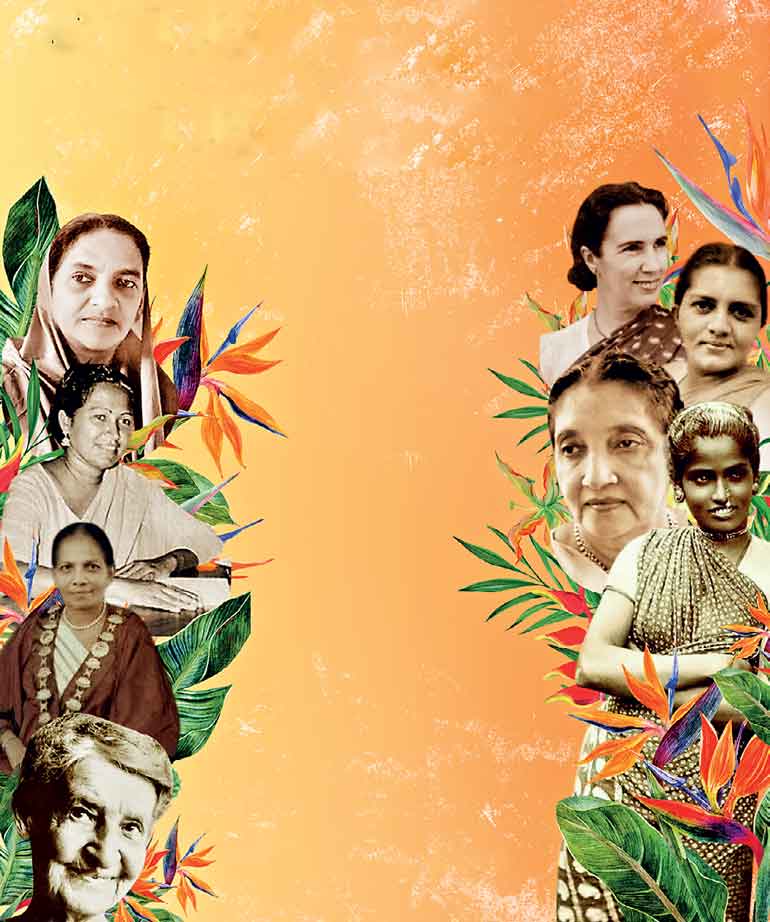
 In the November 2024 parliamentary elections, Harini Amarasuriya won 655,289 preferential votes — the second-highest in Sri Lankan electoral history — and became the country’s first female prime minister in twenty-four years. She is not a widow. She is not a daughter of dynasty. She is an academic, a social anthropologist with a doctorate from Edinburgh, a human rights activist who once marched against the Rajapaksa government when doing so carried real risk. Her ascent to the premiership did not follow the well-worn South Asian script of women inheriting power over the dead bodies of male relatives. It followed a different pathway entirely — one built through scholarship, community organising and feminist conviction. That fact alone should be treated as a signal, not merely a story.
Yet inspiring stories can obscure a more difficult reality.
New research by Uvini Panditha at the International Centre for Ethnic Studies examines what happened after Sri Lanka’s landmark local government quota brought around 2,000 women into office. Based on 26 interviews with women councillors across ten districts and 14 interviews with academics, activists and civil society representatives, the study finds that while representation increased dramatically, power often did not.
The findings reinforce what earlier research has shown. In my work on Sri Lanka’s local government quota and a comparative study with Tanya Jakimow, Mario Gomez, Nadine Vanniasinkam, Viyanga Gunasekera and colleagues in Indonesia, we documented the barriers between grassroots activism and elected office: party gatekeeping, tokenism and exclusion from decision-making. Even when women reach executive leadership, as I explored in The Woman President, they bear gendered expectations that male leaders escape.
Sri Lanka has nevertheless moved. The quota raised women’s representation in local government from under two per cent to about 23 per cent in 2018. The 2024 parliamentary election also produced the country’s highest representation of women to date. These gains matter. But Panditha’s study shows how institutions can comply with a quota while preserving the power structures beneath it.
The quota’s design compounded the problem. It created additional seats for women rather than reserving existing positions, and many women entered through proportional representation lists controlled by party leadership rather than competitive ward contests. This helped produce a symbolic division between supposedly regular representatives and those treated as beneficiaries of special provision. A mechanism intended to overcome exclusion thus became another basis for questioning women’s legitimacy.
New research by Uvini Panditha at the International Centre for Ethnic Studies examines what happened after Sri Lanka’s landmark local government quota brought around 2,000 women into office. Based on 26 interviews with women councillors across ten districts and 14 interviews with academics, activists and civil society representatives, the study finds that while representation increased dramatically, power often did not
Political parties frequently selected compliant women over experienced community leaders, nominated female relatives of party loyalists and placed strong candidates in unwinnable wards. One woman was assigned to a constituency whose residents spoke a language she did not. These practices allowed parties to meet formal requirements without threatening established hierarchies.
Election did not end the exclusion. Women described being interrupted or silenced in council meetings, denied development resources and dismissed when they advanced proposals. Some were derided as ‘quota women’ or ‘list members’, language that reduced their legitimacy to the mechanism enabling their election. The seats were granted, but the authority that should accompany them was withheld.
This distinction between presence and power is crucial. Sri Lanka’s challenge is not a shortage of capable women. Its current parliament includes lawyers, academics, activists, entrepreneurs and other professionals, many without dynastic backgrounds. The question is whether political institutions will treat them as leaders rather than symbolic participants.
The decisive question is not whether the right women exist. They do, in abundance. It is whether Sri Lanka’s political institutions can be reshaped to deserve them
The answer matters beyond Sri Lanka. Across South Asia, quotas have increased women’s presence but often failed to dismantle the informal norms, patronage networks and party cultures determining who governs. Numbers are an essential first step, not proof that institutions have changed.
It matters for governance, too. Local councils make decisions affecting sanitation, roads, health and social welfare. At national level, Sri Lanka is navigating economic recovery, democratic renewal and persistent inequality. Excluding women from the institutions allocating resources and setting priorities is not only unjust. It deprives the country of experience and perspectives essential to effective government.
The next phase of reform must therefore focus squarely on political parties, the principal gatekeepers of opportunity. The ICES study calls for transparent, merit-based nominations to reduce tokenistic selection. Fair campaign funding would help women compete without relying on male-dominated patronage networks. Mandatory training for new councillors, genuine accountability for harassment and equitable access to leadership and development resources would help convert representation into authority.
This distinction between presence and power is crucial. Sri Lanka’s challenge is not a shortage of capable women. The question is whether political institutions will treat them as leaders rather than symbolic participants
There is reason for cautious optimism. Panditha’s research also documents how women responded to institutional hostility. They built informal networks across party lines, shared knowledge, challenged attempts to silence them and scrutinised budgets historically treated as men’s domain. This reflects the importance of women as critical actors who can drive change, even before they reach numerical parity. They did not wait for the system to accommodate them. They began remaking it from within.
Sri Lanka now stands at an important political moment. Amarasuriya’s rise may prove an inflection point or an exception. The recent gains could be consolidated or quietly reversed. The decisive question is not whether the right women exist. They do, in abundance. It is whether Sri Lanka’s political institutions can be reshaped to deserve them.
(The author is Chair in Gender and the Law at the University of Technology Sydney, Australia)
The report Presence and Influence: Local Politics and Gendered Realities is available at the International Centre for Ethnic Studies (ICES), 02 Kynsey Terrace, Colombo 08, in English, Sinhala and Tamil. E-copies of the report are available at www.ices.lk
The next phase of reform must focus squarely on political parties, the principal gatekeepers of opportunity. The ICES study calls for transparent, merit-based nominations to reduce tokenistic selection. Fair campaign funding would help women compete without relying on male-dominated patronage networks



