Friday Oct 16, 2026
Friday Oct 16, 2026
Friday, 16 October 2026 00:20 - - {{hitsCtrl.values.hits}}


Introduction
Essential oils are highly concentrated volatile compounds extracted from aromatic plants and have been used for centuries in medicine, food preservation, cosmetics, perfumery, and cultural practices. In recent decades, global demand for natural ingredients has accelerated due to growing consumer awareness regarding health, sustainability, and environmentally responsible products. Consequently, the essential oil industry has evolved into a significant contributor to the global bioeconomy, supporting pharmaceuticals, food and beverages, cosmetics, personal care, household products and aromatherapy.
Sri Lanka possesses unique advantages within this expanding global market. As one of the world's biodiversity hotspots, the country harbours remarkable floral diversity, diverse climatic zones and centuries of traditional knowledge. This review evaluates the current status of Sri Lanka's essential oil industry, identifies technological and market opportunities, assesses existing constraints, and proposes strategic directions for sustainable industrial growth.
Historical evolution of Sri Lanka's essential oil industry
Sri Lanka's association with aromatic plants extends back more than two millennia. Situated on the Maritime Silk Road, the island became renowned for premium spices, particularly true Ceylon cinnamon. Colonial administrations expanded commercial spice cultivation but emphasised export of raw commodities with limited local value addition. Following independence, cultivation diversified into pepper, citronella, clove, nutmeg, ginger, turmeric, vanilla and medicinal plants. Today, traditional knowledge combined with scientific innovation offers considerable opportunities for producing premium essential oils for international markets. In recently published National Export Development Plan (NEDP) 2026-2030 by Export Development Board (EDB), Spices and concentrates business domain is identified as a priority sector.
Sri Lanka's position in the global essential oil market
Global demand for essential oils continues to grow due to increasing use in fragrances, flavours, pharmaceuticals, cosmetics and nutraceuticals. Sri Lanka contributes only a small proportion of global exports despite its comparative advantages. Currently Sri Lanka holds the 31st position in global essential oil exports and serves 0.5% of the global demand. Principal export markets include the United States, India, Germany, Spain, France, the United Kingdom, Canada, China and Australia. Cinnamon leaf oil and cinnamon bark oil remain the flagship export products owing to the unique quality of Ceylon cinnamon. Growing consumer demand for natural and sustainably sourced ingredients provides significant opportunities for expanding Sri Lanka's global market share through value addition and branding.
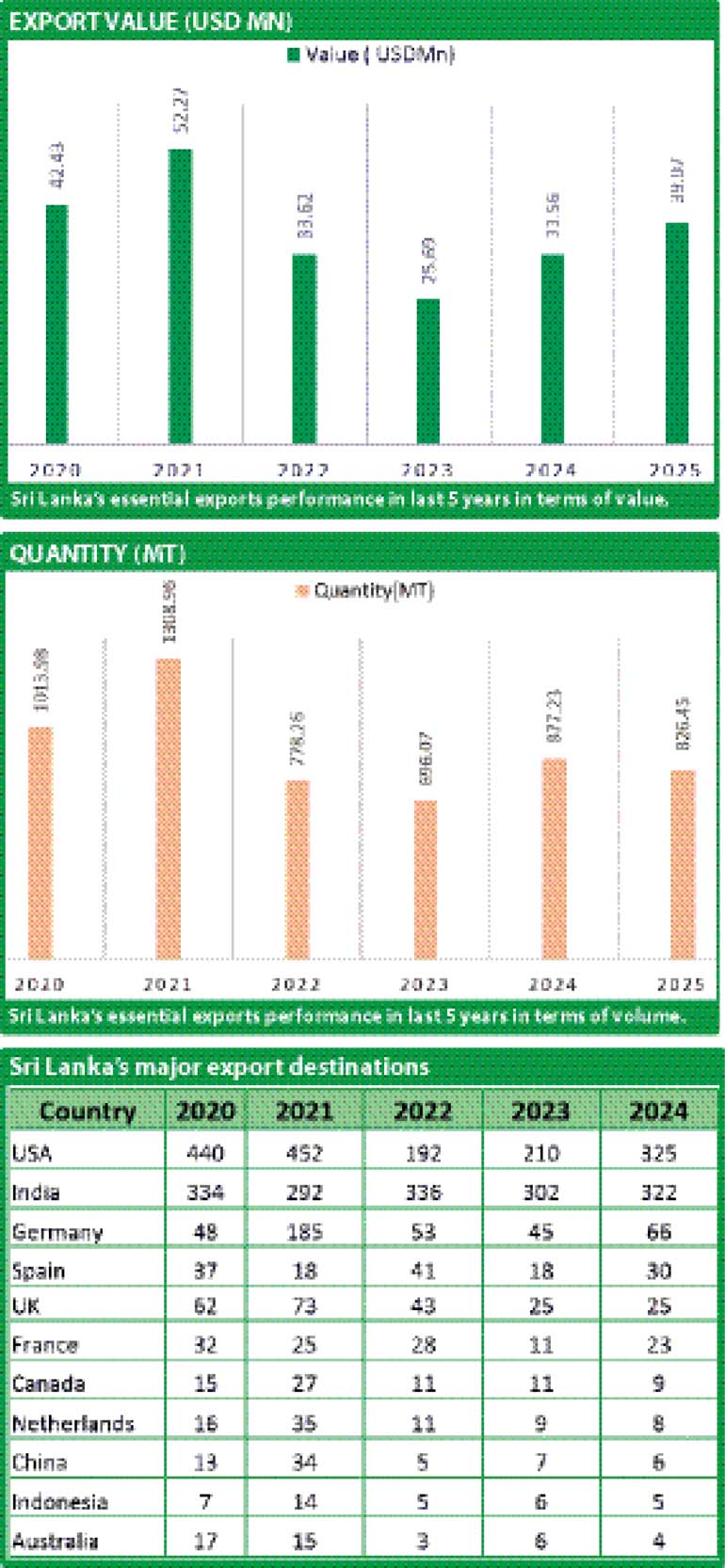
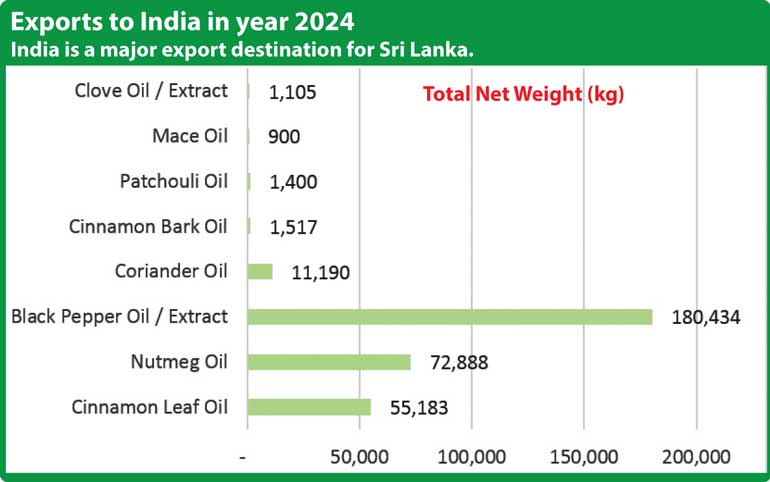
India is a major export destination for Sri Lanka. Exports to India in year 2024.
Production systems, resource base and major essential oil crops
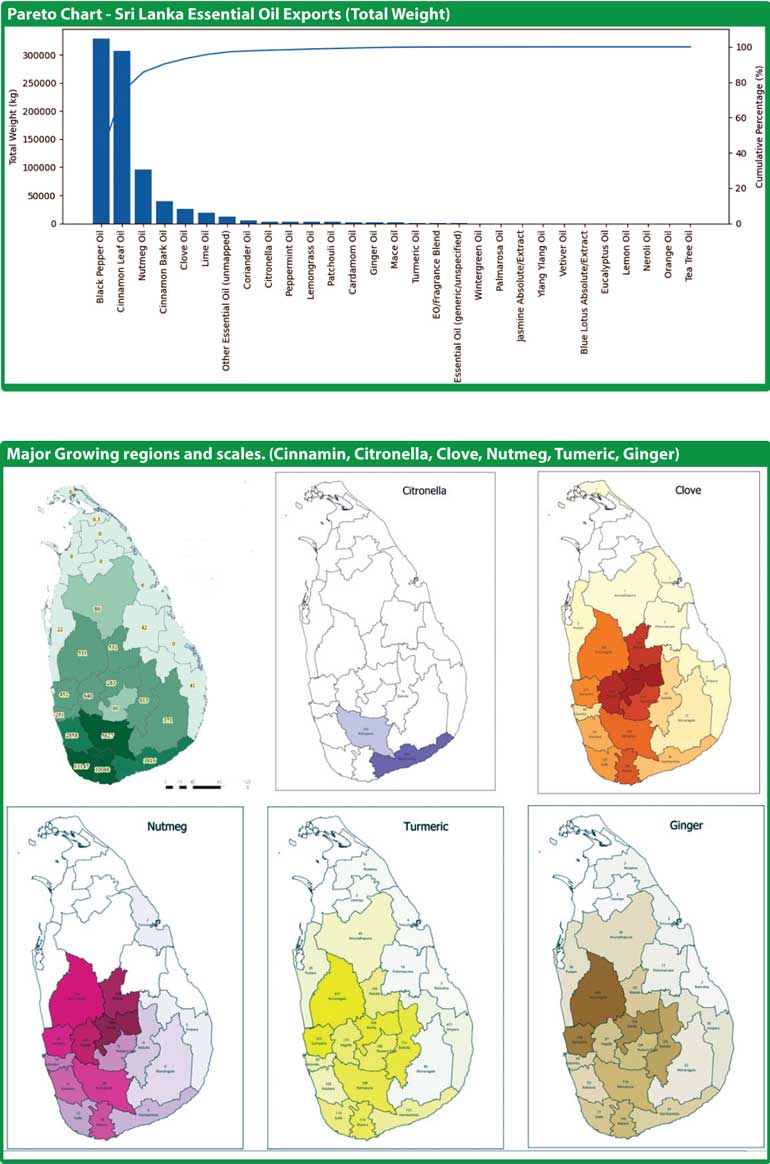
Sri Lanka's favourable climate supports numerous aromatic crops including cinnamon, pepper, citronella, clove, nutmeg, ginger, turmeric, cardamom and vanilla. Production is dominated by smallholder farmers operating diversified farming systems. Cinnamon remains the flagship crop with production concentrated in Galle, Matara, Kalutara and Ratnapura. Conventional steam distillation remains the dominant extraction method. Modernisation of processing infrastructure and industrial-scale value addition are needed to improve competitiveness and export earnings.
Quality assurance and regulatory framework
Quality assurance underpins international competitiveness. Exporters increasingly comply with ISO standards, GMP, HACCP and organic certification requirements. Gas chromatography–mass spectrometry (GC–MS) is the principal analytical technique used to verify authenticity and chemical composition. Institutions including the Industrial Technology Institute, Sri Lanka Standards Institution and National Plant Quarantine Service support quality control and certification. Expanding laboratory access and certification among small producers remains a priority.
Technological innovations transforming Sri Lanka's essential oil industry
Emerging technologies such as supercritical CO₂ extraction, molecular fractionation and blockchain traceability are reshaping the industry. Artificial intelligence, precision agriculture and IoT technologies offer opportunities to optimise harvesting, improve extraction efficiency and strengthen quality assurance. Strategic investment in innovation will enable Sri Lanka to transition from crude oil exports towards high-value fragrance and flavour ingredients.
Recent research and development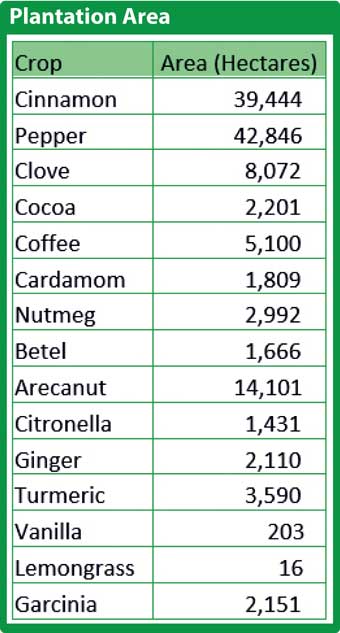
Recent research has highlighted the antimicrobial, antioxidant and therapeutic properties of Sri Lankan essential oils, particularly Ceylon cinnamon, black pepper, clove, nutmeg and citronella. Advances in extraction optimisation, phytochemical characterisation and formulation technologies continue to expand applications in food preservation, cosmetics, pharmaceuticals and nutraceuticals. Increased collaboration among
universities, research institutes and industry will accelerate commercialisation of novel products.
Challenges and future directions
The industry faces challenges including fragmented production, inconsistent quality, inadequate industrial processing, limited research investment and climate change. Nevertheless, rising global demand for sustainable natural products creates significant opportunities. Investment in industrial distillation, aroma chemicals, specialty ingredients, traceability systems, climate-resilient agriculture and international branding will strengthen Sri Lanka's competitiveness. Also, Sri Lanka can be a hub for Flavours and Fragrances industry. Recently few global multinationals established research and development centers in Dubai and Singapore. Due to the geographic location Sri Lanka could be one of the best locations for a research center.
Conclusions
Sri Lanka possesses exceptional biodiversity, a globally recognised spice heritage and favourable agro-climatic conditions that position it to become a leading supplier of premium essential oils. Technological innovation, quality assurance, research investment and strategic policy support are essential for moving beyond commodity exports towards high-value fragrance, flavour and wellness products. Coordinated action among Government, academia and industry can transform the essential oil sector into a major contributor to sustainable economic development.
(The author is Chief Executive Officer of Pride Rock Partners Ltd., Sri Lanka, a company involved in cinnamon, tea and rubber plantations, and cinnamon leaf oil distillation. He has extensively studied the essential oil industry in Sri Lanka and is an international speaker on the essential oil industry. He can be reached via [email protected])




