Saturday Oct 03, 2026
Saturday Oct 03, 2026
Tuesday, 16 June 2026 00:16 - - {{hitsCtrl.values.hits}}
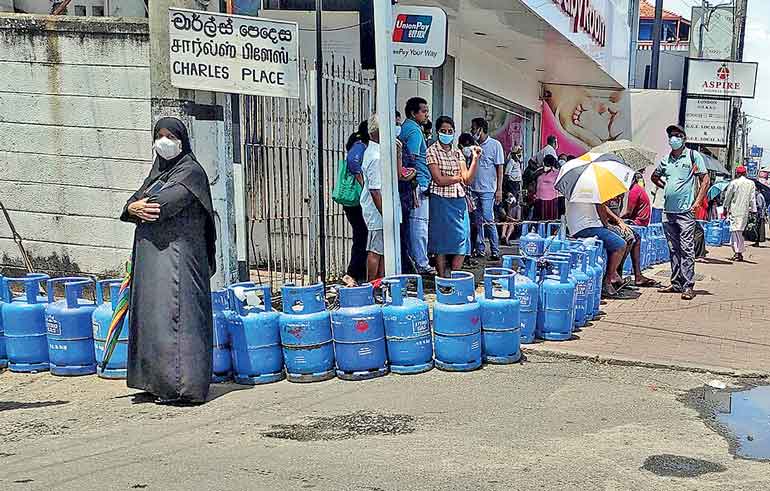
 Sri Lanka stands at a pivotal moment in its economic history. The crisis that culminated in 2022 exposed deep structural weaknesses that had accumulated over decades: unsustainable borrowing, weak fiscal management, policy inconsistency, institutional erosion, and excessive dependence on external financing.
Yet the crisis also created an opportunity. With significant reforms underway and debt restructuring progressing, Sri Lanka now faces a more fundamental question: what kind of economy does it seek to build?
Recent discussions surrounding Gayantha Dehiwatte’s book, ‘The Path of Freedom: Dismantling the Imperialist Debt Trap’, have revived an important debate about the country’s long-term economic direction. While opinions differ on the diagnosis and proposed remedies, the issues raised by Dehiwatte and commentators including Dr. Kalpa Rajapaksha and Professor Emeritus Sumanasiri Liyanage deserve serious consideration.
At the centre of the debate lies a critical question: should economic policy be judged primarily by its ability to satisfy financial markets and creditors, or by its capacity to generate sustainable growth, productive employment, and rising living standards?
Reform agenda
The reforms introduced under Sri Lanka’s IMF-supported program are intended to restore macroeconomic stability, rebuild confidence, and place public finances on a sustainable footing. Supporters argue that such measures are indispensable after years of policy mismanagement and fiscal indiscipline.
Critics, however, contend that the reform agenda reflects a broader policy framework that prioritises inflation control, fiscal consolidation, and financial-sector stability while paying insufficient attention to industrial development, productive investment, and employment creation. They argue that excessive reliance on market-led solutions can leave developing economies vulnerable to external shocks and dependent on volatile capital flows.
These concerns are not unique to Sri Lanka. Across the developing world, policymakers and economists continue to debate the appropriate balance between market liberalisation and strategic state intervention. Experience suggests that neither unrestrained neoliberalism nor unsustainable populism provides a durable path to prosperity.
At the same time, any honest assessment of Sri Lanka’s predicament must acknowledge a basic reality: the IMF did not create the conditions that led to the crisis.
Successive governments bear primary responsibility. For decades, political leaders across party lines expanded expenditure without corresponding gains in productivity, postponed difficult reforms, tolerated inefficiency and corruption, and relied increasingly on debt to sustain growth and electoral promises.
The result was an economy characterised by mounting vulnerabilities and diminishing resilience. By the time external shocks struck, the country’s economic foundations had already been weakened.
This reality places an obligation on both Government and Opposition. The Government cannot attribute every difficult policy decision to external requirements, while Opposition parties cannot credibly distance themselves from policies that contributed to the crisis. Public debate must move beyond assigning blame and focus instead on building a sustainable future.
Macroeconomic stability is essential, but stability alone does not generate prosperity. Low inflation, balanced budgets, and stronger reserves create the conditions for growth, but they do not guarantee it. Sustainable development ultimately depends on expanding productive capacity, encouraging innovation, attracting investment, and creating high-value employment. Sri Lanka’s long-term strategy should therefore focus on productive transformation
Macroeconomic stability
That future requires more than crisis management.
Macroeconomic stability is essential, but stability alone does not generate prosperity. Low inflation, balanced budgets, and stronger reserves create the conditions for growth, but they do not guarantee it. Sustainable development ultimately depends on expanding productive capacity, encouraging innovation, attracting investment, and creating high-value employment.
Sri Lanka’s long-term strategy should therefore focus on productive transformation. This includes strengthening manufacturing, modernising agriculture, expanding technology-driven industries, investing in renewable energy, enhancing logistics capabilities, and increasing the value added to exports. Such measures would help diversify the economy, improve competitiveness, and reduce excessive dependence on imports and external borrowing.
The concerns raised regarding the interconnectedness of currency, credit, and asset markets also merit attention. Policymakers must remain mindful that measures designed to improve financial indicators can have significant consequences for businesses and households. Economic policy should therefore seek a balance between financial stability and productive growth.
Economic sovereignty
Economic sovereignty, moreover, should not be confused with economic isolation. In an interconnected world, prosperity depends on engagement with international markets, institutions, and investment flows. The objective should not be withdrawal from the global economy but the development of sufficient economic strength to make policy choices from a position of resilience rather than dependence.
History offers valuable lessons. Countries that have successfully transformed their economies typically combined sound macroeconomic management with active efforts to build productive capacity, strengthen institutions, invest in human capital, and foster technological advancement. They engaged with global markets while preserving the flexibility to pursue national development priorities.
Sri Lanka possesses many of the ingredients necessary for such a transformation: a strategic location, a well-educated population, valuable natural resources, and established institutions. What has often been lacking is policy consistency and a long-term commitment to national development objectives.
Sri Lanka’s path forward lies not in choosing between markets and the State, nor between openness and sovereignty. It lies in combining macroeconomic discipline with a coherent development strategy that places productive growth at the centre of economic policy. The opportunity remains within reach. Whether it is realised will depend on the willingness of policymakers to move beyond short-term politics and commit to the long-term task of economic transformation.
Path forward
The crisis of recent years has been costly, but it has also provided a rare opportunity for reflection and reform. The challenge now is to ensure that recovery does not become synonymous with merely restoring pre-crisis conditions.
The ultimate goal should be to build an economy that is more productive, more resilient, and less vulnerable to future shocks.
Sri Lanka’s path forward lies not in choosing between markets and the State, nor between openness and sovereignty. It lies in combining macroeconomic discipline with a coherent development strategy that places productive growth at the centre of economic policy.
The opportunity remains within reach. Whether it is realised will depend on the willingness of policymakers to move beyond short-term politics and commit to the long-term task of economic transformation.



