Thursday Oct 15, 2026
Thursday Oct 15, 2026
Thursday, 4 June 2026 00:14 - - {{hitsCtrl.values.hits}}
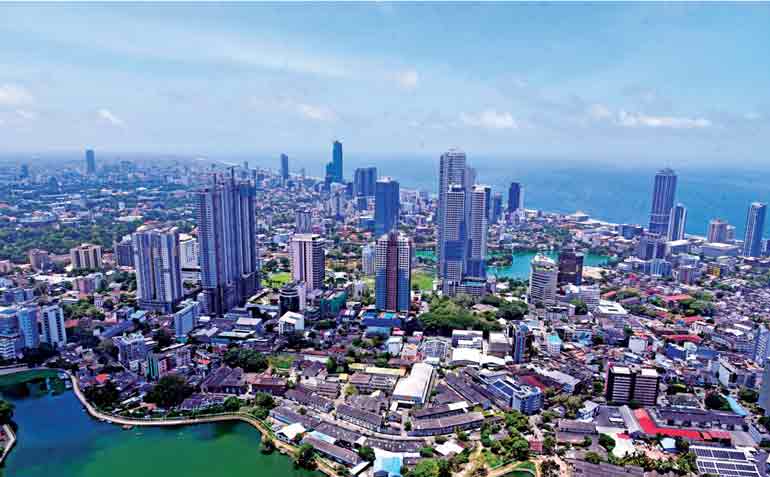
 Sri Lanka is in one of those fascinating business moments where everyone is very busy discussing the economy, taxes, electricity, exchange rates, interest rates, tourism, exports, jobs, and investment.
Brilliant.
It is like standing in a burning kitchen arguing about the price of gas while the chef is still throwing onions at the waiter.
Yes, the macroeconomic issues are real. Sri Lanka is still recovering from a major crisis. Growth is back, business sentiment has improved, tourism and services are moving, and investment appetite is showing signs of life. But the recovery is still uneven, the job-creation gap is serious, energy costs are painful, and businesses are still carrying the emotional hangover of crisis management. [1] [2] [3]
The problem is not only external. The deeper issue is that many Sri Lankan organisations are trying to solve 2026 problems with pre-crisis cultures, post-crisis fear, and management habits that belong in a museum, preferably one with a warning sign.
So, what are the three critical factors that could create a serious impact if changed?
1.Stop worshipping the blame elephant
Every organisation has one. A large, sacred, well-fed elephant called blame.
It sits in the meeting room. Everyone pretends not to see it. Then something goes wrong and suddenly the elephant starts dancing.
Sales blames marketing. Marketing blames finance. Finance blames procurement. Procurement blames the supplier. The supplier blames the port. The port blames the weather. Eventually, everyone blames the government, because it is convenient, popular, and requires no personal improvement.
Sri Lankan businesses cannot afford this anymore.
In a fragile recovery, blame is not just unpleasant, it is expensive. It slows decisions. It hides problems. It makes employees protect themselves instead of solving issues. It kills innovation because nobody wants to be the brave idiot who tried something new and got publicly sacrificed at the next management meeting.
Arthur Carmazzi’s approach would call for a No Blame Zone, not because accountability is unnecessary, but because blame is not accountability. Blame is emotional vomiting with a job title.
The real alternative is Failing Intelligently.
That means three things:
First, make the consequences clear.
Second, solve the problem immediately.
Third, identify what must change so the same problem does not come back wearing a new shirt.
This is especially relevant in Sri Lanka now because businesses need faster adaptation. The World Bank is pointing to private investment, export growth, better regulation, tourism, agriculture, energy, and regional development as areas of opportunity. [2] But opportunity does not help much if employees are too scared to report issues, challenge weak decisions, or admit that a process is broken.
A Sri Lankan company that removes blame will not suddenly become perfect. But it will become faster, more honest, and more innovative. In the current environment, that alone is a competitive advantage.
2.Turn silo kingdoms into a unified identity
Many organisations do not have departments. They have small kingdoms with email addresses.
The finance kingdom has its walls. HR has its rituals. Operations has its warriors. Sales has its heroic stories of suffering. IT lives in a cave and only emerges when someone says, “the system is down.”
And then leadership announces, “We need transformation.”
Wonderful.
Transformation across silos is like asking five tuk-tuk drivers to pull the same bus in different directions and calling it strategic alignment.
Sri Lanka’s business environment now demands cross-functional execution. The World Bank’s current partnership framework emphasises easier business processes, digital government services, trade modernisation, renewable energy, tourism, agriculture, and regional economic development. [2] None of these priorities work well when organisations operate as disconnected tribes.
Arthur’s Culture Evolution model would diagnose many of these organisations as stuck somewhere between Multi-Directional Culture and Live-and-Let-Live Culture.
Multi-Directional Culture says, “My department is my world.”
Live-and-Let-Live Culture says, “Let us not complicate things.”
Both sound polite. Both quietly murder growth.
The solution is a Unified Identity.
This does not mean putting a motivational poster in the pantry that says “One Team” while everyone continues behaving like rival cousins fighting over inheritance.
A real Unified Identity means people co-create the working culture they want. They define guiding principles. They create a common language. They identify key influencers, not only senior managers. They connect personal success to organisational success.
For Sri Lanka, this is critical because the country needs companies that can execute faster than policy uncertainty, energy volatility, skills shortages, and global market shifts can hit them. [1] [3]
The new question for Sri Lankan leaders should not be, “How do I get my people to follow instructions?”
That is factory-age thinking wearing a LinkedIn profile picture.
The better question is, “How do we create an environment where people feel ownership of the result?”
Because ownership is faster than compliance.
3.Measure behaviours, not just beautiful PowerPoint outcomes
Sri Lankan businesses love targets. Revenue targets. Sales targets. Export targets. Cost targets. Growth targets. Digital transformation targets.
Targets are useful. But targets without behaviour measurement are like giving someone a map to Kandy, removing all road signs, and then asking why they ended up in Jaffna.
The Central Bank’s Business Outlook Survey shows improving business conditions, stronger demand and sales expectations, positive investment outlook, and improved capacity utilisation. That is good news. But the same survey also points to skilled labour availability remaining below neutral across sectors and bank credit demand rising mainly for operational needs. [3]
That means businesses are not just chasing growth. They are trying to grow while short on skills and still needing credit to run daily operations.
So, measuring only final results is too slow.
By the time the monthly KPI report arrives, the problem has already had tea, married into the family, and produced three children. Arthur’s “Measure Everything” philosophy is not about creating more bureaucracy. It is about measuring the small behaviors that create the big result.
If customer experience matters, measure the behaviors that create it.
If innovation matters, measure idea-sharing, testing, collaboration, and learning from mistakes.
If execution matters, measure follow-through, speed, cross-departmental support, and proactive problem-solving.
If leadership matters, measure how leaders create clarity, trust, and ownership. This is where gamification becomes practical. Not childish. Not “let us give everyone badges and pretend work is Candy Crush.” Real gamification means making progress visible, feedback fast, contribution measurable, and achievement emotionally rewarding… yes, productivity can be fun if connect it to personal wins.
Sri Lankan companies need this because recovery momentum must be converted into daily execution. A national growth strategy is not implemented in a government document. It is implemented in thousands of daily behaviours inside banks, hotels, apparel factories, logistics companies, tech firms, plantations, SMEs, and family businesses.
And here is the sarcastic little truth, most organisations do not fail because they lack strategy. They fail because the behaviors required to execute the strategy are invisible, unrewarded, inconsistent, or actively punished.
The serious impact
If Sri Lankan businesses changed these three factors, the impact could be substantial.
A No Blame culture would speed up problem-solving and reduce fear.
A Unified Identity would reduce silos and create ownership across teams.
Behaviour measurement would make execution visible, practical, and sustainable… and more importantly FUN!
This matters because Sri Lanka does not simply need economic recovery. It needs organisational recovery.
The country needs businesses where people do not just survive work, but contribute through work. It needs leaders who stop confusing control with leadership. It needs managers who understand that people are not machines with lunch breaks. It needs cultures where young talent sees a future, skilled workers feel valued, and teams can adapt quickly enough to compete beyond local survival.
Sri Lanka is standing at the edge of a new chapter. The question is whether businesses will build cultures that can carry the country forward, or keep polishing the same old blame elephant while calling it transformation.
Because here is the thing about elephants.
They are hard to move.
But once they start moving in the right direction, they can change everything in their path.
The world’s #1 culture/Colour Brain Thinker - Arthur Carmazzi is scheduled to do his first ever regional and national visit for a workshop on 19 June 2026 at the Monarch Imperial Hotel from 8.30 a.m. onwards. The Daily FT in partnership with Ads Store will be hosting the event, “Reset The Brain” which focuses on team dynamics, leadership development and organisational culture transformation through his exclusive expertise. The ‘Reset the Brain’ workshop will provide valuable insights for Corporate Leaders, Business Leaders, Decision Makers, and Department Heads, enabling them to contribute more effectively towards the growth and success of their organisations. For reserve your seat call 0704760700




