Tuesday Oct 27, 2026
Tuesday Oct 27, 2026
Wednesday, 15 July 2026 00:24 - - {{hitsCtrl.values.hits}}
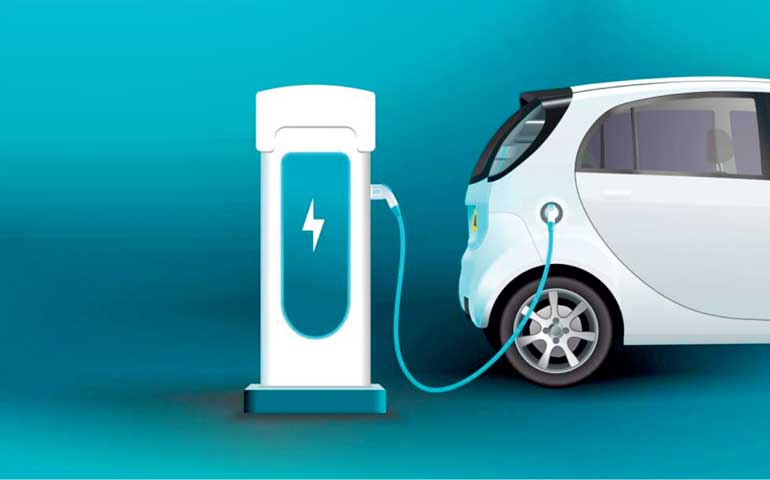
 Sri Lanka’s electric vehicle market in 2026 is no longer a futuristic conversation. It is becoming a live economic, consumer and infrastructure discussion. After several years of vehicle import restrictions, high vehicle prices, fuel-price volatility and foreign exchange pressure, electric vehicles are now entering the market with renewed visibility. The Colombo EV Motor Show 2026, held in June, was another sign that the EV conversation has moved into the mainstream business space. The event featured more than 200 trade stalls covering electric vehicles, motor accessories, spare parts, lubricants, tyres, batteries, charging solutions and related services as per the Colombogazette.com.
However, Sri Lanka’s EV transition should not be viewed only through the excitement of new models, showrooms and exhibitions. The more important question is whether the country is developing the full ecosystem required for EV adoption: clear regulation, affordable financing, charging infrastructure, after-sales service, parts availability, battery confidence, and a realistic total cost of ownership for consumers and businesses.
Policy direction: Encouragement is visible, but clarity matters
From a regulatory point of view, Sri Lanka has started building the framework needed for EV adoption, particularly around charging infrastructure. The Public Utilities Commission of Sri Lanka states that EV charging stations fall under its regulatory purview because they involve the distribution and supply of electricity to electric vehicles. PUCSL’s role includes maintaining a register of EV charging stations, issuing a code of practice, determining end-user tariffs, issuing safety and technical standards, and collecting information for monitoring purposes. [pucsl.gov.lk]
This is an important development. If EV adoption grows without a regulated charging ecosystem, consumers could face inconsistent pricing, safety concerns, unreliable service standards and uneven charging access. PUCSL’s regulatory approach therefore provides a necessary foundation for market confidence. A further PUCSL guideline issued on 1 June 2026 states that any person selling electricity for the purpose of charging electric-propelled vehicles is required to obtain a trading licence or supply exemption, and that the guideline is intended to improve regulatory clarity, compliance and consistent implementation of EV charging infrastructure. [pucsl.gov.lk]
For vehicle imports and pricing, however, the environment remains more complex. Private-sector tax guides indicate that Sri Lanka’s vehicle import cost structure in 2026 includes several layers such as customs duty, excise-related charges, VAT, SSCL and luxury tax, although these guides should be treated as indicative and buyers should verify final figures with authorised agents or Customs professionals. This means that while EVs may benefit from policy encouragement in principle, the actual consumer decision will depend heavily on landed cost, exchange rates, taxes, warranties, financing terms and after-sales support. [lankawebsites.com], [pricemart.lk]
Financing: EV adoption will depend on monthly affordability
For many Sri Lankan consumers, the biggest barrier to EV ownership will not be interest in the technology; it will be affordability. This is where banks and finance companies have a significant role to play.
Several financial institutions have already entered the EV financing space. Commercial Bank offers “Green Leases” to fund hybrid vehicles, electric vehicles, solar panels and other energy-efficient machinery or equipment, with repayment periods of up to five years and lease amounts varying based on vehicle type and registration status. Seylan Bank partnered with GS EVO Motors in 2026 to introduce a dedicated EV leasing facility, with reported repayment periods of up to seven years, fast-track approval within 24 hours and interest rates starting from 10%
A.I.R. according to the report. [combank.lk] [colombogazette.com]
Other partnerships also point to growing institutional interest. HNB partnered with Hayleys Fentons to support EV adoption through financing, insurance benefits and life coverage for customers purchasing electric vehicles through the promotion. Evolution Auto also partnered with Union Bank in 2025 to offer financing solutions, with the report stating that customers could finance up to 90% of the vehicle’s value. [ft.lk] [bizenglish...aderana.lk]
This matters because EV adoption in Sri Lanka will likely be driven by structured financing rather than outright purchases. If monthly rentals are positioned competitively against fuel savings, maintenance savings and long-term ownership benefits, EVs can appeal not only to individual buyers but also to SMEs, tourism operators, delivery companies, corporate fleets and professional service providers.
Charging infrastructure: Progress is visible, but confidence is still uneven
Charging access remains one of the most decisive factors in EV adoption. Sri Lanka has seen progress, especially in Colombo and selected urban areas, but range confidence and charging dependability remain key concerns.
ChargeNET describes itself as Sri Lanka’s first and largest EV charging network, reporting more than 300 total chargers, over 21,000 active customers, more than 170,000 transactions, and over 10 years of operation. Its product portfolio includes fast chargers, dual-port fast chargers and Level 2 home/commercial chargers, supported by IoT connectivity, app-based management, remote monitoring and software updates. [chargenet.lk]
Charging.lk lists charging locations in Colombo and nearby areas, including locations such as SML Frontier Automotive, Lanka IOC Horton Place, Colombo City Centre, Havelock City, Hayleys PLC, Keells Darley Road and selected Cargills outlets. Hayleys Mobility also states that it offers integrated EV charging solutions and a nationwide fast-charging network powered by StarCharge. [charging.lk] [hayleysmobility.com]
Still, for widespread adoption, the country needs more than a list of chargers. Consumers need reliable uptime, transparent pricing, charger compatibility, mobile-app visibility, highway fast-charging, apartment charging, workplace charging and service support when chargers fail. Without that confidence, EVs may remain attractive for urban short-distance users but less convincing for intercity users.
After-sales, parts and maintenance: The hidden factor in consumer trust
In Sri Lanka, buyers do not look only at the brand and price. They also ask: Who will repair it? Are parts available? What happens to the battery? Is the warranty meaningful? Can technicians diagnose software or high-voltage faults?
This is where after-sales credibility becomes central. Browns Hybrid Care states that it provides hybrid and electric vehicle services, including testing and diagnosis for hybrid and EV systems, rebuilding and replacing hybrid batteries, and general maintenance services. It also describes EV battery repair as involving diagnosis, feasibility assessment, repair or replacement, functionality testing and safety standards, while identifying symptoms such as reduced EV range, EV warning indicators and declining state of health. [brownsgroup.lk] [brownshybrid.com]
Hayleys Mobility states that its after-sales support includes routine maintenance, battery health checks, software updates, technical support, specialised repairs, advanced diagnostics and genuine spare parts for its represented vehicle brands. Evolution Auto has also highlighted after-sales support, operational capability and trusted partnerships with global EV manufacturers as part of its EV market positioning. [hayleysmobility.com] [ft.lk]
For the EV market to mature, after-sales must become a competitive advantage rather than an afterthought. Battery warranties, diagnostic equipment, trained technicians, software access, spare-parts pipelines and transparent maintenance costs will influence resale values and long-term buyer confidence.
Competitors and pricing: The market is widening
The Sri Lankan EV market is now forming across several segments: entry-level urban EVs, mid-range family EVs, premium smart EVs, plug-in hybrids, commercial EVs and lifestyle pickup/utility vehicles.
Browns EV has positioned itself strongly around affordability. Brown & Company announced partnerships with SAIC-GM-Wuling and Beijing Auto Works to introduce EV models such as the BAW-E7, Wuling Binguo and Wuling Cloud, with reported launch prices of Rs. 4.7 million, Rs. 8.1 million and Rs. 12.4 million respectively. Browns EV’s official site lists the BAW E6 EV starting from Rs. 4.5 million, with a 220 km NEDC range, LFP battery and a 10-year / 120,000 km battery warranty. [dailymirror.lk] [brownsev.com]
John Keells CG Auto, the authorised distributor for BYD passenger vehicles in Sri Lanka, represents one of the strongest global EV brands locally. Its listed EV and NEV range includes BYD ATTO 1, ATTO 2, ATTO 3, Dolphin, M6, Sealion 6 and Shark 6, with details such as range, seating capacity and BYD Blade Battery technology. BYD Sri Lanka announced special limited-time prices in 2025, including Dolphin Dynamic 49 at Rs. 10.7 million, ATTO 3 Advanced at Rs. 14.6 million, ATTO 3 Superior at Rs. 16.8 million, M6 Standard at Rs. 16.2 million, and Sealion 6 variants from Rs. 21.7 million. [johnkeellscgauto.com], [johnkeellscgauto.com] [newswire.lk]
Evolution Auto is targeting the premium, luxury, commercial and utility segments. Its 2026 portfolio includes AVATR 11, IM6, IM5, XPENG G6, Riddara Active, Riddara RD6, King Long Kingwin+ and KYC V7, covering SUVs, smart crossovers, sedans, electric vans and pickups. Hayleys Mobility is also an important market participant, representing brands and mobility solutions including OMODA, JAECOO, KAIYI, SRM and StarCharge charging solutions. [ft.lk] [hayleysmobility.com]
The used and reconditioned EV market is also becoming active. Marketplace listings show BYD models such as Atto 1, Atto 3, Dolphin, Sealion 6 and Shark 6 listed at different prices depending on model year, mileage, condition and location. However, consumers should be cautious when comparing listing prices, as battery condition, warranty status, service history and importer credibility can materially change the value of an EV. [riyasewana.com]
The future: Practical adoption, not just aspiration
Sri Lanka’s EV future is promising, but it is not guaranteed. EVs can support lower fuel dependency, reduced emissions, lower running costs and new business opportunities in charging, leasing, servicing and renewable-energy integration. But the transition will only work if the ecosystem develops along with the vehicles.
The next phase should focus on five priorities.
*First, EV pricing must remain realistic. If import taxes, exchange rates and financing costs push EVs into a premium-only category, mass adoption will be limited.
*Second, charging infrastructure must expand beyond Colombo and become reliable on intercity routes.
*Third, banks and finance companies should design products based on total cost of ownership, not merely asset value.
*Fourth, after-sales capability must be strengthened with trained technicians, genuine parts, battery services and transparent warranty handling.
*Finally, policy consistency is essential. Investors, importers, banks and buyers all need a stable regulatory environment to make long-term decisions.
Sri Lanka’s EV market in 2026 is therefore at an important turning point. The vehicles are arriving. The banks are responding. Charging networks are expanding. Service providers are positioning themselves. Consumers are interested.
But the market’s real success will depend on whether EV ownership becomes practical, affordable and trustworthy for everyday Sri Lankans.
If Sri Lanka gets the balance right, electric mobility can become more than a lifestyle shift. It can become part of the country’s broader economic resilience strategy — reducing fuel vulnerability, supporting green finance, creating new service industries and preparing the transport sector for the next decade.
(The author is a banking professional and economic observer)




