Saturday Oct 31, 2026
Saturday Oct 31, 2026
Saturday, 31 October 2026 00:00 - - {{hitsCtrl.values.hits}}
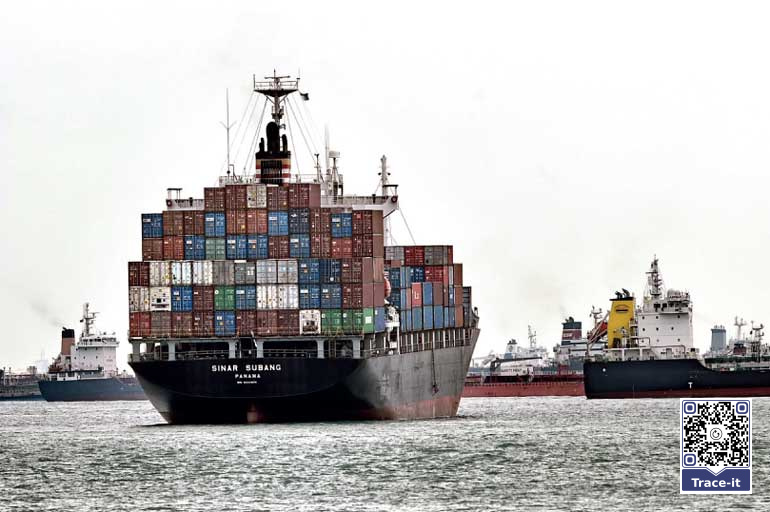
According to the Sri Lanka Export Development Board, Sri Lankan exports to the UAE reached approximately $341 million in 2025, compared with imports of about $1.44 billion. The UAE was Sri Lanka’s seventh-largest export destination and third-largest source of imports. These figures demonstrate the scale of the relationship, but they do not tell us everything about its economic value
 When the United Arab Emirates and Canada signed a new Comprehensive Economic Partnership Agreement on 27 October, the announcement offered another example of how governments are actively reshaping their international economic relationships. The agreement promises improved market access once implemented, alongside wider cooperation in investment, infrastructure and strategic industries.
For Sri Lanka, the important question is not whether it should pursue an identical agreement. It is whether the country is obtaining sufficient economic value from the trade relationships it already possesses.
That question deserves attention because international trade is not simply a matter of increasing the movement of goods. Countries must also consider how trade contributes to employment, domestic production, foreign exchange earnings and the development of more competitive industries.
The UAE is already an important commercial partner for Sri Lanka.
According to the Sri Lanka Export Development Board, Sri Lankan exports to the UAE reached approximately $341 million in 2025, compared with imports of about $1.44 billion. The UAE was Sri Lanka’s seventh-largest export destination and third-largest source of imports.
These figures demonstrate the scale of the relationship, but they do not tell us everything about its economic value.
A bilateral merchandise trade imbalance should not automatically be treated as evidence of an unhealthy relationship. Imports can support domestic production, transportation, energy supply and other essential economic activities. Their contribution depends on what is purchased and how effectively those inputs are used.
Nevertheless, the figures provide a reason to examine whether Sri Lankan companies could generate greater value from their existing access to Gulf markets.
Among Sri Lanka’s principal exports to the UAE in 2025 were tea, garments, diamonds, cocoa preparations, coconut products and petroleum oils.
The diversity of these products presents different commercial possibilities.
For tea exporters, the challenge is not necessarily finding another destination for an established product. It may involve developing stronger brands, improving packaging, identifying higher-value customer segments and building relationships with distributors who understand regional demand.
For apparel manufacturers, competitiveness increasingly depends on reliability, design, production standards and the ability to respond to changing customer requirements.
For coconut-based food producers, opportunities may involve product differentiation, quality assurance and consistent access to retail and food-service markets.
None of these possibilities is guaranteed. Each requires careful market research, regulatory compliance and commercial execution.
In my view, a useful trade strategy should distinguish between exporting more and earning more value from exports.
A company that sells larger volumes at weak margins may become more exposed to transport costs, currency movements and financing pressures. A smaller exporter that develops a recognised product and stable distribution arrangements may create greater long-term value.
This is particularly relevant for small and medium-sized enterprises that cannot easily absorb the costs of unsuccessful overseas expansion.
The UAE’s position as an international commercial and logistics centre creates potential access to customers beyond its domestic market. But such access should not be confused with automatic market entry into other countries.
Distribution arrangements, customs rules, product standards and destination-market requirements still matter. Businesses should examine the full commercial chain rather than assume that shipping goods through an international hub provides unrestricted access elsewhere.
The recent UAE-Canada agreement illustrates how trade cooperation can develop alongside investment and infrastructure planning.
Canadian and Emirati institutions have announced initiatives involving energy and international logistics. A memorandum concerning the Port of Churchill, the Hudson Bay Railway and DP World’s international network is intended to explore new transportation opportunities.
The proposal is not yet an operational corridor. Its significance lies in the attention being given to connectivity and alternative commercial routes.
Sri Lankan policymakers and businesses should consider a related issue: how dependable are the systems connecting domestic producers to foreign customers?
A tea exporter may secure an attractive contract but lose competitiveness through inconsistent delivery. A garment manufacturer may invest in production capacity yet remain vulnerable to delays affecting imported materials. A food producer may meet customer expectations but encounter difficulties with documentation or distribution.
Such problems cannot always be solved by signing additional trade agreements.
They require improvements in operational coordination, logistics reliability, standards compliance, digital processes and commercial information.
Export-support institutions can help by connecting companies to buyers, providing accurate market intelligence and improving knowledge of regulatory requirements. Financial institutions can contribute by offering suitable trade-finance products, subject to responsible risk assessment.
Meanwhile, businesses must examine their own exposure to concentrated customers, suppliers and transportation arrangements.
The objective should not be to eliminate commercial risk, which is impossible. It should be to ensure that expansion does not create dependencies that management cannot understand or control.
There is also value in considering service exports alongside physical goods.
Sri Lanka possesses professional skills and business capabilities that may have applications in technology, engineering support, business services and specialised operations. These opportunities depend on market demand, contractual requirements and the ability to deliver services consistently across borders.
International competitiveness should be developed through capabilities that companies can demonstrate, not through optimistic assumptions about future demand.
For Sri Lanka, the UAE relationship offers an existing platform from which to examine these issues. Its commercial importance is already established. The question is how businesses can make that relationship more productive.
The agreement between Canada and the UAE provides a reminder that economic partnerships are changing as countries seek new markets and strengthen commercial connections.
Sri Lanka does not need to copy every agreement announced elsewhere. It needs to understand which weaknesses limit the value of its present relationships and which improvements would allow local businesses to compete more effectively.
The future of trade should not be measured only by how many products cross a border.
It should also be measured by how much sustainable economic value remains with the people and businesses producing them.
(The author is a UAE-based author and independent researcher specialising in security, risk management, operational resilience and institutional governance)




