Thursday Oct 15, 2026
Thursday Oct 15, 2026
Friday, 10 July 2026 00:23 - - {{hitsCtrl.values.hits}}
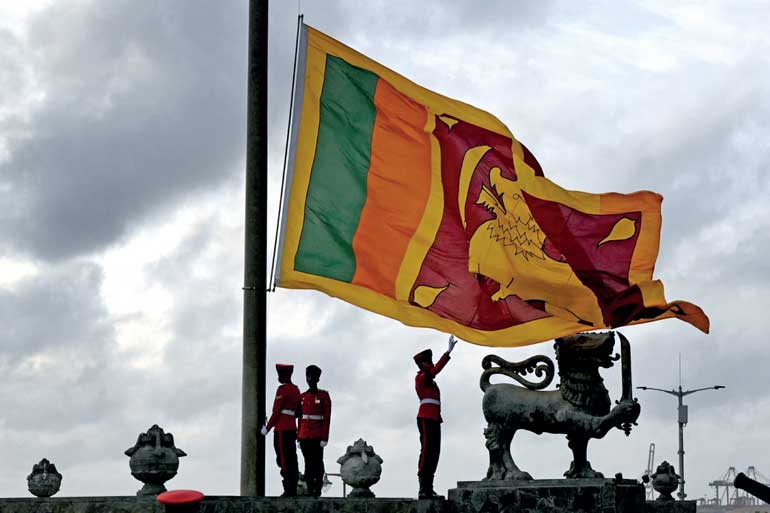

Sri Lanka has earned a visible degree of stability. Inflation has come down. Queues have disappeared. Essential supplies are available. Some confidence has returned. These achievements matter, and those who worked for them deserve recognition.
But stability is not the same as resilience.
A country can look calm on the surface while remaining deeply vulnerable underneath. Sri Lanka is still exposed to foreign exchange shortages, external debt repayments, import dependence, global shocks, climate risks, and sudden shifts in investor confidence.
This is not a matter for economists, the Government, or exporters alone. It touches the future of every citizen.
If Sri Lanka faces another major foreign exchange shock, no business, professional, investor, exporter, importer, employee, or household will remain untouched. A business cannot float comfortably when the whole ship is sinking.
That is why the country must act now.
Not after another crisis. Not after another long study. Not after every possible idea is collected, analysed, and filed.
Sri Lanka must immediately begin activating every responsible and practical foreign exchange inflow path that can be opened within the shortest possible time.
Some ideas will be large. Some will be small. Some will produce results quickly. Some will take longer to mature. But if an idea brings a positive Net Foreign Currency Contribution (NFCC), or saves foreign exchange, it deserves urgent attention.
The clock is already ticking. Future loan repayments, global uncertainty, climate risks, and market confidence will test Sri Lanka again. The question is whether we use this period of stability merely to feel comfortable, or whether we use it wisely to build resilience before the next shock arrives.
Sticking to the same old failed approaches will be futile
Sri Lanka has never suffered from a shortage of discussions, committees, policy papers, or conference speeches. What we have lacked is the speed and discipline to convert practical opportunities into working foreign exchange channels.
For years, we have repeated phrases such as “export more”, “attract investment”, “develop tourism”, and “improve competitiveness”. These are all correct. But they are incomplete unless someone removes the obstacles that prevent real transformation from happening.
Entrepreneurs are like seeds. Even the best seed cannot grow in hard, dry, infertile soil. The role of Government and policy is not to shout at the seeds to grow faster. The role of Government and policy is to make the soil fertile.
That is what I mean by facilitation. It means listening to those who see opportunities. It means identifying where foreign exchange can be earned or saved. It means removing practical barriers without compromising necessary safeguards. It means giving responsible officials authority to solve problems, not merely forward files. It means measuring success by activated transactions, not by meetings held.
Move in two tracks: activate immediately and prioritise continuously
Sri Lanka should not wait until every possible opportunity is gathered, studied, ranked, and perfected. Time is too short for that.
The country needs a two-track approach.
1.Immediate activation: Act immediately on the opportunities that are already visible, practical, and capable of producing early results.
2.Continuous pipeline: Keep identifying, screening, prioritising, and adding new opportunities as they emerge, assigning each to an activation cell with a strict deadline.
This is more realistic than waiting for one perfect national master plan. It allows the country to move while learning. It allows quick wins to begin early, mitigating possible future FX challenges. It also allows more complex opportunities to be developed in parallel.
Listen to the public: open a national window for FX proposals
Many practical ideas never reach the right decision makers. Entrepreneurs, doctors, engineers, academics, bankers, exporters, diaspora members, young professionals, and ordinary citizens may see opportunities that officials cannot see from inside the system.
But without a clear door to walk through, those ideas remain private conversations.
Sri Lanka should therefore create a national platform for proposals for FX inflow paths: one well-publicised channel through which anyone can submit a practical proposal for a new path for resilience or foreign exchange inflow.
This must not become another passive suggestion box. It must be a structured mechanism that receives and screens proposals, tests the strongest for speed, feasibility, risk, and NFCC, and then hands them to small activation cells with clear responsibility and deadlines.
Given its national role in investment facilitation and inter-agency coordination, the Board of Investment (BOI) is a natural institutional home for such a window, supported by relevant ministries, the Export Development Board, Central Bank, Inland Revenue, Customs, Immigration, professional bodies, chambers, and private-sector practitioners.
Sri Lanka’s next great foreign exchange pathway may not come from a ministry file or a foreign consultant’s report. It may come from a teacher, hotelier, exporter, doctor, engineer, banker, diaspora member, or young professional who sees a practical opportunity waiting to be facilitated.
Sri Lanka must create a way to hear them.
Use Net Foreign Currency Contribution as the national test
Sri Lanka must now think beyond gross numbers.
A billion dollars of export revenue does not mean a billion dollars remains in the country. If imported inputs, foreign service payments, profit repatriation, loan repayments, and other external outflows are high, the net benefit may be much smaller.
Meanwhile, an activity that earns a smaller gross amount may be far more valuable if it has low import content and high local value addition.
This is why Sri Lanka needs a national discipline based on Net Foreign Currency Contribution.
Every proposal should be tested against one simple question:
After all foreign exchange outflows are deducted, how much real foreign exchange remains with the country?
This test can change the way we think about exports, tourism, investment, infrastructure, services, trade agreements, and local manufacturing. It will also help Sri Lanka avoid celebrating headline numbers while ignoring real external vulnerability.
Some examples of practical paths that can be activated
The following are just a few examples of the type of practical, actionable foreign exchange paths Sri Lanka must identify, facilitate, and activate. Many more ideas should be welcomed through the proposed national window for proposals.
1. Surgical-medical tourism
Sri Lanka has skilled doctors, internationally accredited private hospitals, a strong hospitality sector, and recovery-friendly surroundings. Yet surgical-medical tourism remains far below its potential.
This can be activated through a national surgical medical tourism facilitation mechanism connecting hospitals, hotels, airlines, immigration, overseas patient-referral networks, insurance channels, and post-treatment care providers. The objective is not another promotional campaign. It should be a transaction-ready system where a foreign patient can confidently choose Sri Lanka, receive treatment, recover safely, and recommend the country to others.
2. Wellness, recovery, and long-stay care tourism
Tourism should not be viewed only as short-stay holidays. Sri Lanka can develop higher-value income from wellness, post-treatment recovery, elder care, retirement stays, Ayurveda-linked wellness, and climate-friendly long-stay programmes.
Many countries have ageing populations, high medical costs, stressful lifestyles, and cold climates. Sri Lanka has a natural advantage if these services are properly organised, regulated, and promoted with credibility.
3. Re-export and entrepôt trade
Sri Lanka’s location has been praised for decades. But location alone earns nothing unless business can move smoothly.
Many export-oriented enterprises operating under investment approvals are largely restricted to manufacturing only for direct export, even though they operate in customs-bonded free trade zones.
The country must make it easier for such companies, and for new entrants, to import, store, repack, assemble, test, certify, bundle, and re-export goods with minimum friction and proper automated safeguards, thereby enabling enterprises in Sri Lanka’s free trade zones to become thousands of export trading hubs, generating a positive NFCC.
A well-facilitated re-export platform can also bring foreign exchange through logistics, warehousing, handling, packaging, value addition, insurance, finance, and technical services. It allows the country to participate in global trade flows using speed, location, service quality, and trust, while deepening local capabilities and ultimately leading to sophisticated product manufacturing.
4. Local sourcing by BOI exporters
If a BOI export manufacturer can import an input easily but faces tax or procedural disadvantages when buying the same input locally, the country loses twice.
First, foreign exchange leaves the country through imports. Second, local industry loses the opportunity to grow by supplying export manufacturers.
Sri Lanka must remove such barriers and make local sourcing by exporters as easy as importing, provided proper safeguards are in place.
This is not old-style import substitution. This is export-linked import replacement. It increases the net foreign currency contribution of exporters while strengthening domestic industry. It can also be implemented through administrative reform rather than heavy Government spending.
5. Professional service exports
Sri Lanka has skilled professionals who can serve foreign clients without requiring heavy imports. Engineering design, accounting, architecture, legal-process support, software, technical documentation, compliance support, and back-office functions can all generate foreign exchange.
This can be activated practically by creating an export-ready professional services registry, simplifying foreign payment and invoicing procedures, supporting recognised quality and data-security certifications, and directly matching Sri Lankan service providers with foreign buyers.
The first pilots can begin with areas where Sri Lanka already has capability: engineering design support, BIM and CAD documentation, accounting back-office work, software support, compliance documentation, and technical writing.
6. Regional repair, refurbishment, testing, and certification hubs
Sri Lanka has engineering and technical skills, but has not sufficiently converted that capability into regional service income.
We can develop hubs for repair, refurbishment, testing, calibration, certification, and maintenance of industrial machinery, electrical equipment, marine components, medical devices, and specialised technical products.
Such services earn foreign exchange while building higher technical competence within the country.
7. Education and vocational training for foreign students
Sri Lanka can attract foreign students for nursing, maritime training, hospitality, technical education, English-medium professional programmes, and industry-linked certifications.
This requires quality assurance, proper accreditation, student visa facilitation, accommodation support, and international marketing.
The opportunity is not only in universities but also in practical vocational and professional training where regional demand is strong.
8. Diaspora-linked business channels
Sri Lanka often sees the diaspora mainly as a source of remittances. That view is too narrow.
The diaspora can support patient referrals, tourism promotion, professional service contracts, export market access, investment partnerships, technology transfer, student recruitment, and business introductions.
Instead of making general appeals, Sri Lanka should create structured diaspora-linked commercial channels where overseas Sri Lankans can connect real opportunities to trusted local enterprises.
What activation should look like
Sri Lanka does not need another large committee studying opportunities for months or years. For each promising foreign exchange path, the country needs a small, dedicated activation cell with a clear deadline and measurable responsibility.
Each activation cell could include a relevant public-sector decision maker, a private-sector practitioner who understands the real transaction, a tax, legal, or regulatory officer who can clear obstacles, and an implementation coordinator accountable for progress.
Their task should be simple: identify the first few obstacles. Remove or simplify them within the shortest possible time. Measure the first real foreign exchange impact. Then improve and expand, based on results.
The performance measure should not be meetings held, papers submitted, or speeches delivered. It should be actual activation: transactions completed, foreign customers served, foreign exchange earned or saved, local suppliers connected, and obstacles removed.
The country must become comfortable with even trial runs. Not every trial will succeed. That is acceptable. What is not acceptable is to discuss opportunities for years while the opportunities are lost or grabbed by others.
This is not only the Government’s responsibility
The Government has a major role, but this cannot be left to the Government alone.
Every chamber, professional body, university, hospital, bank, exporter, hotel, logistics operator, investor, and entrepreneur should ask a simple question:
What foreign exchange path can we help activate?
A hospital should ask how it can serve foreign patients. A hotel should ask how it can support recovery tourism and long-stay care. A university should ask how it can attract regional students. An engineering firm should ask how it can export services. A bank should ask how it can simplify service-export transactions. A chamber should ask what regulatory obstacles are blocking its members.
A policymaker should ask which approvals can be simplified without compromising safeguards.
This is how a national movement begins. Not by waiting for one ministry to solve everything, but by each capable institution identifying one practical path and pushing it towards activation.
Every reader of this article has a stake in this. If foreign exchange becomes weak again, importers, exporters, banks, professionals, employees, and consumers will all suffer together. When the country loses confidence, even good businesses pay the price.
This should not become another debate divided by political colour, institutional pride, or sectoral interest.
A resilient Sri Lanka will protect all of us. A vulnerable Sri Lanka will endanger all of us.
The next stage of leadership
The leaders who act now will not merely manage the present. They can help build Sri Lanka’s first truly resilient foreign exchange architecture.
That requires courage, humility, and speed. Courage to accept that traditional approaches have not been enough. Humility to listen to people who face real business obstacles daily. Speed to move from discussion to facilitation.
The country does not need careless liberalisation, reckless borrowing, or inward-looking protection that weakens productivity. It needs intelligent, disciplined, practical facilitation of activities that create real net foreign exchange value.
Sri Lanka has enough talent, entrepreneurs, professional skill, private-sector energy, geographical advantage, and diaspora goodwill.
What Sri Lanka has lacked is not potential. What Sri Lanka has lacked is facilitation and activation of foreign exchange inflow paths.
A national call to action
We must now make foreign exchange resilience a national discipline.
We need many new paths, not one miracle. We need facilitation, not only regulation. We need NFCC, not only headline gross figures.
Most importantly, we need to understand that this is not someone else’s problem. If the country sinks, all of us sink with it. If the country becomes resilient, all of us gain strength from it.
That is why Sri Lanka’s next national priority must be clear.
Open the national door for ideas. Listen to those who see opportunities. Facilitate every responsible path that can earn, save, or protect foreign exchange. Activate quickly. Learn quickly. Scale what works.
Not someday. Now.
(The author is a Chartered Engineer, industrialist, and keynote speaker. He is the Founder and Chairman of the KIK Group of Companies, whose operations include export-oriented engineering and switchgear manufacturing for global markets. He serves as an Executive Committee member of the Free Trade Zone Manufacturers Association of Sri Lanka. He can be reached via email at [email protected].)




