Sunday Sep 13, 2026
Sunday Sep 13, 2026
Wednesday, 15 July 2026 00:22 - - {{hitsCtrl.values.hits}}
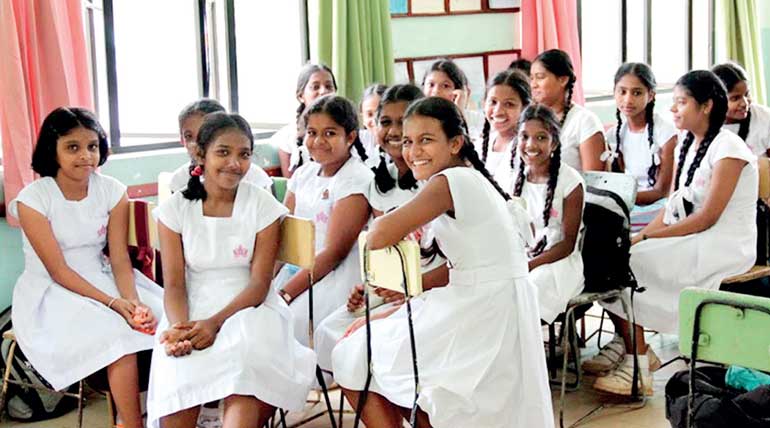
Despite significant progress in female education, Sri Lanka continues to record one of the lowest female labour force participation rates in the region
 Recently, during a commute in the UK, I noticed something that, at first glance, seemed entirely ordinary. The train driver and the conductor were women, and several members of the platform staff were women as well. As the day went on, I found myself paying closer attention. Women were working as paramedics, bus drivers, taxi drivers, security officers, restaurant staff and office professionals. None of this seemed to attract any special attention. These women were simply doing their jobs.
That simple observation stayed with me later, when I read recent Asian Development Bank (ADB) analysis on female labour force participation in Sri Lanka. Despite significant progress in female education, Sri Lanka continues to record one of the lowest female labour force participation rates in the region. In the second quarter of 2025, the female labour force participation rate was 31.7%, compared with 69.5% for men. Economically inactive persons were also overwhelmingly female, with women making up 71.8% of the economically inactive population. Female unemployment was higher than male unemployment, especially among those with GCE A/L and above, where female unemployment stood at 9.1%, compared with 3.0% for men.
These statistics raise an important question. If Sri Lankan women are increasingly educated and capable, why are so many still absent from the workforce? ADB’s 2026 analysis suggests that Sri Lanka’s low female labour force participation is shaped by care responsibilities, gender norms, policy gaps and other structural barriers, with only about one in three women active in the labour force.
The country has already recognised the problem of low female labour force participation and identified many of the barriers. What remains weak is practical implementation. Sri Lanka must also ask why it has been slow to create an environment where women working in any legitimate occupation is seen as entirely normal. The country has not yet built enough of the everyday infrastructure that allows women to work safely, flexibly and continuously. The focus should now shift to how women can enter, remain, return and progress across the whole of their working lives. This article discusses the policy measures needed to make that possible and to better harness women’s economic participation in Sri Lanka.
In many societies, women working as train drivers, security officers, technicians, transport operators or emergency service personnel no longer attract special attention. These are not seen as “men’s jobs” or “women’s jobs”. They are simply employment opportunities. In Sri Lanka, progress has certainly been made, but social attitudes still influence career choices and employment opportunities. Some occupations continue to be viewed as more suitable for men, even when there is no genuine reason why women cannot perform them. These perceptions can discourage women from entering growing sectors of the economy and also reduce the talent pool available to employers.
This is why public discussion on women’s employment should move beyond narrow gender categories. It would be useful to highlight the benefits of opening employment opportunities to women in sectors traditionally seen as male-dominated, especially where women are qualified, trained and willing to work. Women who have already succeeded in non-traditional occupations can also play an important role by speaking about their experiences, the challenges they faced and the sense of confidence and independence that such work can bring. In the long run, these attitudes should also be shaped through schools and career guidance, so that future generations do not grow up believing that certain legitimate occupations are closed to them because of gender.
Practical steps
In the short term, employers and public institutions can take practical steps by opening more roles in sectors where women have been under-represented mainly because of social attitudes rather than actual job requirements. Across South Asia, development programmes increasingly recognise non-traditional livelihoods as a way to expand women’s choices and challenge gender stereotypes, provided that training, safety and workplace support are built into the model. If a woman is qualified, trained and willing to do the job, society should not attach stigma to her choice. Normalising women in non-traditional roles can expand career options for women and help employers access a wider range of talent.
At the same time, workplace culture remains a critical issue. Many women still face concerns about workplace harassment, bullying and discrimination. Strong legal protection through proper legislation is important, but laws alone are not enough. Organisations must also have effective reporting mechanisms, clear internal disciplinary procedures, and a workplace culture where complaints are handled fairly and without delay. Women will not remain in employment if workplaces tolerate harassment, intimidation, bullying or gender discrimination. A practical example can be seen in the United Kingdom, where employers now have a legal duty to take reasonable steps to prevent sexual harassment at work, following the Worker Protection (Amendment of Equality Act 2010) Act 2023, which came into force on 26 October 2024. UK guidance also encourages employers to assess risks, introduce anti-harassment policies, train managers and create safe channels for reporting complaints. In fact, a safe workplace is not a luxury or a special privilege for women. It should be treated as a normal workplace standard.
Ongoing labour-law reform
In Sri Lanka, the Ministry of Labour’s 2025 Progress Report points to ongoing labour-law reform, including efforts to strengthen employee rights, empower working women, enhance flexibility in labour laws and address barriers faced by women in employment. However, these reforms are still at the proposal or implementation stage, rather than forming a complete and fully functioning system. Therefore, while Sri Lanka needs laws that make the prevention of sexual harassment at work mandatory, it is equally important to build managerial practices that can put those laws into effect. Those mechanisms will attract women into the workforce and, more importantly, support their retention.
The conversation should also extend beyond recruitment. Too often, policy discussions focus on bringing women into the workforce, while giving less attention to how they can be kept there. Career continuity is equally important. Many women leave employment temporarily because of childcare responsibilities, caring obligations or other family commitments. Yet structured pathways for returning to work remain limited. When women try to return after career breaks, they often face outdated skills, loss of confidence, employer hesitation and weakened professional networks. One strategic response would be to introduce “returnship” programmes for women who have left employment due to childbirth, caregiving or migration-related family responsibilities. Banks, public institutions, universities, apparel firms, tourism businesses and IT companies could offer re-entry schemes with refresher training, mentoring and workplace exposure. In the United Kingdom, the Government announced career-break returner programmes to help people return to work after time away, including public-sector schemes offering paid placements and support to refresh skills and rebuild professional networks. Career returner programmes, refresher training and re-entry opportunities would help experienced women rejoin the workforce after extended breaks. Therefore, a women’s career-continuity agenda should be treated as a key part of any national strategy to increase female labour force participation.
Moreover, flexible working arrangements also deserve greater consideration. Recent working practices have shown that productivity does not always depend on rigid working patterns. Where the nature of work allows it, options such as flexible hours, hybrid work, part-time employment and job sharing can help employees balance professional and personal responsibilities while remaining economically active. This is especially important for women who may otherwise stay outside the workforce because of commuting difficulties, childcare, eldercare or other domestic responsibilities. Without such practical and flexible ways of working, many women who are willing and able to contribute to economic activity are kept away from opportunity. The International Labour Organisation (ILO) has noted that flexible work can improve work-life balance, productivity and employee satisfaction, although it must be designed carefully to avoid new forms of inequality, discrimination or weaker career progression. Similarly, academic research on flexible work arrangements recognises that such arrangements can give employees more control over where and when they work, helping them combine paid work with care and other responsibilities. Most importantly, flexible work should be properly institutionalised. It should not depend only on the goodwill of individual employers. Where the work can reasonably be done in this way, flexible arrangements should be built into human resource policies and labour standards. Flexibility should not be treated as a sign of reduced commitment. For many employees, especially women with care responsibilities, it may be the very condition that allows them to remain economically active.
Comprehensive care strategy
Establishing a comprehensive care strategy is another critical part of increasing women’s labour force participation in Sri Lanka. Childcare is only one part of the problem. Many women also carry responsibility for elderly parents, disabled family members and wider household needs. A modern care strategy should therefore include affordable childcare, after-school care, elderly care support, care leave, employer-supported care facilities and better recognition of unpaid care work. The ILO has also recognised care responsibilities as a major barrier to women entering and staying in the labour force, with unpaid care work falling disproportionately on women. Without a proper care system, women will continue to absorb the hidden costs of keeping families and households functioning, while their education and skills remain underused in the labour market.
Another issue that receives little attention in Sri Lanka is menopause. This may still be treated as a private health matter, but in reality, it can also affect women’s working lives. In many countries, the discussion has already moved in this direction. The UK Parliament’s Women and Equalities Committee, for example, has recognised menopause as a workplace and equality issue, noting that some women reduce their hours or leave work altogether when they receive little support with menopausal symptoms. Sri Lanka should also begin this conversation. If experienced women leave work in midlife because workplaces are rigid or unsupportive, the economy loses skill, maturity and institutional knowledge. Practical measures such as manager awareness, wellbeing support, flexible arrangements and clear internal guidance are sensible ways of retaining experienced employees. Public and private sector institutions should therefore develop workplace guidelines on wellbeing issues such as menopause and mental health, particularly where these affect women’s career continuity. 
Gender diversity should be treated as part of good management, not merely as a social obligation. When women are represented in leadership, institutions are more likely to hear a wider range of experiences before decisions are made. McKinsey’s research has found a link between diversity in executive teams and stronger financial performance, while Harvard Business School commentary also notes that diverse leadership can improve decision-making when organisations create working cultures that genuinely include new voices. However, it is not enough to say that more women are employed if most remain in low-paid or low-progression roles. Organisations should track recruitment, retention, promotions, pay gaps, return after maternity leave, use of flexible work and women’s representation in management. These are practical measures which show whether women are merely being recruited, or whether they are actually able to progress.
Entrepreneurial skills
Sri Lankan women already have entrepreneurial skills. In many rural communities, women make great efforts to support their families through self-employment, such as preparing sweets, baking, running food stalls, sewing, home gardening or small trading activities. These efforts show initiative and resilience, but many women do not receive enough proper training in business planning, financial management, marketing, digital tools or how to expand a small activity into a stable enterprise. Women should not be seen only as job seekers; with the right support, they can also become job creators. Therefore, greater attention should be given to supporting women entrepreneurs through practical training, financial literacy, easier access to credit, digital skills and market access. This would help women move beyond survival-level self-employment and build businesses that can generate income, employment and local economic growth.
Ultimately, the problem is not a shortage of educated women or a lack of ability and ambition. The country has already invested significantly in developing the knowledge and skills of its female population. The next task is to build the social, legal and workplace infrastructure that allows women to turn that education into sustained and meaningful economic participation. Tourism, care services, IT, finance, public services and logistics all need labour. Women’s employment should therefore be framed as a critical part of Sri Lanka’s growth and productivity strategy. Sri Lanka should move beyond simply increasing the number of women in employment and focus on whether those jobs are safe, dignified, fairly paid and capable of offering career progression. A country cannot build a stronger and more resilient economy while leaving a large share of its educated population outside productive employment.
Increasing female labour force participation should therefore be viewed as an economic and social imperative, rather than only as a gender issue. The objective should be to create a society where women can enter the workforce, remain in it and progress without unnecessary barriers. When seeing women at work in every profession becomes entirely ordinary, Sri Lanka will be much closer to unlocking the full potential of its human capital. Women are willing to contribute; the country must now remove the barriers that keep their contribution outside the economy.
“No country can ever truly flourish if it stifles the potential of its women and deprives itself of the contributions of half of its citizens.”
— Michelle Obama
(The author is an Attorney-at-Law. (Views expressed in this article are entirely personal and do not represent the views of any organisation or institution with which the author is associated)




