Wednesday Sep 16, 2026
Wednesday Sep 16, 2026
Wednesday, 16 September 2026 14:15 - - {{hitsCtrl.values.hits}}
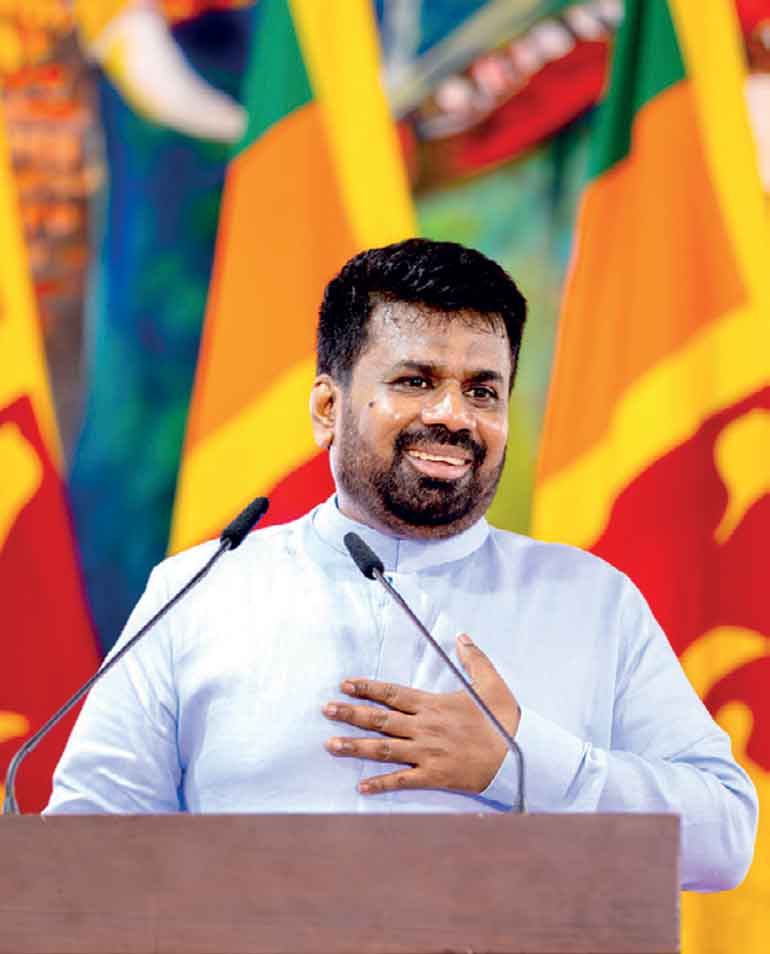
 The LTTE was a terrorist organisation and should never be romanticised. But defeating terrorism did not remove the state’s obligation to uphold the law; Sri Lanka’s unfinished task is to make accountability ordinary, reconciliation credible and human rights universal.
When violence tore through Negombo prison in July, at least 28 people were killed, including at least seven prison officials, and more than 100 were injured. Hundreds of inmates were transferred; two later died in custody, allegations of torture and ill-treatment emerged, and a rapid-response team from Sri Lanka’s own Human Rights Commission was initially denied access to Welikada prison during an unannounced inspection. The commission has reached no conclusions, but its officers later observed injured inmates and delays in medical treatment.
Sri Lanka should not need Geneva to explain why this matters. A prison is where the rule of law is tested at its least comfortable, when the state holds almost total power over people society fears, despises or has convicted. Prison officers have rights too, and those killed at Negombo cannot become a footnote, but disorder does not suspend the law; it is precisely when order breaks down that the discipline of the state matters most.
Yet almost every discussion of human rights in Sri Lanka is dragged backwards into the civil war. Mention accountability and the conversation moves to the north, the military, Geneva and the Liberation Tigers of Tamil Eelam. Before long, a debate about Sri Lankan institutions in 2026 became another referendum in 2009, conveniently turning present-day questions about power into arguments about history.
There should be no ambiguity about the LTTE. It was a terrorist organisation that used suicide attacks, killed civilians and political opponents, recruited children, forcibly displaced communities and committed grave abuses against Sinhalese, Muslims and Tamils themselves; Britain continues to proscribe it as a terrorist group. Reconciliation should never require the families of those it murdered to pretend otherwise, and Sri Lanka was entitled to defeat terrorism and remains entitled to protect its citizens against it today.
But the criminality of a terrorist movement cannot create a permanent exemption from accountability for a democratic state. Terrorists do not claim constitutional legitimacy, promise due process or submit themselves to judicial supervision; the state does. Demanding a higher standard from the state is not to equate it with the organisation it defeated, but to insist on the distinction that gives democratic authority its legitimacy.
Countering terrorism
The same principle applies to counter-terrorism. The Prevention of Terrorism Act dates from 1979 and remains in force while the Government consults on replacement legislation, despite the present administration’s pledge to repeal it. Sri Lanka plainly needs effective powers against terrorist financing, recruitment and planned violence, but exceptional powers must be precise enough not to drift towards journalists, protesters or inconvenient speech. A democratic state should be formidable against terrorism and deliberately restrained against everyone else.
Sri Lanka’s history with journalists shows the cost when threat and dissent are blurred. Editor Lasantha Wickrematunge was assassinated in 2009; political cartoonist and journalist Prageeth Ekneligoda was forcibly disappeared in 2010 and his fate remains unknown; Keith Noyahr, then deputy editor of ‘The Nation’ was abducted in 2008, badly beaten and released the next morning. Human Rights Watch reported this month that there has been renewed movement under the Dissanayake administration, but no indictments have yet been filed in the Wickrematunge and Noyahr cases, while proceedings in the Ekneligoda case have repeatedly stalled. Impunity in such cases is not only the absence of justice after a crime; it teaches the next journalist what investigating power may cost.
President Anura Kumara Dissanayake’s Government did not create the PTA, Sri Lanka’s history of custodial abuse, unresolved disappearances or politically sensitive investigations that dissolved into delay. It inherited them, and it has taken steps worth acknowledging. But inheritance eventually becomes responsibility, and a Government elected to transform the political culture will be judged not by whether it administers inherited powers more politely, but by whether it dismantles the conditions that made abuse easy and accountability exceptional
This is where President Anura Kumara Dissanayake’s Government faces its defining test. It did not create the PTA, Sri Lanka’s history of custodial abuse, unresolved disappearances or politically sensitive investigations that dissolved into delay. It inherited them, and it has taken steps worth acknowledging: strengthening domestic reconciliation bodies, allocating additional resources to the Office on Missing Persons, setting in motion work towards a truth and reconciliation commission, resuming investigations into longstanding cases and moving towards an independent public prosecutor’s office. But inheritance eventually becomes responsibility, and a Government elected to transform the political culture will be judged not by whether it administers inherited powers more politely, but by whether it dismantles the conditions that made abuse easy and accountability exceptional.
Domestic accountability
That test is not new, and neither is the promise of domestic accountability. The Lessons Learnt and Reconciliation Commission, appointed by Mahinda Rajapaksa in 2010, produced recommendations that included credible investigations into disappearances, reassessment of detention policies, stronger independent institutions, protection of freedom of expression and wider rule-of-law reform. In 2011, foreign minister G. L. Peiris defended the LLRC internationally as Sri Lanka’s own mechanism and argued that it should be allowed to complete its work before further international action.
Four years later, under a very different Government, Mangala Samaraweera made the other half of the argument explicit. “Defeating terrorism was a necessity,” he said while defending credible investigations, reconciliation and peacebuilding, arguing that victory had given Sri Lanka greater freedom to confront the causes of conflict and pursue nation-building. The politics changed dramatically; the underlying promise did not. Sri Lanka’s accountability problem is no longer a shortage of commissions, speeches or frameworks, but the distance between promises and institutions capable of keeping them.
International experience reinforces that point without requiring Sri Lanka to import somebody else’s settlement. Peru’s Truth and Reconciliation Commission found the Maoist Shining Path responsible for 54% of fatal victims reported to it while also documenting grave violations by state agents; Colombia’s post-conflict tribunal has held former FARC leaders responsible for mass kidnapping while pursuing accountability for killings and disappearances involving state agents; and Northern Ireland’s post-Troubles policing reforms placed human rights and independent oversight at the centre of institutional legitimacy. None of these processes erased terrorism. They showed that condemning insurgent violence and scrutinising state power are compatible, and that durable security is strengthened when coercive institutions are trusted because they are constrained.
Sri Lanka’s own history should make the principle familiar. During the suppression of the JVP insurrection in the late 1980s, thousands of predominantly Sinhalese young people were subjected to enforced disappearance, extrajudicial killing, torture and other ill-treatment, according to the UN human rights office. Tamil civilians later suffered grave violations during the civil war while the LTTE itself terrorised opponents and civilians; Muslims endured massacres and forced expulsion by the LTTE; Christians became the principal victims of Islamist terrorism on Easter Sunday. The victims changed, but the danger of making rights conditional did not.
Reconciliation
Sri Lanka does not need a common memory of its conflicts. It needs common rules for its future: no terrorism, no torture, no enforced disappearance, no deliberate attacks on civilians, no political immunity, no persecution disguised as national security and no violence disguised as liberation. Those principles are not concessions to minorities or instructions from Geneva; they are the architecture of a state confident enough to protect its citizens without fearing the restraints of law
Reconciliation therefore cannot mean imposing one national memory. A Tamil mother should be able to ask what happened to a missing child without being presumed to support the LTTE, just as a Sinhalese family should be able to seek answers about a relative who disappeared during the JVP era regardless of that relative’s politics. Muslims should be able to remember expulsion and massacre by the LTTE while demanding equal citizenship today, and families of soldiers, police officers and civilians murdered by terrorists should never be told that peace requires them to soften the truth about those crimes.
Nor should members of the Armed Forces carry collective guilt for allegations against individuals. A uniform is neither proof of criminality nor immunity from evidence, and individual accountability protects institutions from collective condemnation by distinguishing lawful service from criminal conduct, allegation from proof and justice from vengeance. A country that refuses to make that distinction damages both victims and the thousands who served the State without committing crimes.
The Dissanayake Government’s insistence on nationally owned accountability is therefore not inherently unreasonable. Justice is more durable when citizens believe it belongs to them, and the Government has continued to argue for strengthening the Office on Missing Persons, Office for Reparations and Office for National Unity and Reconciliation while developing a truth and reconciliation commission and independent public prosecutor. But sovereignty is persuasive only when those institutions deliver: every stalled prosecution, every commission whose findings disappear into archives and every investigation that outlives its witnesses weakens Sri Lanka’s case for domestic accountability more effectively than any speech made against it in Geneva.
Way forward
Moving forward cannot mean another ceremony or another instruction to forget. It means making repetition harder: police officers who know torture brings prosecution rather than protection, journalists who know attacks will be investigated regardless of who ordered them, soldiers who know honourable service will not be stained by the protection of individual wrongdoing, and victims who do not need to calculate an accused person’s ethnicity or political connections before guessing whether justice will be done.
Sri Lanka does not need a common memory of its conflicts. It needs common rules for its future: no terrorism, no torture, no enforced disappearance, no deliberate attacks on civilians, no political immunity, no persecution disguised as national security and no violence disguised as liberation. Those principles are not concessions to minorities or instructions from Geneva; they are the architecture of a state confident enough to protect its citizens without fearing the restraints of law.
Sri Lanka defeated the LTTE 17 years ago and should neither apologise for defeating terrorism nor permit the organisation’s crimes to be sanitised by selective memory. But victory cannot become a permanent licence for exceptional power, and the harder task now belongs to Dissanayake and the institutions he promised to reform: proving that a state strong enough to defeat an armed enemy is also strong enough to restrain itself, and that a peace worth defending is one in which nobody : terrorist, politician, police officer, soldier or official can reasonably expect power to place them beyond the law.
(The author is an International Relations student at Monash University whose writing explores politics, governance, and international affairs).




