Monday Nov 09, 2026
Monday Nov 09, 2026
Monday, 9 November 2026 03:55 - - {{hitsCtrl.values.hits}}
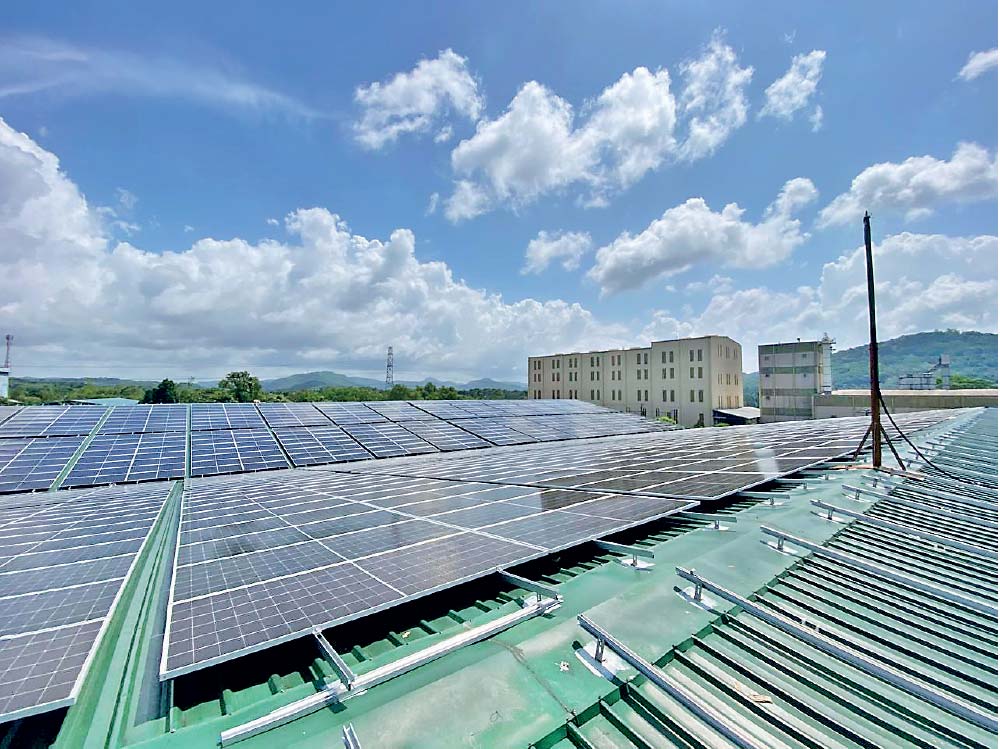
 Despite benefits, the rapid growth of solar power presents significant operational challenges for electricity utilities, particularly in developing countries where electricity grids are often relatively weak, with limited flexibility and modern control systems
 Sri Lanka must recognise the economic and environmental benefits of solar power while addressing the growing technical and financial challenges faced by electricity utilities.
Sri Lanka's electricity sector is undergoing a significant transformation. What began as a modest rooftop solar programme has developed into one of the country's most important sources of renewable electricity. Thousands of households, commercial establishments and industries have invested their own funds to generate electricity, thereby reducing dependence on conventional power plants.
However, this rapid expansion has also created significant challenges for electricity utilities, mainly due to the intermittent nature of solar power generation. When clouds pass over solar installations, electricity generation can drop suddenly and substantially, requiring the utility to immediately compensate for the shortfall to maintain a stable electricity supply. To manage these unpredictable fluctuations, the utility must maintain sufficient spinning reserves, ready to increase generation at short notice, adding to the cost of operating the electricity system. Furthermore, during very sunny weekends, when electricity demand is relatively low, conventional generation has to be reduced to accommodate the high solar output. This can significantly reduce the system's inertia, increasing the risk of frequency instability and making it more challenging to maintain the stability and reliability of the national power system.
The Government's recent decision to discontinue Net Metering and Net Accounting for new rooftop solar connections has therefore raised an important question: Is rooftop solar becoming a financial burden on the electricity sector, or are we overlooking its considerable economic contribution to the country?
The answer requires a comprehensive assessment of both its benefits and its challenges.
Solar power’s growing contribution to Sri Lanka
According to information released by the National System Operator (NSO) in September 2026, Sri Lanka’s total installed solar power capacity exceeded 3,070 MW, comprising approximately 2,542 MW of rooftop solar and 534 MW of ground-mounted solar installations.
Depending on weather conditions, solar generation now contributes approximately 15–25% of the country’s daily electricity requirements. This is a remarkable achievement for a country that remains dependent on imported fossil fuels for a considerable portion of its electricity generation.
In particular, official generation statistics highlight the substantial contribution of rooftop solar to Sri Lanka’s electricity supply. During the first six months of 2026, rooftop solar installations generated approximately 1,228 GWh (1.23 billion units), averaging 205 million units per month or 6.8 million units per day. This represents approximately 13% of the country’s total electricity generation, meaning that nearly one in every eight units of electricity was generated by rooftop solar. To put this into perspective, the energy produced is comparable to the output of a 300 MW power station operating at approximately 94% capacity continuously for six months. This demonstrates the significant role of consumer-funded rooftop solar installations in meeting national electricity demand.
These figures represent a substantial contribution to national electricity supply. Furthermore, rooftop solar electricity consumed directly within households and commercial premises reduces the electricity that must be supplied through the grid, even where this self-consumption is not fully reflected in conventional generation statistics.
It is important to distinguish installed capacity from actual generation. A 1,000 MW solar installation does not generate at full capacity throughout the day, as its output depends on sunlight and weather conditions. With a typical capacity factor (plant factor) of 15–20%, it produces the same amount of electricity over a year as a 150–200 MW power plant operating continuously at full capacity.
Nevertheless, the contribution of solar electricity during daylight hours has become sufficiently significant that the electricity system would face a very different operating and financial situation without it.
Sri Lanka should not approach rooftop solar development as a conflict between electricity utilities and solar investors. Both have an essential role in the country's energy future
The economic benefits of solar generation
One of the greatest benefits of solar electricity is its ability to reduce the amount of electricity generated from conventional thermal power plants.
Every unit of solar electricity that displaces oil- or coal-based generation can reduce fuel consumption. This is especially important for Sri Lanka, where imported fossil fuels create a substantial foreign-exchange burden.
However, the actual economic benefit depends on which generating plant is displaced.
For example, electricity generation costs forecast as per PUCSL Consultation Document for Electricity Tariff Review for 4th Quarter of 2026 approximately:
These figures are reported average costs(forecast) for different sources, not the marginal cost of generating an additional unit at any particular hour. They nevertheless demonstrate why the economic value of solar cannot be determined simply by comparing its purchase tariff with the overall average generation cost.
When solar electricity replaces expensive oil-fired generation, the financial benefit can be considerable. Conversely, when it displaces comparatively inexpensive generation or is produced during periods of excess supply, its immediate economic value may be much lower.
The correct comparison is therefore between the full cost of solar electricity and the actual cost of the electricity that would otherwise have been generated at that time.
This is particularly relevant when evaluating claims that Net Metering creates financial losses for electricity utilities.
Conserving hydropower for the evening peak
Another important benefit is the opportunity to conserve water stored in hydropower reservoirs.
During periods when solar generation is available, it may be possible to reduce hydropower generation and retain water for use during evening peak-demand hours.
This effectively allows hydropower reservoirs to serve as a form of energy storage, although the benefit depends on reservoir levels, water management requirements and whether water would otherwise have been spilled. Such opportunities can reduce the need to operate expensive thermal plants during peak demand.
Solar power also contributes to energy security. During periods of coal plant outages, fuel shortages or reduced hydropower availability, distributed solar generation can reduce daytime demand on conventional generating stations.
Another significant economic benefit of rooftop solar is that the capital investment has largely been borne by households and businesses, reducing the need for government or utility investment in equivalent electricity generation capacity. This contribution of private investment to meeting national electricity demand should also be recognised when assessing the overall economic value of rooftop solar.
The challenges faced by electricity utilities
Despite these benefits, the rapid growth of solar power presents significant operational challenges for electricity utilities, particularly in developing countries where electricity grids are often relatively weak, with limited flexibility and modern control systems. Utilities must continuously balance electricity generation with demand to maintain a stable and reliable power supply. Unlike conventional power plants, solar generation is highly dependent on sunlight and weather conditions, making its output variable and sometimes unpredictable.
One of the major challenges is the changing pattern of electricity demand throughout the day. As rooftop solar generation increases in the morning, demand for electricity from the national grid falls considerably. However, as the sun sets, solar generation declines rapidly while household electricity demand rises, creating what is commonly known as the duck curve. Utilities must therefore maintain sufficient conventional generating capacity to meet the evening peak, even when these power plants operate at reduced output during the day.
Furthermore, sudden changes in solar generation, particularly due to passing clouds, require conventional power plants to increase or decrease their output rapidly. This demands flexible generating capacity, adequate spinning reserves and effective frequency control, all of which involve additional costs. These challenges are particularly serious in smaller and weaker power systems, where limited generation flexibility, low system inertia and inadequate grid infrastructure make it more difficult to maintain stability.
Electricity utilities must remain financially sustainable and maintain a reliable electricity supply. At the same time, renewable energy investors should receive fair compensation for electricity that provides genuine economic value to the national grid. A balanced policy should therefore begin with an independent and transparent assessment of solar power's actual contribution
Voltage rise and reverse power flow
The second major challenge occurs in distribution networks. Traditionally, electricity flows from power stations through transmission and distribution systems towards consumers. Rooftop solar changes this arrangement by allowing consumers to export electricity back into the distribution network. When a large number of solar installations are connected to the same feeder, local generation may exceed local electricity consumption. This can result in reverse power flow, voltage rise, protection coordination difficulties and, in some cases, overloading of distribution transformers or feeders. Excessively high voltage can also cause solar inverters to disconnect automatically, reducing generation and creating further voltage fluctuations.
These are not merely theoretical concerns. The Public Utilities Commission of Sri Lanka (PUCSL), in its analysis of rooftop solar integration, identified distribution network hosting capacity and inadequate real-time monitoring as major obstacles to further solar expansion.
Following the nationwide blackout in February 2025, additional attention was given to inverter protection settings and grid-support capabilities. The regulator subsequently reported that compliance with updated inverter protection requirements remained inadequate.
It would be incorrect to conclude that rooftop solar alone caused the blackout. However, the incident highlighted the need to develop the grid, modernise power system protection, monitoring and control as renewable energy penetration increases.
The financial challenges: Are net metering and net accounting really causing losses?
Perhaps the most controversial issue is the financial impact of Net Metering and Net Accounting on electricity utilities. Under conventional Net Metering or Net Accounting, electricity exported to the grid can offset electricity imported by the consumer on a unit-for-unit basis. However, electricity exported during the daytime does not necessarily have the same economic value as electricity imported during the evening peak.
A consumer may export solar electricity when relatively inexpensive generation is available, but consume electricity at night when the utility must operate more expensive generating plants. Furthermore, electricity tariffs recover more than the direct cost of energy generation. They also contribute towards transmission and distribution infrastructure, maintenance, system operation and other fixed costs.
As more consumers reduce their net electricity purchases through solar generation, the utility may recover less revenue towards these costs. This can create financial pressure and potentially transfer costs to consumers who do not own solar installations. The concern is legitimate, particularly from the perspective of lower-income households that may not be able to afford rooftop solar.
Nevertheless, a reduction in electricity sales revenue should not automatically be treated as an equivalent financial loss to the utility. The utility must also account for the generation costs avoided because solar electricity is available. If a unit of solar electricity eliminates the need to purchase expensive thermal electricity, there is a real saving that must be included in the calculation. Similarly, where solar reduces system losses, conserves water for hydropower generation or reduces fuel imports, these benefits must be appropriately recognised.
On the other hand, solar generation does not automatically eliminate existing capacity payments, network maintenance costs or the need to retain generating capacity for periods without sunlight. Therefore, the actual financial impact can only be determined by considering all these factors together.
Rethinking net metering and net accounting
In September 2026, the Ministry of Energy directed that new rooftop solar connections and extensions of existing agreements should operate under the Net Plus scheme, rather than the traditional Net Metering and Net Accounting arrangements.
Under Net Plus, electricity generation and electricity consumption are accounted for separately, allowing solar generation to receive an approved payment while electricity purchased from the grid is billed under the applicable consumer tariff.
The Government has justified this change partly on the grounds that electricity exported during the day should not automatically compensate for higher-cost electricity consumed at night. However, the policy has generated considerable concern among solar investors and industry participants.
There is also a regulatory difference of interpretation. In a September 2026 clarification, PUCSL maintained that separate measurement of electricity imports and exports could be implemented without necessarily discontinuing the existing commercial arrangements under Net Metering and Net Accounting.
This disagreement highlights the importance of transparent regulatory decision-making. Policy reforms should recognise the genuine costs associated with solar integration without unnecessarily discouraging private investment in renewable energy.
Before making fundamental changes to Net Metering and Net Accounting arrangements, it would be prudent for the authorities to undertake and publish a comprehensive, transparent cost-benefit assessment of rooftop solar generation. Such an assessment should establish its true economic value to the national electricity system and provide a sound basis for fair and sustainable tariff policies, while protecting existing contractual commitments and investor confidence
Energy storage: An essential part of the solution
Battery Energy Storage Systems (BESS) and pumped storage hydropower plants can play a vital role in addressing the challenges associated with increasing solar generation. Surplus solar electricity produced during the daytime can be stored and released during evening peak-demand hours, reducing dependence on expensive thermal generation. Batteries can also respond rapidly to sudden changes in generation, helping maintain system frequency, improve grid stability and minimise the curtailment of renewable energy.
The National System Operator (NSO) has outlined plans to introduce approximately 1,240 MW of battery storage capacity, with an energy storage capability of 4,660 MWh, during 2027–2029. However, the location of these storage facilities is equally important. While large batteries connected to grid substations can support overall power system stability, they may not resolve local voltage fluctuations and transformer overloading caused by high rooftop solar penetration. Therefore, a coordinated approach involving grid-scale storage, strategically located distribution-level batteries and consumer-owned storage systems is essential.
In addition, Time-of-Use (TOU) tariffs and appropriate incentives can encourage consumers to use more electricity during periods of abundant solar generation. Activities such as electric vehicle charging, water pumping, industrial processes and other flexible electricity loads can be shifted to daytime hours. This would improve the utilisation of solar electricity, reduce the need for costly storage and conventional generation, and help maintain a more stable and economically efficient power system.
The way forward: A balanced national policy
Sri Lanka should not approach rooftop solar development as a conflict between electricity utilities and solar investors. Both have an essential role in the country’s energy future.
Electricity utilities must remain financially sustainable and maintain a reliable electricity supply. At the same time, renewable energy investors should receive fair compensation for electricity that provides genuine economic value to the national grid.
A balanced policy should therefore begin with an independent and transparent assessment of solar power’s actual contribution. Such an assessment should compare the hourly operating costs of the electricity system with rooftop solar and without rooftop solar, considering avoided fuel expenditure, hydropower reservoir management, network losses, fixed generation costs, capacity payments, energy storage requirements and grid stability.
It should also examine whether existing electricity tariff structures distribute system costs fairly among solar and non-solar consumers.
The longer-term solution requires modernising the distribution network, improving real-time monitoring, enforcing smart-inverter standards and introducing more dynamic tariff arrangements that recognise the changing value of electricity throughout the day.
Rather than relying entirely on uniform restrictions, utilities should assess the capacity of individual feeders and transformers to accommodate additional solar installations. Where technical limitations exist, network reinforcement, improved inverter control and suitable storage solutions should be evaluated.
Finally, any changes to electricity tariffs or connection schemes should be implemented through a transparent, consultative process that maintains investor confidence and protects consumers.
Conclusion
Rooftop solar has become a valuable national energy resource, making a substantial contribution to Sri Lanka’s electricity supply, reducing dependence on imported fuels, conserving hydropower resources under suitable conditions and supporting the country’s transition towards cleaner energy. Equally important, much of this generation capacity has been developed through private investment by households and businesses, reducing the need for government and utility capital expenditure on additional daytime generation.
At the same time, the growing contribution of solar power presents genuine technical and financial challenges for electricity utilities. Its intermittent nature, the need for costly spinning reserves, reduced system inertia during periods of high solar generation, evening peak-demand requirements and limitations in existing distribution networks all require careful attention. The financial sustainability of electricity utilities and the fair recovery of network costs must also be ensured. These challenges, however, should be addressed through appropriate grid development, modern technologies and sound regulatory policies rather than by discouraging further investment in rooftop solar.
The economic contribution of rooftop solar should therefore be assessed from a broader national perspective, considering not only its impact on utility revenue but also the avoided fuel expenditure, reduced foreign exchange requirements, potential savings in public investment, conservation of hydropower resources and environmental benefits. Equally, the additional costs of maintaining grid stability, providing reserve generation, strengthening networks and introducing energy storage must be properly accounted for.
Before making fundamental changes to Net Metering and Net Accounting arrangements, it would be prudent for the authorities to undertake and publish a comprehensive, transparent cost-benefit assessment of rooftop solar generation. Such an assessment should establish its true economic value to the national electricity system and provide a sound basis for fair and sustainable tariff policies, while protecting existing contractual commitments and investor confidence.
Sri Lanka has already made considerable progress in developing rooftop solar through the participation of its citizens and businesses. Preserving this achievement while addressing the legitimate concerns of electricity utilities requires a balanced, long-term approach. The priority should be to strengthen and modernise the electricity grid, introduce appropriate energy storage and encourage better utilisation of solar electricity through suitable tariff incentives.
The challenge before Sri Lanka is not to restrict the growth of solar power, but to develop an electricity system capable of accommodating it safely, reliably and economically. With proper planning and balanced policies, rooftop solar can continue to benefit consumers, electricity utilities and the national economy alike.
(The author is Former Chief Operating Officer, Electricity Distribution Lanka Ltd.,)




