Monday Sep 14, 2026
Monday Sep 14, 2026
Monday, 14 September 2026 04:00 - - {{hitsCtrl.values.hits}}
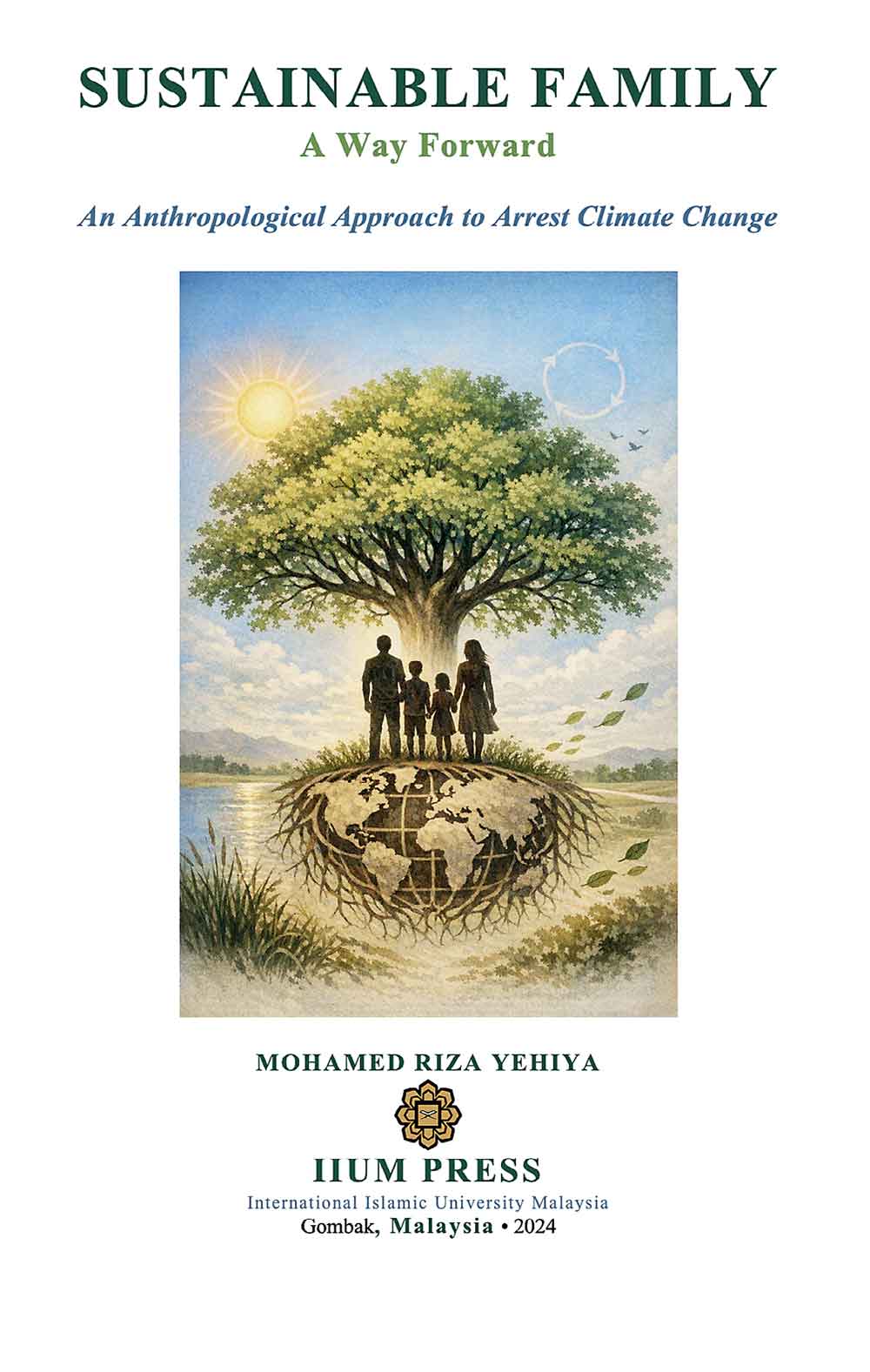
Book cover: Let Yehiya’s message not just be a wish but a concrete foundation for policymaking on one side and religious clerics to adopt when they deal with families
Emerging climate disaster
 In the global fight against ecological collapse, contemporary policymakers have routinely adhered to a top-down policy application tactic. The prevailing assumption is that sweeping international accords, macro-level economic policies, and institutional directives will naturally trickle down to alter individual behaviour.
It is, therefore, believed that people in both developed and emerging economies would change themselves to make the policy work. However, this approach remains fundamentally defective. History demonstrates that top-down mandates routinely fail if individuals at the base of society are never equipped, socialised, or intrinsically motivated to accommodate those changes.
Riza Yehiya’s ‘Sustainable Family’
In his insightful book, ‘Sustainable Family: A Way Forward – An Anthropological Approach to Arrest Climate Change’, architect and writer Mohamed Riza Yehiya presents a radical paradigm shift. By deploying an anthropological lens, Yehiya identifies the family unit as the foundational institution capable of driving genuine, lasting environmental stewardship. This bottom-up approach, suggested for arresting climate change hazards, offers a refreshing and urgently needed perspective on sustainability.
Perils of outsourcing education
|
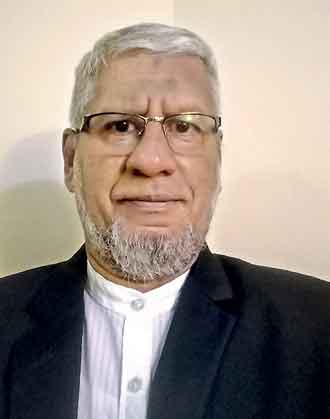
Riza Yehiya
|
To understand the efficacy of Yehiya's model, one must look at how modern institutions have fractured the transmission of core human values, a crisis most evident in contemporary education.
Historically, the family served as the primary educational outfit. Within the household, elders functioned as teachers, directly inculcating literacy, arithmetic, and vital vocational skills. Crucially, this domestic education was deeply intertwined with the transmission of ethics, morality, and cultural heritage, a must in training the young for harmonious living in society.
When society outsourced this responsibility to formal educational institutions—such as schools, technical colleges, and universities—the focus shifted entirely to certificate-earning metrics and market-driven utility. Consequently, modern education manufactures technical proficiency but largely neglects the moral and cultural baseline required for collective responsibility.
Yehiya powerfully emphasises that arresting climate change requires contemporary societies to reclaim this valued, family-centric educational ecosystem, treating ecological ethics not as an institutional subject, but as a deeply rooted household value.
Confucian family value system
Yehiya has quoted the 5th Century BCE Chinese philosopher Confucius to establish that family learning had been there for millennia. Confucius had said that ‘The men of old […] wanting good governments in their State, first established order in their families; wanting order in the home, they first disciplined themselves; desiring self-discipline they first rectified their own hearts; wanting to rectify their hearts, they rectified their tongues’.
 In the global fight against ecological collapse, contemporary policymakers have routinely adhered to a top-down policy application tactic. The prevailing assumption is that sweeping international accords, macro-level economic policies, and institutional directives will naturally trickle down to alter individual behaviour. It is, therefore, believed that people in both developed and emerging economies would change themselves to make the policy work. However, this approach remains fundamentally defective
So, it is from individual to family and from family to the nation and not from the nation to individual through family, a vital requirement which tends to be ignored by modern societies and their policymakers. Yehiya has brought this to focus cogently through his thesis.
Meaning of sustainability
In economics, sustainability means that once a system is established it should be able to continue on its own internal resources without the help of an outsider. For instance, if a student is taught by a teacher, the student should be able to resolve any issue on his own without the help of the teacher. If he still needs the teacher’s support, his learning has not been sustainable.
Yehiya has quoted the 5th Century BCE Chinese philosopher Confucius to establish that family learning had been there for millennia. Confucius had said that ‘The men of old […] wanting good governments in their State, first established order in their families; wanting order in the home, they first disciplined themselves; desiring self-discipline they first rectified their own hearts; wanting to rectify their hearts, they rectified their tongues’
But in the case of the environment, sustainability means that society should use resources without harming the ability of future generations to enjoy life, a definition that was adopted by the UN-appointed World Commission on Environment and Development, popularly known as the Brundtland Commission.
Yehiya’s critique
Yehiya critically reviews the diverse authoritative views of sustainability and concludes that, while they are relevant for conserving and managing natural resources, they lack explanatory power to focus on man-made disasters due to unsustainable lifestyles of people.
According to Yehiya, the problem there is the economic perspective of corporate and business entities have become barriers to family development. They encourage, says Yehiya, individualism in place of working for the common good of society
Going by the sustainability as presented in Islam, Yehiya concludes that it should be defined as ‘a system of living within the means by striking a balance between human need and human greed by sharing and caring for the earth together with its citizens and underlings with responsibility and answerability to the Creator who placed man as His trustee to administer its affairs responsibly and sustainably’.
This is where the family comes into the scene. He says that the family provides the legal, social, and moral bonds as a mechanism for the controlled development of the human species to be sustainable. It gives emotional support, cultivates ethical and moral responsibilities, and contributes to developing human personality to be responsible citizens.
According to Yehiya, the problem there is the economic perspective of corporate and business entities have become barriers to family development. They encourage, says Yehiya, individualism in place of working for the common good of society.
Family is also not that innocent
However, in my view, this charge can be made against the family itself if it is guided by the ethos of the contemporary society. That set of ethos has inculcated a value system even within the family that one should work for his gain, irrespective of how he does it, selfishly. It is the end result that is valued in the family system and not the means adopted to reach that state.
Yehiya argues that secular reductionism has commoditised nature, stripped economic systems of moral responsibility, and detached human agency from metaphysical accountability. By treating nature as an infinite resource pool and defining progress primarily through endless economic consumption, global industrial culture has alienated humanity from its innate, balanced nature (which he has termed fitra-hanifa)
Just see how parents teach children to lie if they want to get admission to an elite school: all entry documents including those relating to residence are forged and children are taught to stand for the forgeries concocted by elders in the family. Yehiya, therefore, suggests, as a solution to the corrupted family system, that families should be guided by a value system as dictated by Islamic doctrines.
In my view, this applies to all the religions because none of them promotes corruption in individuals or the closest organisational unit they belong to, namely, the family.
Anthropological crises of modern sustainability
Yehiya’s core thesis expands on this critique by demonstrating that global climate disruption, biodiversity loss, and ecological decay are not merely technical, market, or policy failures. Instead, they represent a deeper human and behavioural crisis.
The contemporary sustainability paradigm—dominated by corporate metrics, carbon trading, technological adaptation, and secular policy—remains inherently flawed because it attempts to correct an environmental malfunction without addressing the underlying driver: human conduct.
Yehiya posits that the modern climate crisis has occurred in tandem with the erosion of the family structure. Hyper-individualism, extreme consumer culture, and socio-economic displacement have weakened the family's capacity to pass down intergenerational values, restraint, and communal responsibility
Yehiya argues that secular reductionism has commoditised nature, stripped economic systems of moral responsibility, and detached human agency from metaphysical accountability. By treating nature as an infinite resource pool and defining progress primarily through endless economic consumption, global industrial culture has alienated humanity from its innate, balanced nature (which he has termed fitra-hanifa).
Consequently, top-down legislative interventions and technological fixes can only manage the symptoms of environmental collapse. True ecological restoration requires an anthropological reset that addresses the ethical, spiritual, and social foundations governing human action.
Expanding the paradigm: Five-pillar framework
To correct the limitations of the mainstream sustainability discourse—which conventionally relies on three interconnected elements: environment, economy, and society—Yehiya introduces an expanded five-pillar framework. This structural re-conceptualisation integrates the moral and institutional dimensions necessary for long-term survival:
1. Environmental sustainability: Preserving ecological integrity, resource systems, and natural balances (Meezan).
2. Social sustainability: Ensuring equitable community structures, social justice (Adl), protection of vulnerable populations, and cohesive societal bonds.
3. Economic sustainability: Fostering economic systems that prioritise ethical wealth distribution, circular resource utilisation, and the rejection of exploitative practices.
4. Good governance and political sustainability: Institutional structures grounded in accountability, moral leadership, transparency, and the active rejection of tyrannical or self-serving power dynamics (Taghut).
5. Moral responsibility and stewardship (khilafah): The overarching ethical foundation asserting that humans are not sovereign owners of Earth, but appointed stewards accountable for preserving cosmic harmony and intergenerational well-being.
By placing moral stewardship and political accountability on equal footing with ecological and economic metrics, the book argues that true sustainability cannot exist in a system driven purely by profit maximisation or secular governance.
Family as foundational unit of change
The cornerstone of Yehiya’s thesis is the assertion that the family institution is the ultimate micro-social unit responsible for arresting climate change. While global conventions and national policies attempt to govern human behaviour at macro-levels, the ethical orientation, consumption patterns, empathy, and environmental values of individuals are formed within the household.
Unlike modern circular economy models that focus solely on material recycling and industrial efficiency, Yehiya’s circular society is holistic. It integrates moral stewardship, strong family units, social solidarity (Sadaqah, Zakat, equitable inheritance), and community governance. In this vision, social reform starts at the individual and household levels (Da'wa and self-rectification) and propagates outward to build systemic resilience against ecological collapse
Yehiya posits that the modern climate crisis has occurred in tandem with the erosion of the family structure. Hyper-individualism, extreme consumer culture, and socio-economic displacement have weakened the family's capacity to pass down intergenerational values, restraint, and communal responsibility.
Rebuilding a sustainable society requires establishing the sustainable family as an active agent of socio-ecological reform. Within this framework, the family serves critical functions:
 Ethical and spiritual nurture: It instills taqwa (God-consciousness/mindfulness), ethical discipline, and an understanding of human limits, countering the culture of excessive consumption and material waste.
Resource and consumption management: The household functions as the primary arena for practical sustainability—practising conscious consumption, waste reduction, zero-waste principles, and resource stewardship.
Intergenerational transmission of stewardship: It equips future generations with the moral imperative of khilafah, training children to view their relationship with the natural world not through dominance, but through duty and care.
Social and emotional resilience: A stable family unit acts as a buffer against social alienation, economic instability, and community breakdown, creating compassionate networks that extend care to vulnerable social groups (such as orphans, widows, and the marginalised).
Integrating Islamic worldview
To operationalise this anthropological shift, Yehiya roots his methodology in an Islamic ontological framework, emphasising that the Quranic worldview offers a universal model for living in harmony with creation. Key concepts include:
Tawhid (Oneness): The absolute unity of the Creator establishes an interconnected web of creation, meaning that harm inflicted upon the natural world is a violation of cosmic order.
Meezan (Balance) and Adl (Justice): God created the universe in precise balance; human greed disrupts this equilibrium. Sustainability is the continuous act of restoring Meezan across natural and social domains.
Khilafah (Trusteeship): Humanity holds a divine trust (Amanah) over the Earth. Natural resources are held in trust for current and future generations, shifting the focus from individual rights to collective responsibility.
Rejection of Taghut: Repercussions arise when human systems deify material wealth, endless growth, or corrupt authority above divine limits.
Through these principles, Yehiya illustrates that ecological stewardship is an intrinsic religious and moral duty rather than an optional lifestyle preference.
Civilisational cycles and circular society
Yehiya contextualises the current environmental crisis within broader historical and civilisational cycles. Drawing on historical precedents—including Prophetic communities, the governance of the Khulafa e Rashidun, and subsequent civilisational shifts—he demonstrates how societies flourish when aligned with moral law and collapse when self-interest overrides spiritual accountability.
Addressing contemporary disruptions such as the Anthropocene, technological acceleration, post-normal times, and global pandemics, Yehiya argues that the path forward lies in transitioning from a linear, extraction-based society to a circular society.
Unlike modern circular economy models that focus solely on material recycling and industrial efficiency, Yehiya’s circular society is holistic. It integrates moral stewardship, strong family units, social solidarity (Sadaqah, Zakat, equitable inheritance), and community governance. In this vision, social reform starts at the individual and household levels (Da'wa and self-rectification) and propagates outward to build systemic resilience against ecological collapse.
Yehiya’s thesis
Yehiya’s thesis asserts that arresting climate change cannot be achieved through techno-secular policies alone. Lasting environmental restoration demands an anthropological awakening that revives the family as the primary site of moral formation, expands sustainability into a five-pillared model of stewardship, and realigns human civilisation with cosmic balance.
The work done by Yehiya through immense research into the subject is commendable. His attention to use family based sustainable systems to resolve a burning issue like climate change is timely and opportune. His book is readable, well-presented and addressed to common man as well as expert policymakers. I recommend this book to anyone who is much concerned about the emerging catastrophe due to this man-made crisis that is looming over the whole world.
Let Yehiya’s message not just be a wish but a concrete foundation for policymaking on one side and religious clerics to adopt when they deal with families.
(The writer, a former Deputy Governor of the Central Bank of Sri Lanka can be reached at [email protected]; The author of the book, Riza Yehiya, can be reached at [email protected])