Friday Nov 20, 2026
Friday Nov 20, 2026
Friday, 20 November 2026 00:21 - - {{hitsCtrl.values.hits}}
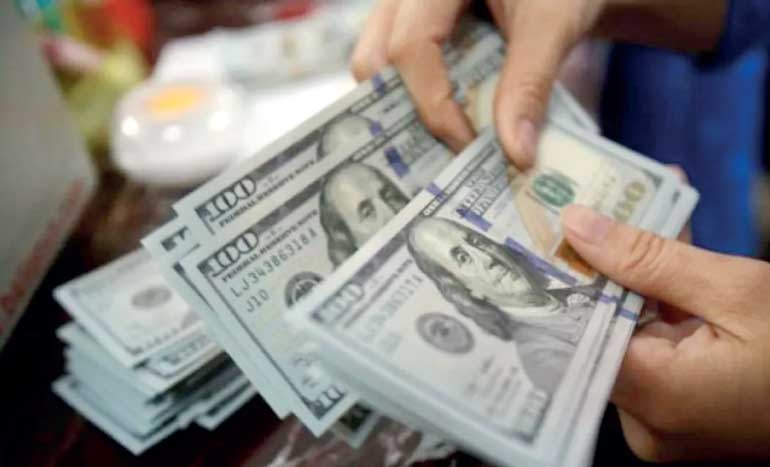
 When the United States of America froze the $ 300 billion. Reserve of Russia, it had weaponised and leveraged an instrument which for years textbooks have claimed to be neutral, driven by standards and market efficiency.
Even though still 56.7% of allocated global foreign exchange reserves are accounted as US Dollars, it is observable as per the World Gold Council (WGC), the central bank net purchases hit a record-breaking 289 tons in the second quarter of 2026 alone, which is a dramatic increase in comparison to the number in the Q4 of 2021 which had shown a number of 76.8 tons which outlines a growth approximately of 376%, proving that Central Bank reserve diversification remains actively underway.
Accumulating the trend a prediction has evolved that de-dollarisation is taking effect as BRICS and multiple other bodies and Central Banks move away from the Dollar. However, this de-dollarisation trend has been misread by multiple as an open opportunity to escape liquid availability of the Dollar constraint.
However, that hypothesis has significantly not been accurate about the effect of such fragmentation.
In case of the fragmentation of currency, countries who import a considerable amount of necessary goods such as Sri Lanka would face multiple systemic complications and constraints.
Finance charges would be increased due to Licensed Commercial Banks as profit maximising entities, institutions passing these high, multi-currency volatility risks directly onto businesses through inflated fees, driving up import prices that are ultimately absorbed by the end consumer. During foreign exchange stress cycles (such as 2022-2024), official trade statistics from the Central Bank of Sri Lanka showed that while raw import volumes of key commodities fluctuated, the financial service fees, exchange spreads, and trade credit charges incurred by importers doubled or tripled compared to baseline operational years.
Furthermore, international trade surveys by the Asian Development Bank (ADB) highlight that the global trade finance gap (unmet demand for trade credit) widened to over $ 2.5 trillion, hitting small open economies hardest because regional commercial banks demand higher risk premiums when clearing outside primary dollars.
As Sri Lanka’s domestic manufacturing sector generates roughly 15% to 20% of GDP, heavily concentrated in light manufacturing (apparel, rubber products, tea processing as confirmed by the Department of Census and Statistics (DCS), National Accounts Estimates of Sri Lanka. And if Sri Lanka ever relies heavily on critical imports from a trade partner operating outside the centralised Dollar network, any localised currency deficit or clearing failure within that fragmented bilateral corridor directly threatens the broader economy. Deprived of the deep, volatility absorbing liquidity buffer provided by global dollar rails, small open economies face immediate settlement bottlenecks. Forcing a sudden pivot toward domestic import substitution under such strain is an operational nightmare; domestic production capacity cannot rapidly scale to replace multi-billion-dollar global supply chains.
Under modern nuclear deterrence, ‘great power’ friction shifts into proxy conflicts and supply-chain disruptions, which is an issue even the deterrence factor that has controlled modern conflict so far wouldn’t be able to control. Viewed through a geo-economic lens, research by the International Monetary Fund (IMF) on Geoeconomic Fragmentation, there is a direct mathematical link between “geopolitical distance” (divergence in UN voting records) and cross-border financial flows.
For Sri Lankan corporate treasurers and commercial banks, this means moving away from passive exposure to bilateral currency shifts. Businesses must actively hedge against emerging clearing bottlenecks rather than treating alternative trade corridors as a frictionless silver bullet.
Ultimately, global monetary fragmentation acts as a hidden tax on Sri Lanka’s economy. Without smooth dollar-clearing channels, essential imports become pricier and our foreign debt obligations grow even more dangerous and threatening. Navigating such a fractured financial landscape will require clearheaded realism from policymakers building strong reserve buffers and managing risk long before the next global shock hits our shores.
This analysis is compiled from independent research into macro-financial trends, utilising data from the World Gold Council, the Asian Development Bank, the IMF, and the Central Bank of Sri Lanka, and was solely compiled and articulated.