There is no need to reinvent. What is needed is mainstreaming nature’s contribution across all sectors and looking beyond short-term benefits
There will be future cyclones and other such natural cataclysms as the warming equatorial seas result in greater surface evaporation that feed rain clouds and strong winds. In Sri Lanka, Cyclone Ditwah exposed a critical gap in dealing with such an event: the lack of integration between disaster preparedness and ecosystem health. Sri Lanka must evolve from viewing ecosystems as “victims”
of climate change to treating them as the “primary defence” in mitigating climate disasters. We need to stop relying solely on concrete seawalls and drainage canals which fail during extreme weather. We need to move to hybrid engineering thereby combining hard infrastructure with green buffers. This requires realigning national strategies to treat Ecosystem-Based Disaster Risk Reduction (Eco-DRR) as a National Security Priority.
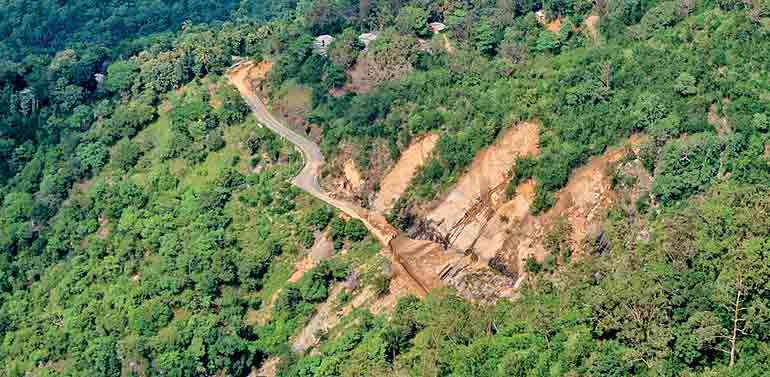
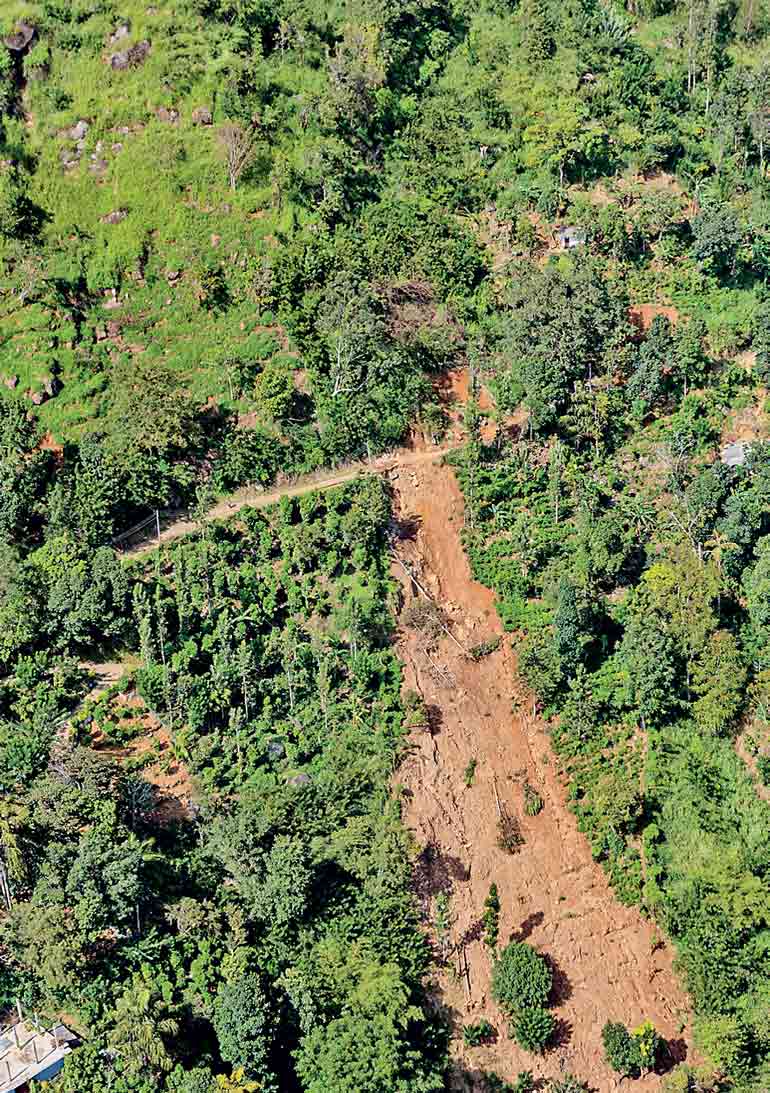
Proposals for the prevention of landslides:
- All illegal structures and construction on protected areas and buffer zones at an elevation above 5,000 feet should be removed and the people moved out settled; all within the next two years. The Department of Forest should introduce a buffer zone for all Protected Areas immediately.
- Enforce the Soil Conservation Act, with due rigour, in all areas.
- The ecosystems within the altitudes of 2,000-5,000 feet are equally critical. All illegal construction and shops, hotels, homes and establishments built on water reservation areas, buffer zones, protected areas and roadside and railway reservations should be issued vacation notices with a timeline of no more than three years to comply.
- All the areas where landslides took place should immediately be demarcated by the National Building Research Organisation (NBRO) as High-Risk Landslide Prone Areas. Reconstruction or future construction should NOT be permitted on those areas, from the hills right up to the roadsides.
- The CEA or relevant authority should add a further 30-50 metres on either side of the earth slip boundaries and declare them Conservation Areas including the earth slip footprint. This should be followed by a major tree planting campaign to bring back native trees onto those locations.
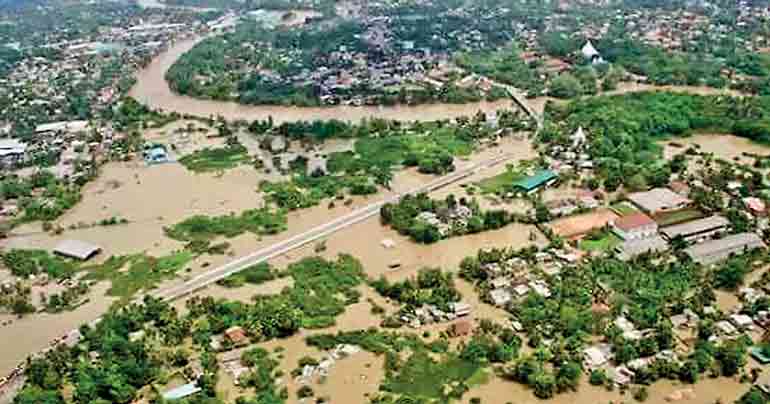
- Declare the widened borders of rivers and waterways which carried the flood water through, as the New River Boundaries. Create mandatory buffer zones beyond these new boundaries, rather than just fill up the areas that got washed away.
- Declare a 20-year Restoration Plan which removes all the Pine and Cyprus species which plague the higher altitudes of our mountains. They have a huge detrimental impact on the montane ecosystems, and place untold pressure on the remnant forests.
- Gradually convert these zones back to natural forest. Impose an immediate ban on replanting either species upon the next harvesting, and eliminate them from Sri Lankan mountains; all within two decades.
- Reinforce the notion of Forest Corridors along the banks of ALL waterways along the entire river continuum, both in the hills and in the lowland urban areas. Water exit points and flows have been hugely congested causing water to gather upstream and burst out into other areas. All waterway banks should be devoid of human structures within the existing mandatory natural boundaries, as per the relevant Acts, within the next three years.
Proposals for prevention of flooding
- The central focus must be to transition from traditional economic zoning to Biodiversity Inclusive Spatial Planning. This approach requires an urgent need for Strategic Environmental Assessments (SEA) for agriculture, energy, aquaculture, and irrigation since haphazard development in these four sectors have seriously damaged our critical ecosystems.
- The forecast unpredictability of weather patterns requires all planning and development to cater to these changes. Climate change adaptation should be an integral part of developing any strategy and the country must invest in the active implementation of currently developed Nationally Determined Contributions (NDCs) in all sectors.
- Disaster Resilient Agroecology. Move away from large-scale monocultures (which are easily wiped out by wind/flood) to diversified agroforestry, building market chains for crops that can withstand disasters. Promote multi-layered home gardens (Kandyan Forest Garden Model) which are proven to withstand high winds better than open fields, ensuring food security post-cyclone and markets for such products nationally and internationally.
- Crucially, this planning must designate critical wetland catchments, as identified in the National Environmental Action Plan, as essential flood retention basins, thereby enforcing their protection as “No-Build Zones.” The above includes strict environmental impact assessments and conserving of the last remaining coastal defenses which include mangroves, salt marshes, sand dunes, coastal shrub-lands, sandy beaches as well as seagrass and coral reefs while also restoring those already degraded as the first line of defence for coastal cities.
- Urban water exit points have choked the entire country and the backed up water spills over into other areas upstream and onto paddy fields, etc. An initiative to take down all illegal city structures bordering urban waterways, within five kilometers of the coastal line, should be undertaken immediately. Illegal coastal structures have also contributed to the narrowing of river mouths. The potential to explore a few new exit routes, bring back and declare more marshlands as conservation areas, and aggressively put a stop to illegal filling and building on marshland, will help ease future problems.
- Restore ‘Sponge’ landscapes: Abandon the colonial “drain water fast” mentality which worsens downstream flooding and adopt a “sponge city/landscape” approach. This requires reconnecting rivers to their floodplains and restoring the ancient Tank Cascade Systems (Ellanga) in the Dry Zone to absorb excess cyclone rainfall and prevent flash floods. Ample suggestions and pathways are present in the Ramsar SP5 (Wise use of water) and SDG 6 (Water management) Reports.
- Connect resilience corridors: Shift from isolated forest patches to Other Effective Area-based Conservation Measures (OECMs) that connect ecosystems physically; by both State and the private sector.
General proposals
- A data-driven nation: We still have no centralised data collection mechanism and as such we are crippled by our inability to forecast, predict or take data driven decisions. Data and access to data and access to environmental data to all is essential.
- Eco-health surveillance: We need to realign health monitoring to include ecosystem indicators. Monitor water quality in wetlands and lagoons real-time to predict post-disaster disease outbreaks (like Leptospirosis or dengue), recognising that degraded ecosystems breed disease hence require restoration and application of strategies as given in the ‘One Health Approach’. This will address the “toxic debris” issue we are witnessing now. Immediate support to the Marine Environmental Protection Authority (MEPA), Urban and Provincial Councils to responsibly dispose of waste needs to be planned. Making all Sri Lankans better aware of the dangers of irresponsible disposal should be taken up by the media.
- All illegally constructed structures should not be restored by State-funded mechanism, nor permitted to be rebuilt even through private funding.
- The Environmental Impact Assessment (EIA) Process must be strengthened. The Central Environmental Authority (CEA) and the other project approving agencies for all EPL, IEE and EIAs have the technical skills to carry them out too. However, it must be ensured that the CEA and other project approving agencies remain independent in this process without any political pressure placed on them, especially in relation to State-funded projects.
Cyclone Ditwah exposed a critical gap in dealing with such an event: the lack of integration between disaster preparedness and ecosystem health. Sri Lanka must evolve from viewing ecosystems as “victims” of climate change to treating them as the “primary defence” in mitigating climate disasters
Sri Lanka can do it
The existing policies, strategies, action plans and commitments to numerous bilateral agreements, conventions, treaties signed by Sri Lanka provides the pathway for most of the above. There is no need to reinvent. What is needed is mainstreaming nature’s contribution across all sectors and looking beyond short term benefits.
The Wildlife and Nature Protection Society (WNPS) of Sri Lanka, the 3rd oldest conservation organisation in the World, strongly urges the Government of Sri Lanka to use this chance to place effective protections in place. This is not a time of politics but of Good Governance. After all, prevention is better than cure.
The WNPS remains committed to support the Government of Sri Lanka, and all relevant organisations, with our resources and skills, when implementing the above.




