Friday Oct 02, 2026
Friday Oct 02, 2026
Monday, 17 August 2026 02:50 - - {{hitsCtrl.values.hits}}
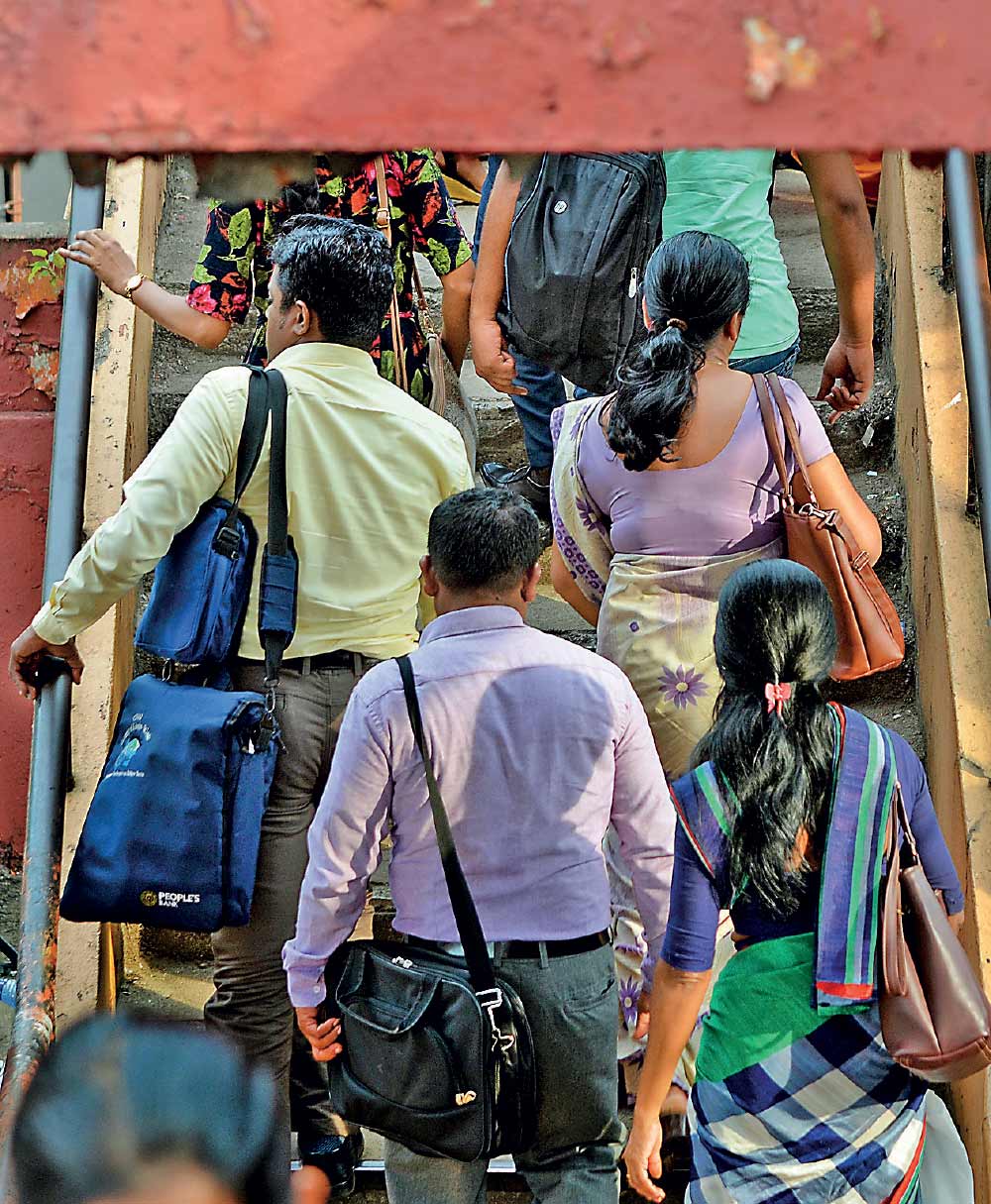
 Sri Lanka's fiscal recovery has been built, in large part, on the discipline of its salaried, tax-compliant cadre, the very group with the least room to absorb further strain and the most ability to simply leave. Budget 2027 is the moment to acknowledge this cadre. Genuine relief, designed with care and delivered where the squeeze actually is, will not weaken the revenue gains of the past years, it will secure them, by giving the country's working professionals a tangible reason to stay, build, and keep paying into the system that needs them most
The Government has signalled that some form of income tax relief is coming, possibly as part of the Budget 2027 process that is now underway. That is welcome. But relief announced without care for how the bands are actually redrawn can end up helping the people who need it least while leaving the actual squeezed middle-income
earners exactly where where they were. And if that squeeze continues unaddressed, the cost will not stop at reduced disposable income; it will show up, again, in the number of skilled professionals who decide that the exit is simpler than the wait. The focus of this article is to set out why the design of the relief matters and what a genuinely useful package could look like
 The response to my recent article on the middle-income tax squeeze ( Sri Lanka’s Personal Income Tax squeeze published on 27th July 2026 https://www.ft.lk/columns/Sri-Lanka-s-Personal-Income-Tax-squeeze/4-795176) was overwhelming and made one thing clear: this topic is not an abstract policy debate for the people living it. It is the accountant, the engineer, the bank officer, the manager, who does the arithmetic every month and finds that a salary that looks respectable on paper doesn't stretch to a routine, unremarkable life once EPF, loan instalments, school costs and the weekly groceries are accounted for.
The squeeze is not a perception problem
Under the rates that have applied since April 2025, tax-free relief covers the first Rs. 1,800,000 of annual income, after which a taxpayer moves through bands from 6% up to 36%, with the top rate kicking in above Rs. 4,300,000 a year, or roughly Rs. 358,000 a month. That is not a luxury income in today's Sri Lanka. It is a salary that, for someone with a housing loan, a vehicle lease, and a couple of children in school, disappears quickly into fixed commitments before a single discretionary rupee is spent. The squeeze on this segment is real in a very literal sense: take-home pay net of tax, EPF/ETF contributions and loan servicing is frequently insufficient to sustain what would elsewhere be considered an unremarkable, routine standard of living. This is not a complaint about paying tax. Salaried employees broadly accept that a functioning State needs revenue. The complaint is that the burden is landing narrowly, and in places arbitrarily, on a band of earners who have no capacity to plan around it, because it is withheld automatically at source every month.
Salaried employees broadly accept that a functioning State needs revenue. The complaint is that the burden is landing narrowly, and in places arbitrarily, on a band of earners who have no capacity to plan around it, because it is withheld automatically at source every month
Design of the relief mechanism
Whenever the Government talks about tax relief, the instinctive and politically visible move is to trim the top marginal rate — for instance, taking 36% down to 33% or 30%. It sounds generous, and it is easy to announce. But it does very little for the middle-income earner. A reduction in the top rate only benefits income earned above the top threshold; it does nothing for someone whose taxable income sits at Rs. 2.5 million or Rs. 3.5 million a year, who never reaches that bracket in the first place. If the Government wants to be seen to be helping “middle income earners” while the actual mechanism only touches the highest band, the relief will not reach the people it intends to. Worse, if the bands themselves are restructured abruptly, in a way that shifts thresholds without careful modelling, there is a genuine risk that some earners who are intended beneficiaries of relief end up paying more, not less, simply because the width of the band they fall into has changed. Any redesign has to be tested against real payroll data, band by band, before it is announced, not worked out after the Laws are amended.
Widen the bands where the squeeze actually is
The more effective, and more equitable, lever is to widen the middle bands themselves, rather than chase headline rate cuts at the top. As things stand, the 6% band covers only the first Rs. 1,000,000 above the tax-free threshold, after which the rate jumps to 18%, then 24%, then 30%, then 36%, in steps of Rs. 500,000. That is a steep climb over a comparatively narrow income range. A more considered structure would widen the entry-level bands: extending the 6% band from the current Rs. 1,000,000 to, say, Rs. 1,500,000, and reintroducing an intermediate rate, for example 12%, over the next Rs. 500,000, before stepping up further. This keeps the same overall shape of a progressive schedule, but gives middle earners more room to grow their income before crossing into materially higher marginal rates. It costs the State less than a broad-based cut to the top rate, because it is targeted at exactly the income range where the bulk of compliant, withheld-at-source taxpayers actually sit — the same population the IRD's own performance data shows is disproportionately carrying the APIT load.
To put a number on it: an individual earning employment income of Rs. 4,300,000 a year — Rs. 358,333 a month, precisely the income at which today's top 36% rate begins — currently pays Rs. 35,000 a month in tax as APIT, having climbed through the 6%, 18%, 24% and 30% bands to get there. Under the widened structure proposed above, that same individual would still sit comfortably inside the 18% band at that income level, and would pay only Rs. 20,000 a month, a reduction of roughly Rs. 15,000 a month, or close to 43%, without the top marginal rate moving by a single point. This particular structure is offered here purely to illustrate the rationale, that widening the bands where people actually earn delivers more relief than trimming the top rate, and not as a finished proposal. The actual width and rates of any revised bands are a matter for policymakers to determine, taking into account the resulting revenue loss, the Government's fiscal space under the ongoing IMF program, and the broader tax base the IRD is still working to widen.
The Government talks about tax relief, the instinctive and politically visible move is to trim the top marginal rate — for instance, taking 36% down to 33% or 30%. It sounds generous, and it is easy to announce. But it does very little for the middle-income earner
Recognition for real financial commitments
A second, quieter unfairness sits underneath the rate structure altogether: the tax is levied on gross salary with no allowance for the fixed financial commitments that consume a large share of that salary. Consider a professional earning Rs. 400,000 a month. APIT is withheld in full on that gross figure (i.e Rs 50,000 a month). That same individual may be paying close to Rs. 200,000 a month in housing loan interest on a property purchased in good faith, often the only realistic route to home ownership in the current price environment. None of that interest reduces the taxable base. A deduction for housing loan interest existed in the previous Inland Revenue Act and under the current Statute also a few years ago, as part of a broader expenditure relief between 2020 and 2022, and has since lapsed; there is no equivalent relief available today. The result is that two employees earning an identical gross salary are treated identically by the tax system, even though one has a third of their income committed to housing debt. That is not a minor technical gap. It materially changes what “take-home” income actually means for someone servicing a mortgage, and it should be revisited in any genuine relief package rather than treated as settled policy.
There is also a more fundamental principle at stake here, one that an earlier article by the author on housing affordability emphasised: the state's own housing policy already treats it as an enabler of homeownership rather than a provider of housing for all. The Government simply does not have the fiscal capacity to build homes at the scale the country needs. Given that, the least it can do is stop penalising the citizens who are solving that problem on their own, through a bank loan and years of disciplined repayment, by taxing them as though that loan did not exist. Where the State cannot deliver a basic need directly, tax policy should at minimum get out of the way of the citizen trying to secure it for themselves. A capped deduction for housing loan interest is not an indulgence; it is the State acknowledging that private homeownership is doing work the public purse cannot.
A reduction in the top rate only benefits income earned above the top threshold; it does nothing for someone whose taxable income sits at Rs. 2.5 million or Rs. 3.5 million a year, who never reaches that bracket in the first place. If the Government wants to be seen to be helping "middle-income
earners” while the actual mechanism only touches the highest band, the relief will not reach the people it intends to. Any redesign has to be tested against real payroll data, band by band, before it is announced, not worked out after the laws are amended. The more effective, and more equitable, lever is to widen the middle bands themselves, rather than chase headline rate cuts at the top
The brain drain risk
There is a further cost to getting this wrong that rarely features in the tax debate directly: migration. Sri Lanka has already lived through one wave of professionals, from engineers and doctors to accountants and IT specialists, leaving for markets that offer a fraction of the tax friction and a multiple of the disposable income. The reasons for that first wave were partly about opportunity and partly about the crisis years. But a slower, quieter version of the same decision is available to any mid-career professional today: stay in a system where a decent salary is taxed hard, housing debt earns no recognition, and disposable income barely covers a routine life, or move to a jurisdiction where the same skill set converts into a materially better standard of living. A tax system that squeezes exactly the segment of the workforce that is most mobile, the salaried, internationally employable professional, is not a neutral outcome. It is a standing incentive to leave. Retaining that talent should be treated as a tax policy objective in its own right, not an afterthought to revenue targets, because every professional who leaves takes their APIT contribution, their spending, and their skills with them, permanently.
A second, quieter unfairness sits underneath the rate structure altogether: the tax is levied on gross salary with no allowance for the fixed financial commitments that consume a large share of that salary
Life-stage reliefs deserve attention
Beyond the bands and the housing deduction, there is room for the Budget to recognise ordinary life events that Sri Lankan tax policy currently ignores entirely. A marriage allowance, even a modest one, would acknowledge that a newly formed household typically absorbs one-off costs at a point when income has not yet caught up. A child education allowance, similarly, would recognise that raising and educating children is itself a form of investment in the country's future workforce, not a discretionary lifestyle choice to be taxed away without acknowledgement. These reliefs exist in many foreign tax systems precisely because they target real, verifiable life events rather than opening the door to broad-based avoidance, and they would cost the Treasury comparatively little set against the revenue base the IRD has now built.
A deduction for housing loan interest existed in the previous Inland Revenue Act and under the current statute also a few years ago, as part of a broader expenditure relief between 2020 and 2022, and has since lapsed; there is no equivalent relief available today. The result is that two employees earning an identical gross salary are treated identically by the tax system, even though one has a third of their income committed to housing debt
Credible relief package
As the Budget 2027 is fast approaching the following are few reliefs that the policy makers can consider to help the working cadre:
1. Model any band change against actual payroll and APIT data before proposing it, so that no group intended to benefit ends up paying more because of how a threshold was redrawn.
2. Prioritise widening the entry-level middle bands over cutting the top marginal rate, since that is where the bulk of compliant, salaried taxpayers actually sit.
3. Revisit a housing loan interest deduction, even a capped one, on the principle that where the state cannot build housing for its citizens at scale, it should at least not tax them for building it themselves.
4. Introduce targeted, verifiable life-stage reliefs, such as a marriage allowance or child education allowance, that reward real commitments rather than simply lowering rates across the board.
5. Treat professional retention as an explicit goal of tax design, not a by-product of it, given how easily Sri Lanka's most mobile, most heavily taxed workers can, and do, choose to take their skills and their tax contribution elsewhere.
None of this is about asking for a lighter tax burden in the abstract. It is about asking that when relief is finally delivered, it is delivered to the people it is announced for, and that it is designed with an eye on who it risks losing altogether, rather than dissolving into a headline rate change.
Sri Lanka's fiscal recovery has been built, in large part, on the discipline of its salaried, tax-compliant cadre, the very group with the least room to absorb further strain and the most ability to simply leave. Budget 2027 is the moment to acknowledge this cadre. Genuine relief, designed with care and delivered where the squeeze actually is, will not weaken the revenue gains of the past years, it will secure them, by giving the country's working professionals a tangible reason to stay, build, and keep paying into the system that needs them most.
(Reference has been made to the Inland Revenue Department's Annual APIT tables published for calculation purposes)
(The views expressed in this article are those of the author in her personal capacity)



