Thursday Oct 22, 2026
Thursday Oct 22, 2026
Saturday, 21 February 2026 00:00 - - {{hitsCtrl.values.hits}}
Awami League moulded on Mujibur Rahman image was to Bangla what the Indian Congress was to Nehru›s India and the United National Party (UNP) for Senanayakes and Wijewardenes in Sri Lanka. BNP with its free market «nationalism» led by Kalida Zia was more like the Bandaranaikes’ SLFP, no less corrupt, now dragged along as SLPP by the Rajapaksas. They have all created personified social cults as facades and live on political scheming. On the political fringe, «centre-left» reforms are not debated and discussed as alternative answers to increasing socio-economic disparities in an utterly corrupt, failed economy that ferment frustration and opposition among urban poor
 Oldest Bangladeshi political party, founded as Awami Muslim League in 1949 was renamed as Bangladesh Awami League to project itself as a secular political party. Awami League›s massive, multi-storey party headquarters in Central Dhaka, partly burnt during the 2024 July university student revolt and partly in debris now, is being used by the «homeless» in the densely populated city centre and as a «piss-here» corner by city loiters.
Presently led by Sheik Hasina, the eldest daughter of one of its founders Sheik Mujibur Rahman, was thrown out of office in July 2024 after being in power for 15 years from 2009. Awami League is now proscribed with Sheik Hasina in self-exile in India.
Bengali nationalism
Absence of the Awami League at elections in independent Bangladesh by itself sounds freaky. Most ordinary people tend to believe, any election in Bangladesh without the Awami League is not an election. A daily vendor in the streets of Dhaka speaking to foreign media had said he is not going to vote, because there is no validity in the ballot paper without the “boat” symbol. Another had said, he and family would go to the “polling booth” though the “boat” is missing, to avoid being identified as Awami supporters. “Boat” , picked by the Awami League in 1954 as their electoral symbol, is an integral part of Bangla daily life.
In Bangladesh, Awami League was a major political force since 1949 when it represented “Bengali nationalism”. West Pakistan leadership wanted their “Urdu” language to be the language of “unity” representing “Islam culture” in the East as well. From the early ‘50s the Awami League campaigned to be independent of the West Pakistan’s
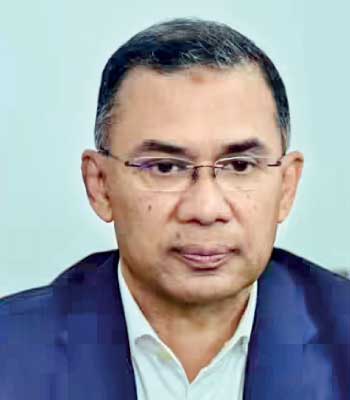 |
| Prime Minister Tarique Rahman |
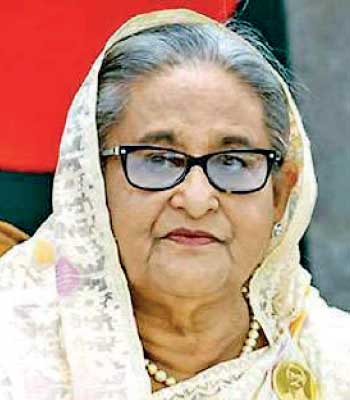 |
| Former Prime Minister Sheik Hasina |
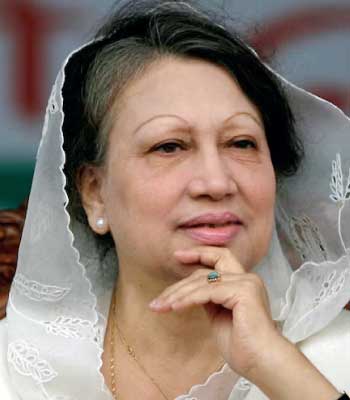 |
| Former Prime Minister Begum Kalida Zia |
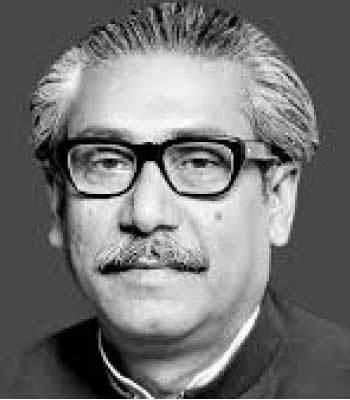 |
| Former President Sheik Mujibur Rahman |
Muslim League and against centralisation by the Pakistani Government in Karachchi. First elections for the East Bengal Legislative Assembly in 1954 in post-British Pakistan, marks the turning point in East Bengali politics, led by the Awami League in alliance with anti-feudal Krishak Praja Party, the Ganatantri Dal the first secular party in East Bengal and the moderate Islamic party the Nizam-e Islam. Called the “Jukta Front”, they wiped the board with 223 of their candidates elected to the 237 member assembly, Awami league represented by 143 of them.
Thereafter, East Bengal politics gradually evolved, challenging the two-unit Government of East and West Pakistan. Former military General and then President Iskander Ali Mirza declared martial law and appointed General Ayub Khan as the Martial Law Administrator on 07 October 1958. Three weeks later on 28 October Ayub Khan took over Pakistan in a military coup. He immediately banned all political parties in the East including the Awami League. Entire Awami leadership was arrested and was detained till 1963. Bangladesh, then East Pakistan was thus led to the 1971 “liberation war”. Awami League played a pivotal role politically leading the liberation war, while armed Mukti Bahini squads supported by the Indian military took up the challenge in defeating Pakistan.
On 25 March, Sheik Mujibur Rahman was arrested. Two days later on 27 March, Major Ziaur Rahman mutinied with his Chittagong platoon to join the “liberation war” and on behalf of Sheik Mujibur Rahman, publicly declared Bangladesh as an independent, sovereign State. After eight and a half months the liberation war concluded with the Karachchi Government accepting defeat. Its armed forces surrendered on 16 December, 1971. Around 93,000 Pakistani soldiers and officers were taken as “prisoners of war” by the Bengali Government.
Returning to liberated Bangladesh, Sheik Mujibur Rahman took over the new Government as the popular leader of the victorious Awami League. His rule in war ruined, economically devastated Bangladesh with rampant food shortages was gripped by a famine in 1974 that accounted for over 70,000 deaths. Sheik Mujibur Rahman’s regime came to be famously called “corrupt” and a “failure”.
Year 1975 began with “leftist” insurgency and President Mujibur Rahman declaring emergency. All political parties were banned. Mujibur Rahman’s presidency was, no doubt, autocratic. In the early morning of Friday 15 August, 1975, President Mujibur Rahman, his wife Begum Sheik Fazilatunnesa Mujib and the three sons were brutally shot and murdered in their own Dhaka mansion. The two daughters who were in Germany on a cultural exchange programme, thus escaped death.
Liberated Bangladesh sadly was never getting on its feet proper. Between August 1975 and December, there were 03 military coups that killed incumbent presidents. General Ziaur Rahman installed as President through a coup in November 1975, formed his own political party the Bangladesh Nationalist Party (BNP) in 1978 September. His presidential rule till his assassination in May 1981, perhaps holds a record with 21 attempted coups against him. Military tribunals ordered execution of at least 200 army and air force soldiers.
After Ziaur Rahman’s assassination, his wife Begum Kalida Zia was elected leader of BNP and became a formidable leader on her own terms. Meanwhile, one of the most respected and honoured freedom fighters, a Commander of the Mukti Bahini, Abdul Kader Siddique, once again led an armed insurgency, this time against military rule for over 22 months that led to deaths of 104 rebels and over 500 injured.
Democracy was not what the Bangladeshis ever got a taste of. Neither their two mainstream parties, the Awami League and the BNP, nor the fringe parties had ever been democratic organisations. Awami League moulded on Mujibur Rahman image was to Bangla what the Indian Congress was to Nehru’s India and the United National Party (UNP) for Senanayakes and Wijewardenes in Sri Lanka. BNP with its free market “nationalism” led by Kalida Zia was more like the Bandaranaikes’ SLFP, no less corrupt, now dragged along as SLPP by the Rajapaksas. They have all created personified social cults as facades and live on political scheming. On the political fringe, “centre-left” reforms are not debated and discussed as alternative answers to increasing socio-economic disparities in an utterly corrupt, failed economy that ferment frustration and opposition among urban poor.
Youth unrest
In such a backdrop, university students most prominently those in Dhaka on 15 July (2024) began protesting against reintroduction of 30 percent quota allocations of Government jobs for children of war veterans of the liberation war in 1971. Sit-in protests of university students were first brutally attacked by youth wing activists of the Awami League and the army deployed thereafter. Internet access was denied countrywide and a curfew imposed, Amnesty International (AI) on 29 July reported, over 200 people were killed in less than 10 days. Over 2,500 had been arbitrarily arrested and around 61,000 protesters named as accused persons cases.
With savage State repressions, student protests turned into mass protests, vandalism and anarchy demanding resignation of PM Sheik Hasina and accountability for those killed. On Monday 05 August 2024, Hasina fled the country, after protesters forced themselves into her mansion. The military leadership took over total responsibility of installing a “caretaker Government”. It was yet again a case of electing a new Government, with promises for democratic reforms. Message from the protesters, as Al Jazeera quoted was, “whoever comes to power next, will now know, that they will not tolerate any kind of dictatorship or mismanagement and that the students will decide”.
Who comes next was decided well in advance of the elections scheduled for 12 February, 2026. Once Awami League was proscribed, BNP coming to power was unavoidable, with a revolting student movement that has no clue what they plan for after PM Hasina’s departure. The student party formed to contest elections as National Citizens’ Party (NCP), also came with promises with no clear program. They had nothing new and different in them to be considered worth electing. It was the far-right Islamic party the Jamaat-e Islami that was left to be voted as the lead Opposition.
July Charter
What Bangladesh also proves is, student protests, whether called “Gen Z” or not, have only been rhetorically and violently anti-Government without alternate solutions. No different to Sri Lanka they were marginalised leaving space for mainstream politics yet again. What is important and left to be seen in Bangladesh though, is how they would get about their “July Charter” adopted by the referendum voted along with the parliamentary election.
“July Charter” so named as it is the major political outcome of the 2024 July upheaval that overthrew Sheik Hasina’s Government. Negotiated by the “Interim Government”, a total of 28 political parties have endorsed and signed the July Charter that mandates the elected parliament to adopt State reforms through Constitutional amendments. As the finalised July Charter carries with it 11 Notes of Dissent, 09 of which are from the BNP led by Khaleda Zia’s son Tarique Rahman who now holds a 2/3 majority in parliament, it is the BNP that would decide the fate of the Charter in Bangla politics and governance. Let me conclude by saying, in Bangla too, “youth, students or Gen Z” would be left dissolved in traditional mainstream politics as in Sri Lanka, for many years to come.




