Friday Oct 02, 2026
Friday Oct 02, 2026
Saturday, 13 June 2026 04:57 - - {{hitsCtrl.values.hits}}
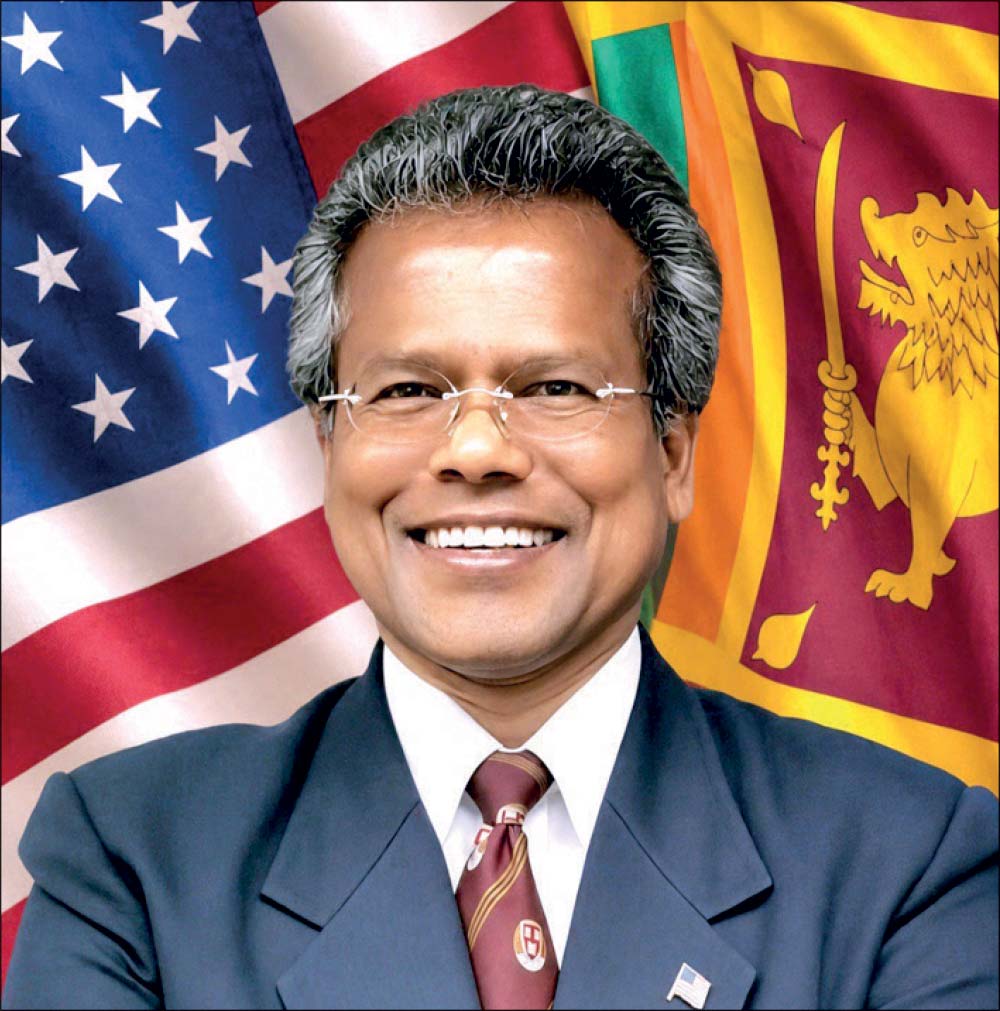
Prof. Patrick Mendis
 Mendis’s distinctive combination of service in the American Government and deep scholarly engagement has positioned Mendis as an important voice for smaller nations and the Global South as they navigate an increasingly complex global order
 Washington, D.C. — As America commemorates the 250th anniversary of its founding, the story of this quintessential Sri Lankan—once described by the Financial Times as a leader who journeyed from a humble “mud house to the White House”—is worthy of reflection.
It is a story that speaks not only to the enduring power of education, perseverance, and public service, but also to the contributions that Sri Lanka and its people have made to the United States and the wider world.
Few Sri Lankans have built a life as deeply connected to both Sri Lanka and the United States as Prof. Patrick Mendis. A scholar, diplomat, military professor, educator, philanthropist, and global policy expert, Mendis has devoted decades to strengthening understanding between his country of birth and his adopted homeland through public service, education, scholarship, and people-to-people diplomacy.
At my initiative, the Embassy of Sri Lanka arranged for Mendis to deliver a series of lectures at the General Sir John Kotelawala Defence University and the Foreign Affairs Ministry in Colombo for diplomats serving both at home and abroad. The University of Sri Jayewardenepura, his alma mater, recognised his longstanding contributions to education and public service by appointing him Distinguished Visiting Professor and Honorary Fellow during the 30th-Anniversary commemoration of the Dr. Patrick Mendis Prize in 2024.
The author of more than 250 scholarly works—including books, academic articles, and newspaper columns—Mendis has made notable contributions to scholarship on Sri Lanka and its global diaspora. He served as an advisor and authored the chapter on the Sri Lankan diaspora in the United States for the project that produced The Encyclopedia of the Sri Lankan Diaspora. For this five-year project, Mendis travelled between Singapore and Washington with the support of the National University of Singapore and the Foreign Affairs Ministry of Singapore.
As the United States commemorates the 250th anniversary of its founding, the story of Patrick Mendis reflects values that have long connected Sri Lanka and America: educational opportunity, democratic citizenship, civic responsibility, and international cooperation. Across a career spanning diplomacy, academia, strategic education, and philanthropy, he has worked in and travelled to more than 150 countries, developing a uniquely global outlook shaped equally by his quintessential Sri Lankan roots and genuine American experience.
American Odyssey from Polonnaruwa
His American journey is both deeply personal and historically significant. To date, Mendis remains the only Sri Lankan-born American to have served in the United States Government under both Democratic and Republican administrations during the terms of six American presidents: Ronald Reagan, Bill Clinton, George W. Bush, Barack Obama, Joe Biden, and Donald Trump.
Before becoming a naturalised US citizen, the Government of Sri Lanka appointed him as its first Youth Ambassador to the United Nations in New York, serving alongside the distinguished Sri Lankan diplomat Jayantha Dhanapala. Ambassador Dhanapala became both a mentor and a close friend, helping to shape Mendis’s understanding of public service and Sri Lanka’s place in the world. In recognition of his service, Mendis was honoured with the United Nations Medal for leadership and service—an early indication of a career that would span continents and institutions.
Born in the medieval capital city of Polonnaruwa, Patrick Mendis grew up on a three-acre rice field among water buffaloes before receiving a life-changing opportunity through the American Field Service (AFS) exchange program. In the late 1970s, the teenager travelled to Minnesota as a high school exchange student to live with an American family and experience first-hand the civic culture, democratic traditions, and spirit of volunteerism that shape American society. What began as a student exchange evolved into a lifelong bridge between two nations.
After returning to Sri Lanka, Mendis earned a First-Class Honours BSc degree in Business Administration and Economics from the University of Sri Jayewardenepura. Yet, as political unrest and civil conflict began to unfold in Sri Lanka, his AFS host family and community leaders in Minnesota rallied to help him return to the United States for graduate studies. Their generosity left a lasting impression and reinforced his belief in the transformative power of education, public service, and international friendship.
Scholar and Diplomat
Mendis later pursued graduate studies at the University of Minnesota and executive leadership education at Harvard University, supported by fellowships and scholarships from the Humphrey School of Public Affairs and the Kennedy School of Government. These experiences deepened his expertise in economics, diplomacy, public policy, and leadership in international relations.
During these formative years, another influential mentor entered his life: Harlan Cleveland, former United States Ambassador to NATO, Assistant Secretary of State, and Founding Dean of the Humphrey School of Public Affairs at the University of Minnesota. What began as academic mentorship evolved into a friendship that endured for more than a quarter century. Ambassador Cleveland became one of the most important intellectual influences in Mendis’s life, helping to shape his understanding of diplomacy, governance, and global citizenship.
During his years at the university, Mendis arranged meetings in Minnesota between Ambassador Ernest Corea, Ambassador Jayantha Dhanapala, Ambassador Ananda Guruge, and Cleveland. Under Cleveland’s guidance, Mendis deepened his appreciation for multilateral institutions and transatlantic cooperation—an experience that later informed his service as an award-winning diplomat at the US Department of State and as an accomplished military professor teaching service members stationed at major US military bases across the NATO and Indo-Pacific Commands. In recognition of his contributions to military education, he received the Stanley J. Drazek Teaching Excellence Award.
Mendis also served as special assistant and advisor to Ambassador Cleveland during Cleveland’s presidency of the World Academy of Art and Science—an international intellectual network dedicated to peace, human development, and global policy. In that role, Mendis coordinated Cleveland’s visit to Sri Lanka, where they met Prime Minister Sirimavo Bandaranaike. During the visit, Mendis also presented a copy of his newly published book, Sri Lanka in Pictures, to the world’s first woman Prime Minister, whom Cleveland greatly admired during his years as the US Ambassador to NATO.
Bound by mutual admiration and respect, Cleveland also met with Sir Arthur C. Clarke and Venerable Dr. Bhikkhu Bodhi, both Fellows of the World Academy. Reflecting the profound influence of Cleveland’s mentorship, Mendis later dedicated his book, Trade for Peace, to him, with a foreword by Ambassador Brian Atwood, who served as President Clinton’s Administrator of the US Agency for International Development. Today, Mendis continues this tradition of global engagement as a Fellow of the World Academy of Art and Science.
For Sri Lanka—strategically situated at the centre of the Indian Ocean and often balancing relationships among major powers—his experience offers an example of how global knowledge, diplomatic insight, and cross-cultural engagement can strengthen the country’s international standing and advance its role as a lighthouse of the Indian Ocean
Government service
Over time, Mendis built an unusual career that combined scholarship with public service in ways few immigrants—and even fewer Sri Lankans—have achieved. He served on the staff of the US Senate Foreign Relations Committee during the administration of President Ronald Reagan before returning to academia.
Following years of multidisciplinary research and teaching at the University of Minnesota, Columbia University, and Yale University—and after leading an American academic delegation to lecture at Leningrad State University and Moscow State University in the former Soviet Union—Mendis returned to government service.
After joining the US Department of State as a Diplomacy Fellow of the American Association for the Advancement of Science (AAAS) and serving as a Foreign Affairs Officer, Mendis was appointed by Secretary of State Madeleine Albright to chair the newly created interagency policy working group on science and technology. In that role, he coordinated with the White House Office of Science and Technology Policy (OSTP) while advising US delegations to the United Nations in New York.
Knowing Mendis as a former AFS exchange student and military professor, Secretary of State General Colin Powell later asked him to serve as Secretariat Director in the Bureau of Educational and Cultural Affairs. There, he helped oversee the Fulbright, Humphrey, Muskie, and other international educational exchange programs during the George W. Bush administration.
During the Obama administration, Secretaries of State Hillary Clinton and John Kerry appointed Mendis on two occasions to serve on the US National Commission for UNESCO. He continued serving for two additional years during the Trump administration. That appointment concluded when the United States withdrew from UNESCO in 2018.
The Biden White House appointed Mendis, with congressional endorsement, to serve as a Presidential Advisor to the National Security Education Board of the US Department of Defense, alongside General Karl Eikenberry.
Across the administrations of Presidents Clinton, Bush, Obama, Trump, and Biden, Mendis contributed to diplomacy, foreign policy, and national security education. His service under both Republican and Democratic presidents reflected not political affiliation, but a sustained commitment to public service and America’s engagement with the wider world.
At the same time, Mendis remained deeply committed to teaching and scholarship. He became the first Sri Lankan-born scholar to serve as an award-winning military professor at NATO. He also lectured at the US Foreign Service Institute and the USDA Graduate School. In recognition of his contributions, he received the US Department of Agriculture’s Leadership and Service Award, the Department of State’s Meritorious Service Award, and the Benjamin Franklin Award.
To further strengthen his executive leadership and negotiation skills, the Department of State sponsored Mendis for specialised stress-management and leadership training at the NASA Space and Rocket Centre in Huntsville, Alabama.
Mendis currently serves as Distinguished Visiting Professor of Transatlantic Relations at the University of Warsaw in Poland, continuing a teaching and research career that has taken him across Europe, Asia, and the United States.
Philanthropist at heart
His contributions extend beyond academia and diplomacy. Throughout his career, Mendis has remained deeply committed to Sri Lanka through philanthropy, education, and public service.
Following the devastating 2004 Indian Ocean tsunami, Mendis helped mobilise humanitarian and educational support through the sale of his book, Glocalisation: The Human Side of Globalisation. Ambassador Bernard Goonetilleke hosted a book launch and signing reception for Mendis at the Embassy of Sri Lanka in Washington in partnership with the Harvard Alumni Association and the World Academy of Art and Science.
The initiative brought together prominent American and Sri Lankan voices, including Colonel Larry Wilkerson, former Chief of Staff to General Colin Powell at the US Department of State, and former US Ambassador to Sri Lanka Shaun Donnelly, both former colleagues of Mendis at the State Department. Sir Arthur C. Clarke, the British-born Sri Lankan author who wrote the foreword and lent his support to the project, shared a written message, while Dr. A. T. Ariyaratne, founder of the Sarvodaya Movement, contributed the afterword.
Proceeds from the book funded scholarships for schoolchildren, supported a tsunami-damaged hospital in Galle, and established the Sarvodaya Peace Award, linking education with post-tsunami healing, recovery, and reconciliation. More recently, he provided financial support to two villages in Polonnaruwa and Anuradhapura that were devastated by the Cyclone Ditwah.
Mendis also served as the Founding Chairman of the Advisory Board of the Educate Lanka Foundation (ELF) in Maryland, an award-winning volunteer organisation, with a commitment to expanding educational opportunities for underserved school children across Sri Lanka.
His philanthropic engagement began in Minnesota. As President of the Asian-Pacific Endowment at the St. Paul Foundation—supported by the Ford Foundation and the Rockefeller Foundation—he worked with immigrant and refugee communities from Southeast Asia and the Pacific Islands, helping to promote economic integration and expand educational opportunities in the Twin Cities of St. Paul and Minneapolis.
In recognition of his leadership and service, he received the Asian-Pacific Leadership Award from the Governor of Minnesota, the President’s Leadership and Service Award from the University of Minnesota, and the Hubert H. Humphrey Award for Outstanding Leadership from the Humphrey School of Public Affairs.
Acts of gratitude
Mendis also transformed personal gratitude into lasting educational opportunities. In 1994, he established a scholarship at the University of Sri Jayewardenepura—later expanded into the Dr. Patrick Mendis Prize—recognising students who demonstrate both academic excellence and leadership. He also created the Edward Burdick Legislative Award at the University of Minnesota in honour of his American mentor and “father,” a distinguished Parliamentarian and one of the longest-served public servants in the United States.
In memory of his AFS host parents, he established the Johnson–Mendis Scholarship at Minnesota State Community and Technical College (M State) in Fergus Falls for students from Perham High School. At Harvard University, he founded the Millennials Award for Leadership and Service to support promising students in journalism and international relations.
In recognition of his contributions to higher education, global diplomacy, philanthropy, and international service, Mendis has received numerous honours, including a Lifetime Achievement Award from the Sri Lankan Foundation in Los Angeles and the Albert Nelson Marquis Lifetime Achievement Award from Who’s Who in America.
Indeed, the story of Patrick Mendis is both historical and inspirational: that of a village boy from Sri Lanka who, through education, mentorship, and public service, became a bridge between Sri Lanka and the United States. In an increasingly interconnected world, such a journey carries significance not only for scholarship and diplomacy but also for strengthening Sri Lanka’s presence, influence, and standing on the global stage
Going beyond titles
His titles and recognitions in America and Sri Lanka tell only part of the story. Patrick Mendis’s larger contribution has been his ability to connect people, institutions, and ideas across national borders. From a childhood in Polonnaruwa to diplomatic service in Washington, from representing Sri Lanka at the United Nations to teaching within NATO and the Indo-Pacific Command, his journey demonstrates how education, perseverance, and service can transcend geography and circumstance.
As the United States marks the 250th anniversary of its founding, Mendis’s story serves as a reminder that the relationship between Sri Lanka and America is shaped not only by governments and diplomacy, but also by individuals whose lives help connect nations. This vision echoes President Dwight D. Eisenhower’s belief in people-to-people exchanges as a means of fostering mutual understanding and helping to prevent future conflict in the aftermath of World War II.
His distinctive combination of service in the American Government and deep scholarly engagement has positioned Mendis as an important voice for smaller nations and the Global South as they navigate an increasingly complex global order. For Sri Lanka—strategically situated at the centre of the Indian Ocean and often balancing relationships among major powers—his experience offers an example of how global knowledge, diplomatic insight, and cross-cultural engagement can strengthen the country’s international standing and advance its role as a lighthouse of the Indian Ocean.
Indeed, the story of Patrick Mendis is both historical and inspirational: that of a village boy from Sri Lanka who, through education, mentorship, and public service, became a bridge between Sri Lanka and the United States. In an increasingly interconnected world, such a journey carries significance not only for scholarship and diplomacy but also for strengthening Sri Lanka’s presence, influence, and standing on the global stage.
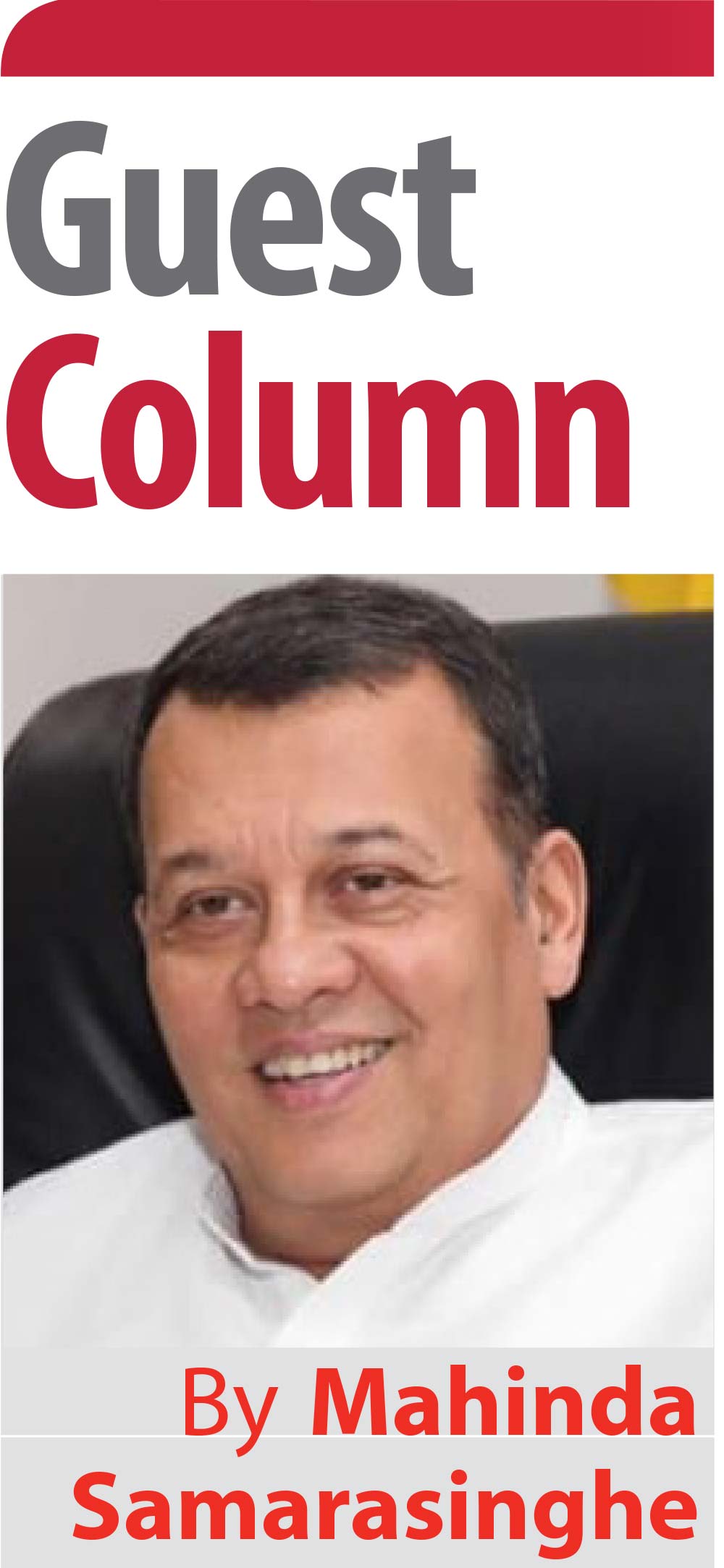
(The author is the Sri Lankan Ambassador to the United States of America and Mexico)



