Sunday Sep 27, 2026
Sunday Sep 27, 2026
Tuesday, 11 August 2026 01:23 - - {{hitsCtrl.values.hits}}
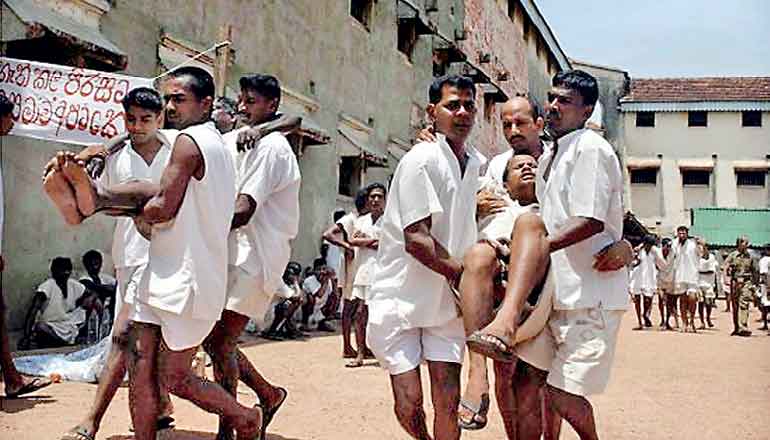
This article discusses documented historical incidents and internationally recognised human-rights principles. It aims to promote good governance, transparency and rehabilitation within correctional systems
 Introduction
Every society is judged not only by the freedoms enjoyed outside its prison walls but also by the justice practiced within them. A prison sentence removes liberty—it should never remove dignity, legal protections, or the right to life. When correctional institutions become overcrowded, poorly governed, or politically influenced, they risk becoming instruments of repression rather than institutions of justice and rehabilitation.
Why good governance matters
Modern prisons should protect society, provide lawful punishment, prepare offenders for successful reintegration and never used to eliminate opposing politicians. Independent oversight, professional corrections staff, adequate funding, transparent investigations into deaths in custody, and political independence are essential safeguards. Overcrowding, corruption and political interference increase the risk of violence and abuse.
Historical lessons
Peru (1986) – El Frontón, Lurigancho and Santa Bárbara Prisons
Coordinated uprisings occurred involving members of the Shining Path insurgency.
Security forces retook the prisons.
Later judicial findings concluded that some prisoners were unlawfully executed after organised resistance had ended.
Lesson: Even during prison emergencies, the rule of law must prevail.
Syria (1980) – Tadmor (Palmyra) Prison
Following an assassination attempt against President Hafez al-Assad, security forces entered Tadmor Prison.
Hundreds of detainees were killed.
Human-rights organisations regard the incident as one of the twentieth century’s worst prison massacres.
Lesson: Political retaliation has no place within correctional institutions.
Khapra Ward, East Pakistan (now Bangladesh) (1950)
Police opened fire on imprisoned Communist political activists inside Rajshahi Central Jail.
Seven prisoners were killed and many others injured.
Lesson: Political beliefs should never determine how prisoners are treated.
Soviet Union (1941) – NKVD Prison Massacres
As German forces advanced, Soviet security services executed thousands of political prisoners rather than evacuating them.
Victims included political opponents, intellectuals and clergy.
Lesson: Prisons must never become instruments of state terror.
United States (1971) – Attica Prison
Poor conditions and overcrowding contributed to a major prison uprising.
The retaking of the prison resulted in 43 deaths.
Subsequent investigations corrected inaccurate official accounts.
Lesson: Independent investigations are vital after deaths in custody.
The true measure of a nation’s commitment to justice is revealed behind prison walls. A correctional institution should never become a place where political scores are settled. It should remain a place of lawful custody, accountability and rehabilitation. A democracy is strengthened when the rule of law applies equally to every person—including those in custody—and to every institution of the State
Spain (1936) – Cárcel Modelo
During the early Spanish Civil War, armed militias killed prominent political prisoners inside Madrid’s Modelo Prison.
Lesson: Political instability quickly erodes the independence of correctional institutions.
Why democracies must never weaponise their prisons
History demonstrates that when governments use prisons to intimidate, silence or eliminate political opponents, the consequences extend far beyond prison walls. Public confidence in the justice system declines, human-rights protections weaken, and democratic institutions suffer lasting damage. Every unexplained death in custody deserves an independent, transparent investigation.
Human rights and international standards
The United Nations Nelson Mandela Rules recognise that imprisonment removes liberty but not humanity. Prisoners remain entitled to humane treatment, healthcare, due process and protection from torture or arbitrary violence. These standards protect both prisoners and the integrity of the State.
Conclusion
The true measure of a nation’s commitment to justice is revealed behind prison walls. A correctional institution should never become a place where political scores are settled. It should remain a place of lawful custody, accountability and rehabilitation. A democracy is strengthened when the rule of law applies equally to every person—including those in custody—and to every institution of the State.
(The author is a CPA who was the head of finance at the Securities and Exchange Commission of Sri Lanka from its inception in 1992 and was a founder manager. He has commercial experience in Australia and over 15 years of experience in the public service and not-for-profit sectors in New Zealand where he resides now)