Friday Oct 02, 2026
Friday Oct 02, 2026
Thursday, 18 June 2026 00:22 - - {{hitsCtrl.values.hits}}
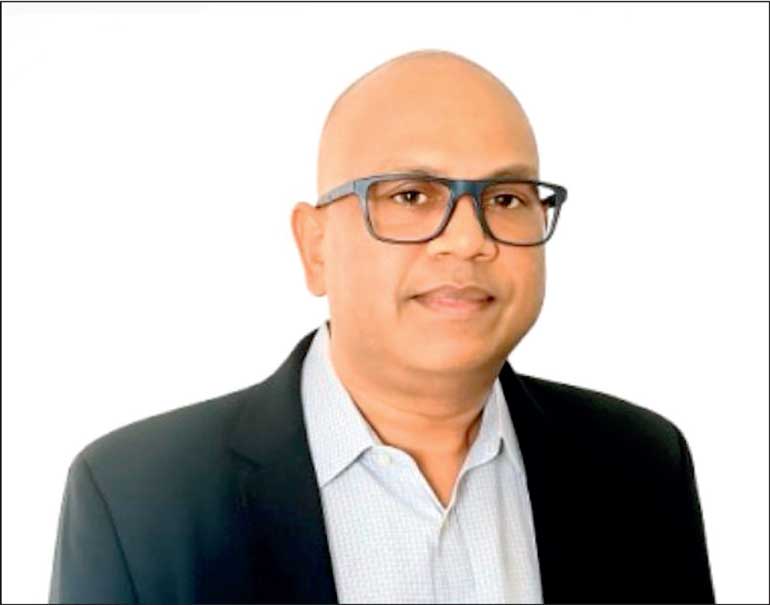
Prajeeth Balasubramaniam
 There is a version of Prajeeth Balasubramaniam’s life where he never comes home. He spent two decades abroad, holds a second passport, and has children already settled overseas. He could walk away tomorrow and lose nothing. Instead, he came back to Sri Lanka and spent the next two decades building something the country had never really had: a startup ecosystem.
When I ask him why, he doesn’t reach for anything grand. “Why not do it at home?” he says. “I am looking to create an impact.” It’s the whole thesis in two sentences, and everything he’s built since has been an attempt to make
it true.
What he built
Prajeeth didn’t arrive with a fund and a thesis. He arrived with a family company to run, which he ultimately decided to restructure, spinning off companies in multiple sectors. Seeing that the pain points he faced as an entrepreneur were not unique drove him towards supporting founders, investing in their startups and helping them scale. He was already behaving like an angel investor before he had the word for it.
The word came from his business partner, Rajan Anandan, who had been angel investing for years and recognised the behaviour immediately. “You are doing angel investing,” he told Prajeeth. In Colombo at the time, it was unheard of. There was also a war on, and the decision was to wait. When the war ended, they moved.
In 2009 they co-founded BOV Capital, and the early days punctured any illusion that the money was the hard part. He and his partner pooled what they had and went looking for founders to back, only to find the founders suspicious of them. “It was almost like we were going around with a begging bowl,” Prajeeth says. “Even though we had the cash, they were asking, ‘Why do you want to fund us?’” What was missing wasn’t capital. It was trust, and trust takes longer to raise than a fund.
The first move was to create the meeting place itself. With the help of the Indian Angel Network, Prajeeth and Rajan launched Venture Engine, a structured platform to bring founders and investors into the same room. “It changed gears, took it at a different speed,” he says. It solved, at its core, the exact problem that was previously exposed: not a shortage of cash or a shortage of ideas, but the absence of a place where the two could meet and start building a relationship, trust. “There won’t be startups without investments,” he says, “and there won’t be investors without startups.” Venture Engine became the room where both could finally show up and meet, today it is the largest platform of its kind in the country.
Once that room existed, the local appetite followed. In 2012, with a few co-founders, Prajeeth started the Lankan Angel Network. “Everything was ideated and executed around the dining table,” he says, and over time the table became a network and the network became start-up investment infrastructure.
Through BOV Capital he set up Sri Lanka’s first dedicated venture vehicle out of Singapore, a six-and-a-half-million-dollar fund. Then soon after a second fund with Axiata Dialog, for the first time from within Sri Lanka. The strongest answer to whether Sri Lankan venture capital works is found in the exits. From the nCinga sale to Zillingo, to the public listing of InsureMe, shows clear-cut Sri Lankan success stories, of both local and foreign investor appetite. “That was our first showcase,” he says. Others will follow, including what he expects will become the largest digital health company in the country. When I ask what fifteen years actually taught him about who makes it, he doesn’t hesitate. “Team, team, and team.” The returns came from founders who could bend without breaking, who pivoted fast, who kept companies alive that had no business
surviving.
What comes next
If the first fifteen years proved the ecosystem could exist, the next phase will decide whether the country lets it grow, and here Prajeeth’s optimism hardens into a blueprint.
He has one big ask: a tax pass-through structure for investors. Today, a venture investment can effectively be taxed at three different points: at the company level, at the fund level, and again when returns reach investors. In most mature venture ecosystems, funds operate as pass-through vehicles. Here it’s treated as something to penalise. He has been lobbying to fix it for the better part of a decade, through one Government after another. “The amount of lobbying we had done is just unbelievable,” he says. “Unfortunately, nothing happened.”
But he feels something has shifted now. For the first time the work has moved out of the lobby and into actual collaboration with the Government; regulations are set to be passed and a fund of funds is genuinely on the table.
So suppose the structure arrives, the tax pass-through clears, the fund of funds gets capitalised. What then? Prajeeth is adamant that the plumbing is necessary but not sufficient, and that the next move belongs to the people the structure is meant to serve.
For founders, his advice cuts against the instinct of a market that has survived on services revenue. Building someone else’s software for a fee keeps the lights on, but it doesn’t compound. “You’re not building your own house, you’re building someone else’s,” he says of the services trap. The companies he wants to back are the ones building intellectual property they can put a mark on, a product that can be scaled and compound. His test is unsentimental: are you on a path to a fifty- or hundred-million-dollar company in the next five to ten years? And the thing that decides it, in his experience, is rarely the technology. It’s the team, and the trust inside it. Founders mature enough to disagree hard and not take it personally. “A lot of founders take things personally,” he says. “That’s where opportunity gets lost.”
For the ecosystem partners, the networks, the incubators, the accelerators, his ask is to stop duplicating and start combining. In a market the size of Colombo, he points out, everyone is everywhere and everyone does a bit of everything, which leaves founders unable to tell who’s actually good at what.
And then the appeal underneath all of it: Sri Lanka needs more capital, and more people willing to deploy it from here. He says he’s lost count of the founders he’s intercepted on their way out, including some he first met when they’d flown to Singapore for funding, only to be sent back home to him. The smartest, most fundable founders are the ones most able to leave, and they will keep leaving until there’s enough money on the ground to make staying the rational choice. “We need ten more VC funds based from here in Sri Lanka.” One fund cannot build an ecosystem. The tax pass-through and the fund of funds will open that door; whether anyone walks through it depends on how many new funds actually set up shop and start writing cheques in Sri Lankan rupees.
That’s the blueprint, and the part he keeps returning to is that it isn’t really about him. He’s done the unglamorous work, from building the awareness and the networks to the decades of lobbying. The structure is finally coming. What it produces now is up to the founders who decide to build something they can own, and the investors who decide that home is worth backing. Prajeeth has spent fifteen years laying the foundation. The house is for everyone else to build.
(The author is a Consultant at the TiE Colombo Corporate Office, the Sri Lankan chapter of The Indus Entrepreneurs (TiE), a global network committed to nurturing entrepreneurship through mentorship, networking, and access to capital)



