Sunday Oct 25, 2026
Sunday Oct 25, 2026
Wednesday, 9 September 2026 00:25 - - {{hitsCtrl.values.hits}}
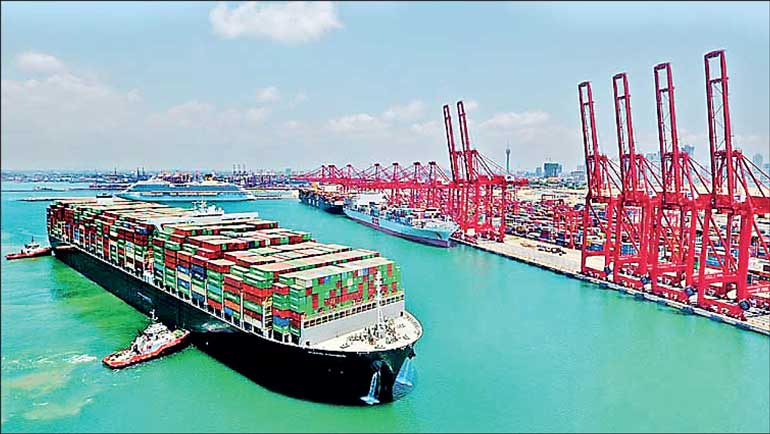
Port of Colombo
 The ports and shipping industry was delighted to learn that the Port of Colombo (POC) has entered the elite ranks of the world’s Top 20 container ports. This is a historic achievement that all stakeholders in the maritime sector should celebrate with pride. This milestone did not occur by chance. It is the result of port reforms initiated in 1996, followed by decades of investment in capacity enhancement, infrastructure development, and operational modernisation. Continuous improvements across the four critical pillars of port performance, namely people, processes, equipment, and technology, have collectively transformed Colombo into one of the leading maritime gateways in the region.
While we should rightly celebrate this accomplishment, we cannot afford to become complacent. Reaching the Top 20 is not the destination; it is the beginning of a more demanding journey. Much like an athlete who achieves a global ranking or a personal best performance, even greater effort is required to sustain success and reach new heights.
I believe innovative design thinking and purposeful self-disruption will be crucial if Colombo is to remain competitive and fulfil its aspiration of becoming the most attractive maritime hub in the Indian Ocean.
Enhance Colombo’s unique identity
It is time for the Port of Colombo to clearly define the unique characteristics by which it wants to be recognised globally. We should not seek to imitate our competitors. Instead, we should aim to create our own distinct identity and strive to outperform them through innovation and excellence.
This is where Design Thinking becomes essential. We must leverage our knowledge, expertise, and experience to transform ideas that others may view as ambitious, or even unrealistic, into practical and sustainable realities. Ultimately, our success will depend on our ability to create, communicate, and consistently deliver distinctive value propositions to our trading partners.
To achieve this, we must maintain a deep understanding of customer needs, evolving industry trends, and the implications of geopolitical and socioeconomic developments across global supply chains. Disruptions occurring anywhere in the world can quickly impact port operations. Our ability to anticipate these changes, assess their implications, and implement innovative mitigation strategies will determine how effectively we navigate future challenges and capitalise on emerging opportunities.
Proven record of resilience
The Port of Colombo has repeatedly demonstrated its resilience.
From operating during the difficult years of Sri Lanka’s civil conflict until 2009, to overcoming the unprecedented challenges of the COVID-19 pandemic and the subsequent economic crisis, the Sri Lanka Ports Authority (SLPA), private terminal operators, and other stakeholders have consistently risen to the occasion. In fact, during the pandemic, Colombo remained operational without interruption despite facing extraordinary pressure from inflated cargo volumes and severe physical capacity constraints. Few ports globally managed to maintain such continuity while confronting similar operational challenges.
More recently, disruptions in Red Sea shipping routes, which began in late 2023, have reinforced Colombo’s strategic importance. As vessel operators sought alternative routing options, Colombo naturally emerged as a preferred transshipment hub. This situation brings back memories of the late 1980s, when major East-West shipping services turned around in Colombo and an extensive feeder network connected regional ports, including those in the Gulf. While today’s market dynamics are very different, there are parallels. The current disruptions once again present Colombo with opportunities that can be leveraged through strategic thinking and proactive planning.
Those who take the time to carefully analyse these developments may discover significant opportunities hidden within the challenges.
Transforming future through design thinking
If Colombo is to emerge as the premier maritime hub in the Indian Ocean, geographic advantage alone, combined with conventional thinking, will not be sufficient to achieve and sustain market leadership. In 2025, the subcontinent market comprised approximately 28.5 million physical TEUs, of which POC served only around 3.5 million TEUs, excluding double counting. Nearly 87% of the market is currently being captured by competing ports across the region, highlighting the need for differentiation beyond geographic advantage.
While technology plays a critical role in transformation, it is not a solution in itself. Sustainable value is created only when technology adoption is paired with a fundamental redesign of operating models, processes, and ways of working. Otherwise, organisations risk simply digitising existing inefficiencies and scaling them across the enterprise. Design thinking offers a more holistic approach by aligning people, processes, equipment, and technology in a manner that enhances service delivery and creates sustainable economic value for all stakeholders.
The Port of Colombo has embarked on an ambitious capacity expansion program through public-private partnership (PPP) developments along its western and northern boundaries. While this investment in infrastructure is both necessary and commendable, physical expansion alone will not secure long-term competitiveness. Sustained success will depend equally on improvements in overall operational efficiency, commercial competitiveness, governance effectiveness, and collaboration across the broader port ecosystem.
Capacity is more than physical infrastructure
Port capacity has two dimensions: physical capacity and revenue throughput capacity.
Physical capacity is finite and constrained by available land and infrastructure. Revenue throughput capacity, however, depends on operational excellence, commercial strategy, and the ability to maximise the utilisation of available resources.
Optimising revenue throughput is neither simple nor automatic. It requires disciplined execution and close collaboration among all parties involved in the port ecosystem.
A good example is SAGT
When SAGT commenced operations, its design throughput was approximately 1.1 million TEUs, reflecting the prevailing assumptions and physical constraints at the time. Recognising that infrastructure alone does not determine performance, the team identified substantial opportunities to improve productivity, optimise resource utilisation, and unlock latent capacity within the existing terminal footprint.
A comprehensive operating model was developed to identify improvement opportunities across the organisation. Technology was selectively deployed to automate critical functions, enhance productivity, and optimise resource utilisation. At the same time, employees were trained and upskilled, processes were redesigned, and operational discipline was strengthened to ensure consistent execution and sustained adherence to new operational standards. The result was a substantial increase in productivity. Vessel turnaround times improved, creating additional berth availability. Faster cargo evacuation reduced dwell times and increased yard efficiency. Through these improvements, throughput increased to approximately 2.1 million TEUs, nearly 190% of the original design capacity.
This serves as a compelling example of how technology, when combined with process improvement and workforce development, can unlock the full potential of existing resources, generating additional revenue, driving volume growth, enhancing connectivity, and increasing berth capacity.
Addressing the ITT Challenge
One of the most pressing challenges today is the growing strain on Inter-Terminal Trucking (ITT).
Current demand patterns have resulted in highly congested yards across the port, making service delivery increasingly difficult. ITT has been among the most affected areas.
Importantly, the ITT challenge is not a technology problem alone. The assumption that software can independently resolve the issue is misguided. While advanced software and AI can improve truck utilisation, enhance planning, and provide end-to-end visibility, they cannot, by themselves, eliminate the inefficiencies embedded within the physical conveyance process. Sustainable improvements will require a holistic transformation encompassing processes, operating practices, governance, and stakeholder behaviour, supported by a Port of Colombo specific ITT operating model that reflects the unique resource constraints and operational realities of each terminal. To address the current situation effectively, SLPA must take the leadership role in bringing together all stakeholders to develop a modern operating model for ITT.
The process worked relatively smoothly when only JCT and SAGT were involved. At that time, connectivity was essentially a two-terminal operation with limited complexity. However, the introduction of additional deep-water terminals transformed what was once a straightforward two-way process into a complex five-way network.
What was once a relatively straightforward connection has evolved into a complex and highly interconnected operational ecosystem. Consequently, addressing this challenge requires a fundamentally different approach. Rather than pursuing a one-size-fits-all solution, emphasis should be placed on identifying the root causes that impede effective inter-terminal connectivity and implementing targeted interventions. Given the distinct constraints, resource limitations, and operational realities of each terminal, solutions must be tailored accordingly to achieve sustainable and measurable outcomes.
There may also be opportunities to create new commercial service offerings around enhanced terminal connectivity, transforming an operational challenge into a competitive advantage.
Strengthening regulatory oversight
In my view, stronger regulatory leadership is required in this area.
By statute, SLPA functions as both port authority and regulator, with responsibility for ensuring service fulfilment throughout the Port of Colombo.
The significant number of missed connections experienced in 2022, particularly those affecting a key market segment, demonstrated the far-reaching consequences of operational failures. The resulting dissatisfaction among trade stakeholders was severe, undermining confidence in the port’s reliability and generating considerable concern across the industry. At its peak, some industry groups even called on shipping lines to avoid routing cargo through Colombo, highlighting the reputational and commercial risks associated with persistent connectivity failures.
Fortunately, the situation was resolved through timely intervention by the government, SLPA, industry stakeholders, and strategic investments by SAGT, including dedicated ITT resources and specialised operating teams. Had the issue not been addressed effectively, Colombo could have faced the loss of one of its most important hinterland markets and a corresponding reduction in shipping services.
These incidents highlight the need for proactive oversight, continuous monitoring, and coordinated intervention whenever service standards are threatened. Since private terminals operate under concessions granted by SLPA, the authority has both the responsibility and the mandate to ensure alignment with broader port performance objectives.
Unlocking potential of ECT
Port developments are typically supported by detailed operational, commercial, financial, and engineering assessments before approvals are granted. I am confident that the relevant evaluations were carried out during the approval process for ECT. However, as with any large-scale project, assumptions and market conditions can change. There is merit in reviewing and validating existing operational, commercial, and financial plans against current realities. Where necessary, plans should be refined to ensure alignment with present market conditions and future strategic objectives.
In my opinion, ECT’s full operationalisation need not be a prolonged process. Various options exist to accelerate progress, provided there is clarity of purpose and disciplined execution.
Rethinking future of SLPA
Perhaps the most important discussion concerns the future structure and management of SLPA itself.
I firmly believe that the Port of Colombo’s most valuable asset remains its people. Across virtually every aspect of port management and operations, SLPA possesses a wealth of institutional knowledge and technical expertise. Unfortunately, this talent is not always utilised to its fullest potential.
Many organisational structures and management practices established decades ago are no longer fully aligned with the realities of modern global commerce. The maritime industry has evolved significantly and requires greater agility, commercial orientation, and responsiveness.
As Sri Lanka’s most important economic gateway, the Port of Colombo should be empowered to operate with greater commercial flexibility while maintaining appropriate accountability and governance standards. New anti-corruption and governance frameworks apply equally to both public and private organisations. Therefore, the distinction between State-owned and private-sector management philosophies is becoming increasingly less relevant.
The SLPA Act remains a remarkably progressive piece of legislation. It provides the authority with the tools necessary to make dynamic decisions, optimise economic returns, and create a resilient, high-performing organisation. If supported by a high-performance culture and modern management practices, SLPA has every opportunity to become not only the leading State-owned enterprise in Sri Lanka but also a global benchmark for port governance and performance.
Strengthening partnerships with shipping lines
Shipping lines have been the foundation of Colombo’s success for many decades.
The trust they have placed in the Port of Colombo must be reciprocated through the delivery of world-class services that provide genuine value for money. Port stakeholders must engage closely with shipping lines to understand their evolving requirements and tailor services accordingly.
At the same time, shipping lines must recognise that sustainable throughput growth can only be achieved through disciplined cargo flows, timely evacuation, efficient connectivity, and adherence to agreed operating frameworks. Consistency and compliance are essential. When exceptions become routine, service reliability inevitably deteriorates.
Terminal operators must also align their individual commercial objectives with the overall interests of the port ecosystem. Isolated decision-making rarely succeeds in a complex hub environment where multiple stakeholders are interdependent.
Likewise, shipping lines should consider the long-term implications of commercial practices that prioritise short-term cost reductions at the expense of operational efficiency, service quality, or ESG objectives.
Ultimately, the Port of Colombo and its customers must view each other as strategic partners in the global supply chain. Success can only be achieved through collaboration, mutual accountability, and a shared commitment to excellence.
Conclusion
The Port of Colombo’s entry into the global Top 20 is a landmark achievement and a testament to decades of investment, innovation, and resilience. Yet sustaining and improving upon this success will require a new level of ambition. Future progress will depend not only on expanding infrastructure but also on reimagining operating models, strengthening governance, fostering innovation, improving stakeholder collaboration, and embracing a culture of continuous improvement.
The opportunity before us is far greater than maintaining a ranking. It is to establish Colombo as the most agile, innovative, reliable, and customer-centric maritime hub in the Indian Ocean. If we have the courage to challenge conventional thinking and the discipline to execute effectively, there is no reason why Colombo cannot emerge as one of the world’s most respected maritime success stories.
Let me conclude with a thought from the Dhammapada: “We are what we think. All that we are - arises with our thoughts.” Let us think boldly, innovate sustainably, and collaborate deeply, to elevate POC to its true potential.
(The author is the Former Chief Operations Officer of SAGT)




