Saturday Oct 03, 2026
Saturday Oct 03, 2026
Friday, 12 June 2026 00:24 - - {{hitsCtrl.values.hits}}
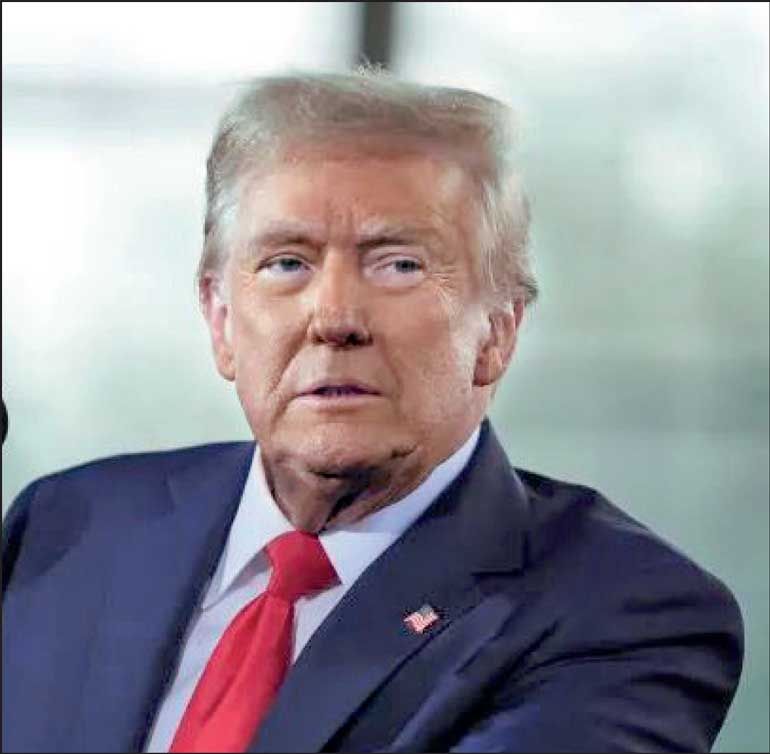
US President Donald Trump
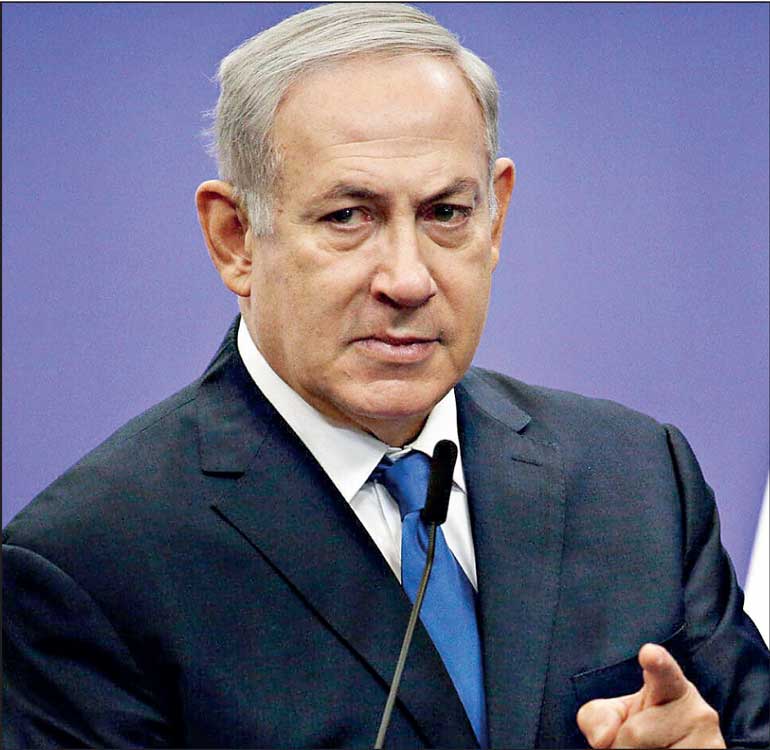
Israel Prime Minister Benjamin Netanyahu
 A wise man once said: If a fish comes out of the water to tell you the crocodile is sick, believe it. But do not believe when the crocodiles
Traditionally, the success of leadership is measured by the quantum of followership a leader is able to attract and retain under his command. Followers are attracted to leadership when it is considered positive in terms of attitude more than style (external behaviour).
Attitude is normally a tacit trait, while style is one that gets externally manifested in the behaviour of the leader.
Attitude is latent and cannot be easily discerned. Furthermore, it is attitude that eventually determines the true character of a leader. Behaviour can be manipulated and camouflaged (for instance, President Trump), but an intelligent follower can easily make a judgement. Attitude is inside you. It is born raw in a person and grows and develops on the basis of assumptions about life, interactions with peer groups, the values induced by parents, religious beliefs, and observations absorbed from events and interactions in the environment. Attitude becomes cemented and remains deeply rooted within an individual.
In short, attitude is a function of assumptions, values, and beliefs. By and large, a clever and manipulative mind can project behavioural styles that artificially depict a soft and sincere personality. The challenge for a person is to project a personality that truly reflects his or her character.
There are various styles of leadership. An exploitative and authoritarian leader is one who is openly nasty and often racist. Such a leader, by nature, has a dictatorial attitude and suffers from a superiority complex. For instance, the current Prime Minister of Israel, Benjamin Netanyahu. On the other hand, Donald Trump suffers from excessive self-confidence, where the actual truth often differs significantly from his subjective utterances.
He wants a set of subordinates who are virtually his henchmen (yes-men). He lives in a world of his own. He expects the rest of the world to obey him. He commands the world’s most powerful military and the world’s largest economy. However, he has become complacent and believes that anything and everything is under his control. This has led him to challenge even the Pope and entertain the fantasy (or audacity) of imitating Jesus. He is probably influenced by the once-popular stage play Jesus Christ Superstar.
His egomaniacal style is detested by almost all world leaders except one, Benjamin Netanyahu. Netanyahu applies the right kind of flattery to Trump to secure unwavering support for his war with Iran. He does not mind being called “f***ing crazy” as long as he can manipulate Trump’s propaganda-driven mindset to obtain billions of dollars-worth of lethal military equipment.
Knowledge is yet another powerful tool for effective leadership. Benjamin Netanyahu is highly knowledgeable when it comes to war strategy. He possesses extensive expertise and experience in conducting military operations. However, this strength has also made him hard-hearted enough to adopt extreme forms of warfare, such as using starvation as a strategy against civilian populations while negotiating with his enemy, Hamas, to surrender. In other words, he is a merciless killer. Trump, however controversial, is not a patch on Netanyahu’s cruelty.
Trump came to power with the slogan “Make America Great Again”. However, this payoff line has now lost much of its value, vigour, and power. Trump may realise this in forthcoming elections. It is not too late for him to return to that promise, perhaps with a slightly modified slogan such as “Making America the Best of the Best”.
For such a vision to gain traction, he would need to divert national resources away from war in Israel and towards development in the spheres of the economy, commerce, industry, trade, and investment.
Will he have the courage and intelligence to do so and thereby protect both his presidency and the future of the United States?
One does not need to be the President of a superpower such as the United States, Russia, China, or India to demonstrate leadership. The emphasis of leadership in these countries varies according to the personality of the leader. For instance, Narendra Modi’s leadership is often perceived as being skewed towards Hindutva, where religious nationalism becomes a tool for capturing votes. It is not only Modi but also some of his close associates who are regarded as strong proponents of that ideology.
Conclusion
A good leader can afford to be tough-minded and principled while also embracing the features of emotional leadership. Such a leader possesses effective communication skills that are unmatched by others. He means what he says. He is not blunt but firm, bold, and straightforward. He is not selfish but self-interested. His decisions are based purely on merit and nothing else.
He is governed by ethics and morality. He is rational in his approach and has a sound rationale for his behaviour. He does not mince or swallow words. He believes in wisdom more than intelligence. He is wise, not cunning. He has the courage, capacity, confidence, commitment, and competence to lead with a strong sense of compassion. All these traits, in the writer’s view, are embodied in the current Sri Lankan President, Anura Kumara Dissanayake.
Wisdom in politics is more important than intelligence. Intelligence may enable a person to argue stubbornly in order to defeat opponents, but wisdom guides a person towards reconciliation and compromise.
The basic attitude of a leader should not be to control subordinates but to guide the team towards achieving its goals successfully. A good leader translates vision and mission into meaningful goals and objectives for others to achieve. Such a leader does not impose personal values and beliefs but discusses ways and means of incorporating them into the organisational philosophy.
A true leader can easily distinguish truth from falsehood; hypocrisy from truthfulness; selfishness from self-interest; lies from manipulation; rationality from irrationality; need from greed; and passiveness from aggression.
These traits and characteristics distinguish a leader beyond comparison. Such a leader enjoys a sustainable competitive advantage over others in similar positions. Leaders who are eager to learn can adopt these traits as benchmark yardsticks to enhance both their leadership attitudes and behavioural styles.
(The author is a former Deputy Director General of the Board of Investment of Sri Lanka)



