Saturday Nov 21, 2026
Saturday, 21 November 2026 00:00 - - {{hitsCtrl.values.hits}}

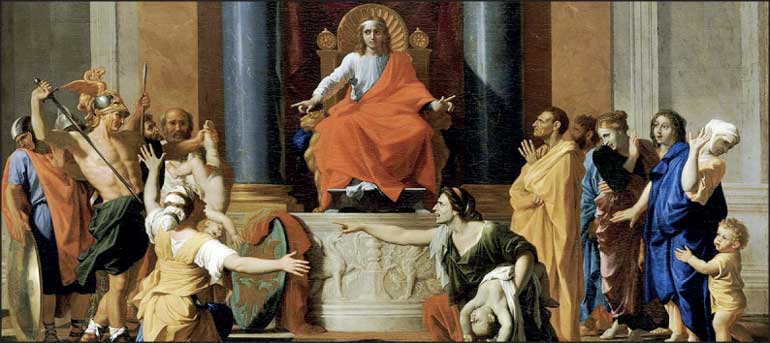
Judgement of Solomon

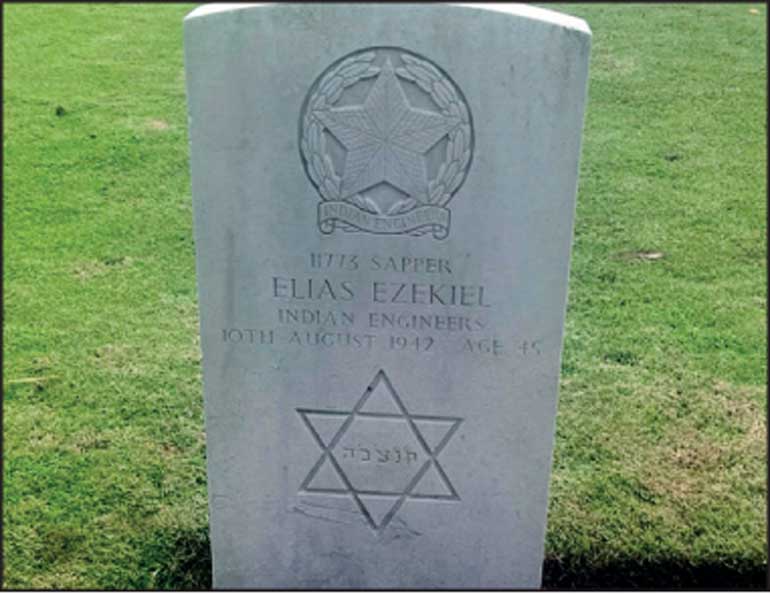
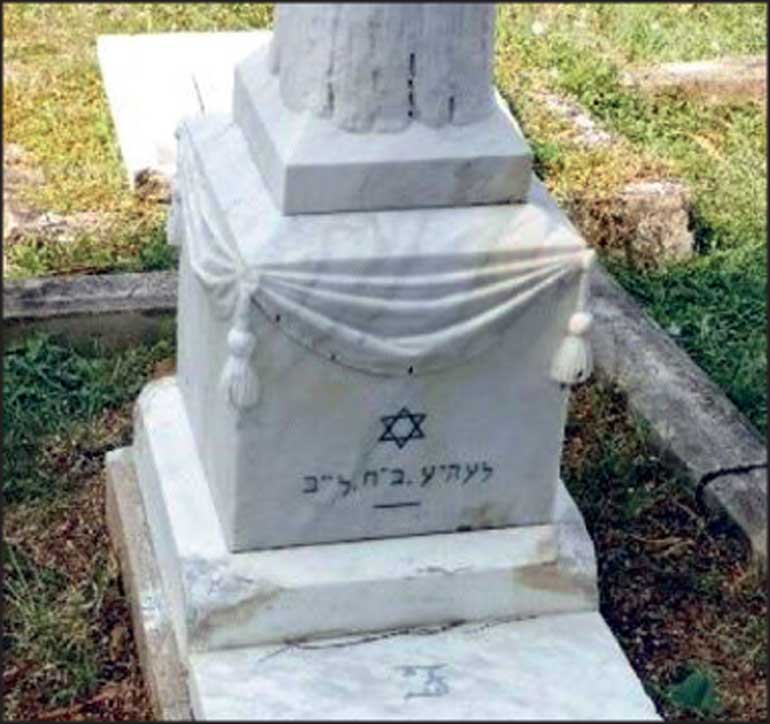
Indian Jewish grave in Borella Kanatte
Ever since the advent of the internet, accounts of Sri Lankan history have painted romantic tales of an ancient Jewish presence on the island. These narratives conjure images of biblical ships docking in Galle, Jewish ministers advising Lankan kings, and massive synagogues with men in hats walking to service in colonial era Colombo.
Yet, modern factual research reveals a narrative built littered with unverified myths, romantic hypotheses, and mistranslated texts. Both Sri Lankan and Israeli media frequently repeat these tall tales without basic fact-checking, playing a game of telephone.
Jews lived in many places and Sri Lanka has hosted people from many places, so naturally when people realise that there is no large, permanent Jewish community here like nearby India, the imagination runs wild. However, the verified history is one of a minor, transient merchant presence—and is equally fascinating once you unlock the truth under the fog of rumours.
Mysteries of antiquity
The most enduring legend links Galle to the biblical port of Tarshish, where King Solomon supposedly sourced gold, ivory, apes, and peacocks.
Solomon the wise reigned around 970–931 BCE, centuries before Sri Lanka’s first recorded king, Vijaya, arrived in roughly 543 BCE. The Tarshish connection was just a romantic hypothesis popularized in 1859 by Sir James Emerson Tennent, former Colonial Secretary of Ceylon.
Theories claiming that the rock inscriptions documented in local prehistoric cave art by Professor Raj Somadeva is Hebrew are highly anachronistic: During the era of King Solomon, the Hebrew language was written in a Paleo-Hebrew script that looks entirely different from the modern square alphabet used to make that comparison.
Furthermore, simple shapes like straight lines and circles are universal basic motifs that appear across many cultures and cannot be used to prove a solid connection.
During the Age of Discovery, Europeans encountered distinct Jewish communities in China, India and Ethiopia, and sought biblical parallels in newly encountered cultures—such as Native Americans, Indigenous Australians, and the Japanese—with the Lost Tribes and biblical geography. This same romantic lens was applied to Sri Lanka.
Similarly, the medieval logs frequently cited as proof of a Jewish community lack concrete evidence. A 12th-century itinerary by Benjamin of Tudela claimed that a few thousand Jews lived in the region, while the geographer al-Idrisi asserted that a Sinhalese king appointed four Jewish ministers to a royal council. Neither writer ever set foot on the island; their accounts were entirely based on bazaar gossip. Some online communities have even conflated this king with Kasyapa I who built the rock citadel Sigiriya - Al-Idrissi lived almost 700 years after Sigiriya was built.
Furthermore, Benjamin of Tudela’s original manuscript mentions Ibrig/Kulam, which in later translations was transcribed as "Candig". Later readers assumed this referred to Kandy—a major anachronism, given that Kandy was not an established capital in the 12th century. Similar unverified claims made by Abu Zeid al-Hasan of Siraf remain equally debatable.
Trade connections
Archaeological excavations at Tel Dor in Israel uncovered 3,000-year-old Phoenician ceramic flasks. Organic residue analysis revealed traces of cinnamaldehyde within these vessels. Although the 2013 study only showed that it wasn’t African cinnamon and native to Asia. Further tests have to be conducted to confirm the Sri Lankan connection as fact.
Solid evidence of medieval trade ties rests in the Cairo Genizah in Egypt. These 10th to 13th century documents contain authentic letters written by Middle-Eastern Jewish traders and explicitly detail an Aden (in modern day Yemen) to Sri Lanka spice and gem route. This proves that Jewish merchants definitely traded in Sri Lankan goods and may have travelled here primarily as transient businessmen rather than permanent residents.
While there are letters in the Geniza speaking of Middle Eastern Jews marrying Indian women, there is no record of marriage in Sri Lanka; rather they mostly left their wives behind at home.
In contrast, Arab Muslim traders left definitive proof of their voyages with a vibrant local Muslim community that claims descent from them. Local chronicles like the Mahavamsa, Culavamsa, palm-leaf manuscripts, and stone inscriptions are entirely silent when it comes to Jewish presence.
Even the Cochin Jews of nearby India who have been there for over a 1,000 years and maintained a rich oral tradition of folk songs and poetry that stretches back centuries, make no mention of a sister community across the sea.
In one letter from the 1130s, a Middle-Eastern businessman named Joseph b. Abraham mentions a young business partner named Abu l-Faraj b. Moses al-Baghdadi, who absconded from India and ran away to Sri Lanka. Joseph tries to track him down in vain. So, it is possible that a Jewish individual remained a fugitive in Sri Lanka. Although nobody can truly verify if he even stayed in Sri Lanka or went elsewhere to disappear.
Consequently, modern claims that the local Thattar or Rodiya communities possess Jewish ancestry are dubious. It is probable that these theories came about because Thattars work with gold (a trade frequently associated with European Jewish names like Goldsmith) and Rodiyas historically lived, as a marginalised group the way Jews were historically confined to ghettos in Europe.
By the time the Moroccan traveller Ibn Battuta visited the island in 1344, he documented various distinct communities but made no mention of Jewish presence.
There is no archaeological find yet showing ancient synagogues or other medieval Jewish graves or structures in Sri Lanka.
Colonial and modern eras
A wave of Jewish individuals arrived centuries later during European colonial times. Some arrived disguised as "New Christians" (Conversos) alongside the Portuguese, and later, openly with the Dutch East India Company (VOC). However, these individuals largely assimilated into the broader Burgher (Eurasian) community over generations, and the majority of their descendants do not maintain the Jewish faith. While many Sinhalese and Tamil families carry Portuguese-derived surnames with some that can be traced back to Sephardic Jewish roots (such as Perera, Fonseka or De Silva), it remains unclear whether locals adopted these names directly upon conversion, intermarriage, or perhaps a combination of both.
Robert Knox was an English sailor who spent over 19 years in captivity in the Kandyan Kingdom after being detained by King Rajasinghe II in 1660. Again, he made no mention of Jews among the king’s subjects in his writings.
Had the Portuguese encountered a pre-existing Jewish community on the island, they most likely would have documented it. For example, while exploring West Africa, they encountered griots or gewalas (oral storytellers) and mistakenly wrote that they were Jews. They made no such recordings in Sri Lanka.
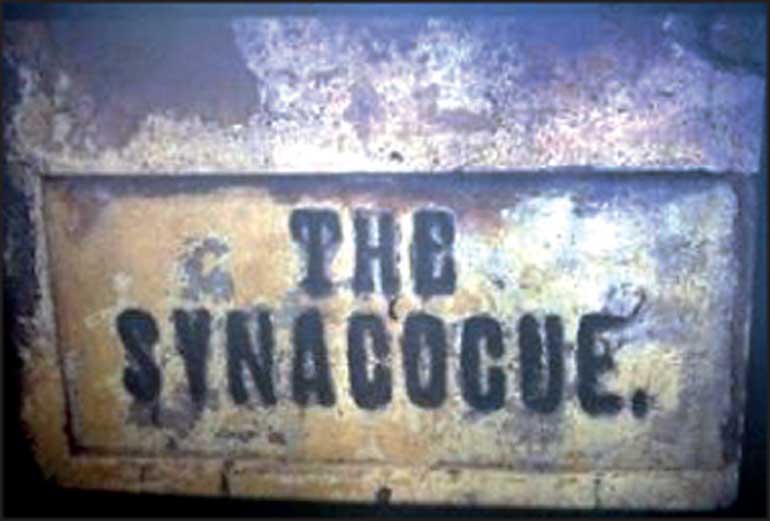
Such rumours persist into more recent history, manifesting in an urban legend claiming that there was a Great Synagogue of Colombo during the British era. While a 1910 edition of the Jewish Chronicle in the UK does reference this, the property in all articles was actually a grand private mansion, or walauwa, nicknamed "The Synagogue". It was owned by Peter De Saram, originally built by his ancestor, James De Alwis. The property was photographed by an Israeli UN employee named Ze’ev Raphael in 1966 who misinterpreted it and published this on Israeli media. It was eventually demolished after the 1972 land reforms.
Multiple interviews claiming to have seen Jewish men in hats and suits walking in Colombo stem from an alternative explanation: these memories were simply that of local elites or foreigners wearing formal suits and top hats heading out. Notably, the nearby Galle Face Hotel had a similar formal dress code. This serves as a classic example of the "Mandela Effect"—a collective false memory similar to the widespread beliefs that Darth Vader said, "Luke, I am your father," or that the Monopoly man wears a monocle, neither of which is true. The mind simply has a way of editing memories to fill gaps.
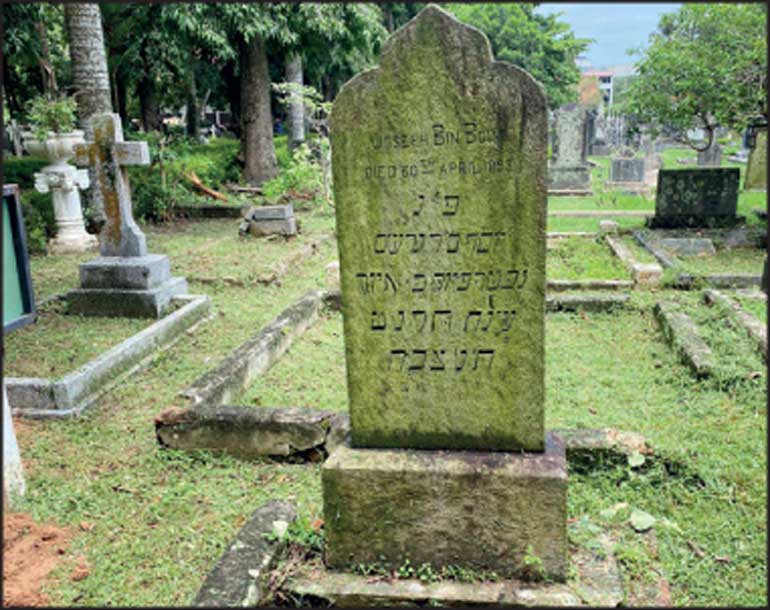
Tellingly, the 1911 and 1921 censuses both counted a mere eight Jewish residents across the entire island - barely sufficient to maintain a huge synagogue. While media reports often cite 18 Jewish graves in the Borella Kanatte cemetery and scattered elsewhere, the actual count may be lower. Furthermore, the articles claim that the tombstones feature inscriptions in both Hebrew and Yiddish (a Germanic language spoken by European Ashkenazi Jews), but verifiable searches show only Hebrew and English. There is one Indian Jewish soldier buried in the Commonwealth section. Even though most of the Jewish graves are of Ashkenazi origin, there is no evidence of Yiddish grave inscriptions in Sri Lanka.
Ultimately, Sri Lanka's Jewish history is not one of continuous, ancient settlements, but rather that of transient residents, scholars, and global traders. The reality of Sri Lanka's connection to the Jewish world is that it does not need romanticised myths or fanciful tales in online communities to be profound; it simply needs fact-checks to honour the country’s true, historic ties with the Jewish and wider world.

Lanka Jewish grave

Lanka Jewish grave

Synagogue sign (Zeev Raphael)