Monday Oct 12, 2026
Monday Oct 12, 2026
Saturday, 11 April 2026 00:00 - - {{hitsCtrl.values.hits}}
 Gravity of geo-political and geo-economic crisis:
“Never put all your geopolitical eggs in one basket” - Prof. Kishore Mahbubani, former President of UN Security Council and storied Singaporean career diplomat. In the beginning of the last Century, US Steel magnate and one of the three wealthiest persons at that period stated, “Put all your eggs in one basket and then watch the basket.” This famed quote could be, even, evolved or altered given the current geo-political and geo-economic unpredictability and seminal nature of oil and gas to most of the major economies as quote “Put all your geo-political eggs in one basket and watch that basket meticulously and with extreme care.” unquote.
Just about a month and half ago, on 20 February 2026, when the US Supreme Court submitted a verdict against the US Tariffs and were reduced to 10%, the global community was much relieved. This ‘elation ’ did last barely a week as the Iran - Israel - US conflict began, thus surprising and eclipsing most of the nations and leaders of the world. Coincidently, the on-going Ukraine-Russia conflict marked the completion of the fourth year just four days before the Iran War on 24 February 2026. Most, including some of the noted strategists, believed the war would conclude fairly rapidly similar to the 12-day “Operation Midnight Hammer” in June 2025.
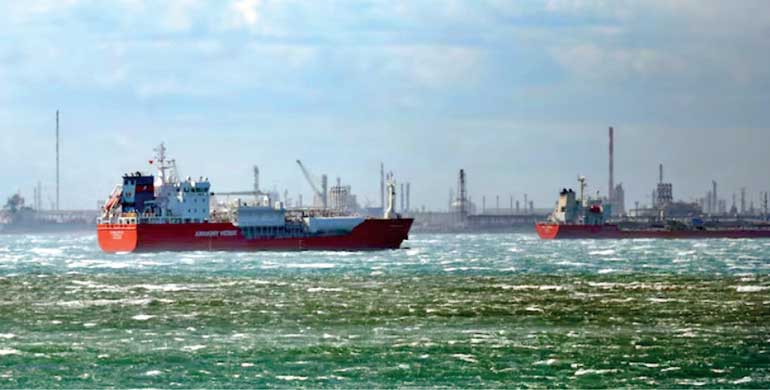
The world took little notice or paid much heed during the first week as the global economy and oil and gas markets and demands were not disrupted or upended. Without any surprise, Iran implemented a blockade of the seminal Strait of Hormuz, which is, probably, the most critical chokepoint for global oil shipments, impeding and fracturing the flow of oil and gas consisting 20% of global demand. It is stated that it was not a shock to any perceptive or perspicacious geo-political analyst as Iran, since the beginning of 1980s, at the time of infamous Iran-Iraq War, consistently threatened to block or strangle the Strait of Hormuz. Until the Strait of Hormuz was ruptured, the global economy did not feel the Iran-Israel-US conflict much.
Impact on price of oil if war continues:
As a matter of fact, the world of today has learned and acclimatised to live and conduct its functionaries despite the four-year Ukraine-Russia conflict as well as the third year of Israel-Palestine conflict, amongst others. The width of this Strait of Hormuz, arguably, the most pivotal waterway ranges from around a mere 20 to 50 nautical miles. It’s scarcely visible not only on a world map but even on a map of the region of Middle East. As a result, today the global price of a barrel of oil has surged to between $ 110-115 and if the aforesaid Strait was kept closed till the beginning of May, one could witness the oil reaching the highest price of $ 160-180 a barrel, historically the highest recorded numerical price since the 2008 global financial crisis. These circumstances and vicissitudes could have ‘rancorous’ and detrimental developments reverberating from Melbourne, Mumbai to Miami. For record, during the month of March 2026, one of the most searched words on Google and in other search engines was none other than the word ‘Hormuz’. If one makes a comparison of production of oil in 1978/1979 to 2026, the percentage of Middle East global oil production in 1978 was 34% and today it still hovers around 31%. Interestingly, Iran used to produce 8.5% in 1978, under the rule of Mohommed Reza Pahlavi better known as Shah, and now it has diminished to 5.5%.
Criticality of Strait of Hormuz and oil:
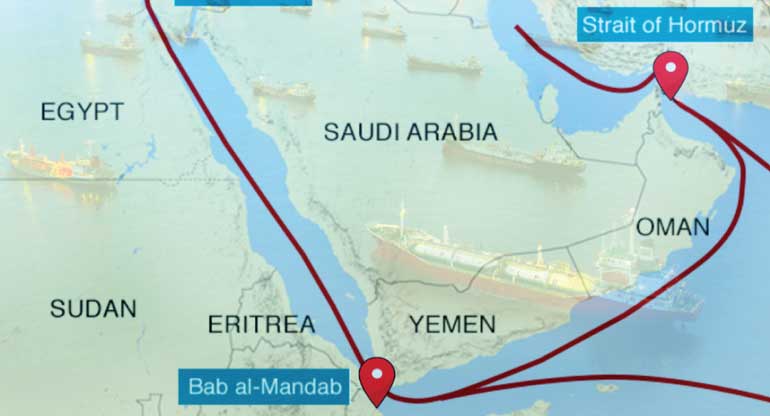
On a similar note, most readers might not be well conversant of yet another key and pivotal Strait known as Bab-el-Mandeb with a maximum length of 18 miles connecting Red Sea to Gulf of Aden and extending to Indian Ocean. This Strait accounts for roughly 10%-12% of total traded seaborne oil and mostly fueling the economies of Asia. This particular Strait, added to Hormuz, too had become critical theatre in widening and exacerbating the regional conflict, thus further ravaging the global economy, including advanced to least developed economies such as Solomon Islands, Sri Lanka to Switzerland. This is due to the fact that Yemen’s Houthi rebels have now got formally involved in the hostilities by launching and firing multitude of attacks, thus cogently and compellingly threatening the aforesaid Strait as well as the entire region.
As a career diplomat specialised on international economics and geo-politics, this writer was much baffled and obfuscated of the fact that the world at large including major militaries, regional blocs such as EU, GCC, USMCA and ASEAN, defense blocs as 32-member NATO and 27-member ARF and of course the so-called global multi-billion dollar corporate behemoths, amongst others, failed woefully and grievously to pay heed to focus on a single three letter word, yet imperative and crucial for global economy to function smoothly i.e. oil. For all record purposes, this was not the first occasion that the global economy confronted and was threatened by an energy crisis i.e. oil and gas, especially in the region of Middle East.
During the last seven decades, the Suez Crisis of 1956, the two oil crises of 1973 and 1979, 1990 invasion of Kuwait by Iraq, US invasion of Iraq in 2003, global financial crisis of 2008, Arab Springs of 2012 and Russian invasion of Ukraine in 2022 to name a few. On the same note, during the last Century which witnessed, probably, the most heinous and insidious as well as cataclysmic devastations and loss of human lives as never before included the two World Wars, Spanish Flu of 1918, Great Depression and COVID pandemic as well as a large number of natural disasters, military conflicts and civil wars, amongst others.
Of course, these did negatively impinge the global economy but the oil did not play an instrumental or influential role as during the last five decades. It is also perturbing and economically excruciating to observe that a tiny strip of waterway i.e. Hormuz, could markedly disrupt and distress the nation states due to the excessive dependence on mostly oil as well as gas by the global community. Let the readers be convinced, unequivocally and unambiguously, that this unprecedented geo-political and geo-economic volatility was not due to a military conflict but due to disruption of the flow of energy i.e. oil.
The world, since the last Century, witnessed a number of regional and interstate military conflicts of unimaginable and catastrophic consequences both in property and human lives but they did not impact the entire global economy as much as this particular conflict. Of course, the world did experience virulent and fatal diseases during the last 800 years ranging from Black Death of 14th Century to recent COVID, as well as numerous bloody conflicts some which were marginally reported or covered by media such as Congo War, Sudanese Civil War, Secret War of Laos, Cambodian Genocide and Burundian Civil War. These catastrophic events were once in a Century or even once in a millennium, thus having a human toll ranging from hundreds of thousands to several millions.
Indispensable nature of oil
In mid 1980s, some of the noted policy makers and Think Tanks stated that oil, mostly in Middle East, would not be able to hold the global economy hostage since numerous sources of energy were found, evolved and invented. True to an extent, as nations pivoted to renewable energy sources, amongst others, as wind, solar, green hydrogen, tidal/wave power and electric as well as hydropower, biomass, nuclear and coal to name a few.
Even to this day, oil is the largest energy source of six of the ten largest economies including the US, Germany, Japan and UK. Interestingly, only China and India depend more on coal than oil whilst Russia on natural gas and France on nuclear. In this decade, in particular, the world was obsessed and intensely focused on the inventions and innovations of the 4th Industrial Revolution (4th IR) and 4th IR plus signaling the fact that the world would be embracing and unleashing the 5th Industrial Revolution (5th IR).
This, of course, encompassed AI, ML, Big Data, EVs, and Quantum Computing, amongst others, and “Magnificent Seven” corporates (Mag-7) were touting and boasting a market cap of USD 23 trillion, larger than the GDP of China or over four times the GDP of India or Japan. In the fourth quarter of 2025, a single company known as NVIDIA had a market cap. much larger than that of Germany, Japan or India, approximately close to USD 5 trillion. The equity markets, world over, surged to around USD 160 trillion before the Iran conflict. Since then, during the last 30 days, they have lost over USD 12 trillion, manifesting and accentuating the magnitude as well as the vulnerability of both the conflict and the economy vis-à-vis oil and gas.
Foreseeable economic cost of the war
It is ironical to observe that the noted futurists and tech-gurus used to state that the entire world and global economy would be depended on most advanced and sophisticated technology in the sphere of AI etc. Further, many of the traditional employment would be replaced and the “Big-Tech” would make the greatest impact on the global economy more than any of the Industrial Revolutions of the past Century. The unsettling and distressing fact vis-à-vis the Iran-Israel-US conflict and disruption of flow of oil today is that despite all the unprecedented advancements, innovation and evolutions of the world, the global economy is still as vulnerable and defenseless as five decades ago.
As political analyst and author, Geoffrey Blainey, stated quote “No wars are unintended or accidental. What is often unintended is the length and bloodiness of the War” unquote. It is often being stated since the Roman times, it was quite easy or required less effort to enter in to a conflict/war but exceedingly arduous to get extricated from a war, once a nation was sucked into a war. History would illustrate ample examples of this unfortunate thesis. Financially and economically speaking, what is terrifying or eerie of this conflict was that the Price/Earning (P/E) ratio of the US equity market in 1979 was around 7.5 and today, the PE is around 26.
The entire US market cap is close to 50% of the global market cap as the US hovers around $ 70 trillion or well over twice the magnitude of the entire GDP of the US. If the US market plummets, with other mega markets, the future potential of earnings too would plummet with other mega markets, leading to global diminishing of earnings and equity markets, which could lead to high inflation and stagflation (slower growth and higher unemployment) similar to 1980s. This milieu could occur if the conflict continues, indefinitely, could lead to unprecedented rise of oil and gas and economic recession. This scenario could be detrimental and pernicious as the COVID.
Sri Lanka needs to absorb the shocks and pivot
From a Sri Lankan perspective, it is encouraging and commendable that the Government was in discussion and negotiation with major countries, including India and Russia, to meet the energy sources i.e. oil and gas. The country, today, has foreign exchange reserves sufficient for nearly four months of imports, stable currency with minimal depreciation, robust and rising equity market and did record an impressive GDP growth of around 5% in 2025, amongst others. However, Sri Lanka is compelled to address the key economic pivots acronym as “MERIITSS”. This denotes Manufacturing, Exports, Remittances, Investments (FDI/FII), Industrial Agriculture, Tourism, SMEs and Services.
Given these highly testing and trying times, if both the Government and corporate/private sector tenaciously address on these indispensable economic pivots, extensively and comprehensively, Sri Lanka could transform the so-called “Crisis’’ to an “Opportunity”. As President John F. Kennedy famously defined a “crisis” not simply as extreme danger but as a pivotal opportunity for positive change referencing to “crisis” written in Chinese represents two characters i.e. “danger’’ and “opportunity”. It is for respective countries i.e. Sri Lanka, to pay heed, attention and sanguinity to the second character of the word “crisis”, which represents “opportunity”.
The listed eight Economic Pivots account for over 80% of the output of the country. These could propel and catalyse the country to be a rapidly developing nation, thus traversing and navigating to be a developed nation in the foreseeable decades. The undersigned wishes to conclude with the sagacious words of Idowu Koyenikan, noted author of “Wealth for all Africans”, quote “Your pride for your country should not come after your country becomes great; your country becomes great because of your pride in it” unquote.
(The author is a former career Ambassador, Professor and Examiner of International Economics with specialisation on Geo-economics and Geo-politics, Board Member, and Strategic Advisor. He earned the MBA from San Francisco State/University of California, PhD from Indian Institute of Technology (IIT) Delhi and is a Senior Fellow at Harvard. He could be reached on [email protected])




